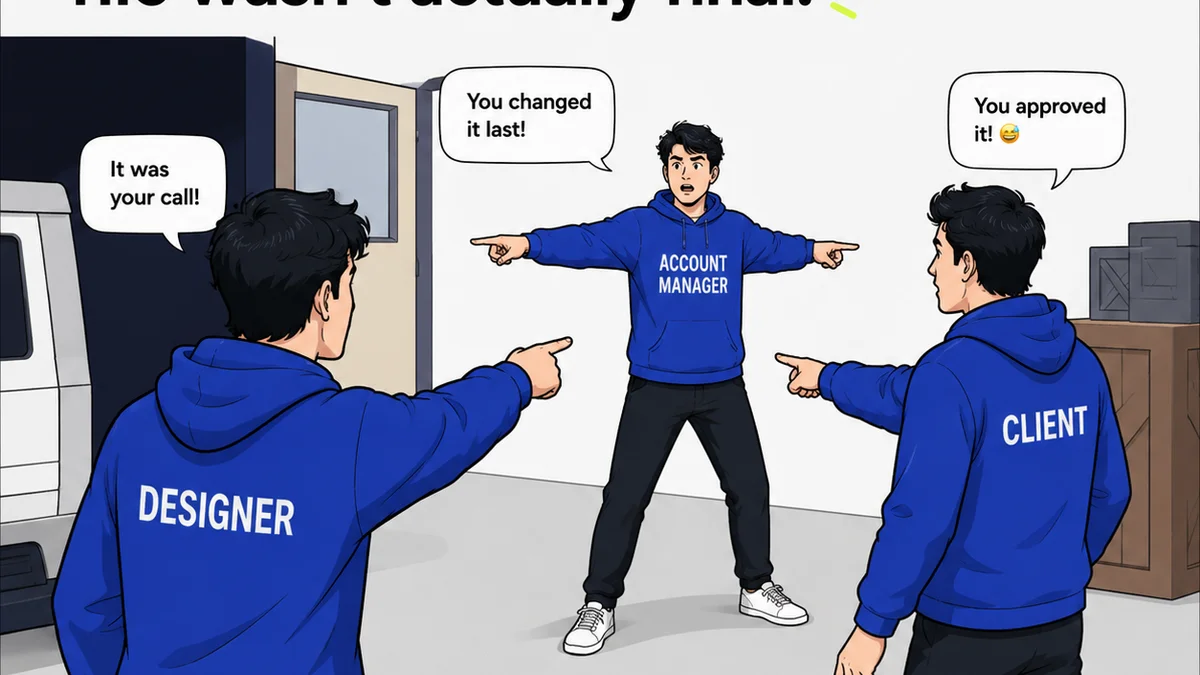
Everyone talks about design quality. They say it’s about pixel perfection, brand consistency, and user experience. None of that is wrong. But it’s incomplete.
The hard truth? A stellar design is only as good as the process that delivers it. And that process hinges on a rigorous, often overlooked, design QA workflow.
Most agencies treat Quality Assurance (QA) as a final hurdle, a quick once-over before launch. This is a mistake. It’s reactive, prone to errors, and damages client trust.
A true design QA workflow isn't a gate; it's a continuous thread woven through every stage of the creative process. It’s about preventing issues, not just catching them.
1. Beyond the Checklist: What Design QA Really Means
Design QA is the systematic evaluation of creative deliverables against predefined standards and project requirements. It’s not just about aesthetics; it’s about functionality, usability, accessibility, and brand integrity.
Think of it as the difference between a car that looks good and a car that drives well, safely, and reliably. You need both.
The Common Pitfalls of Poor QA
- Missed typos and grammatical errors.
- Inconsistent branding elements (logos, colors, fonts).
- Broken links or incorrect navigation.
- UI elements that don't function as intended.
- Accessibility violations (e.g., poor color contrast, missing alt text).
- Content misalignment with client brief or brand voice.
- Cross-browser or cross-device rendering issues.
- Performance bottlenecks impacting user experience.
These aren't minor oversights. They are fundamental failures that erode client confidence and can lead to costly rework.
2. Building Your Design QA Framework
A robust QA framework starts before the first design concept is even sketched. It requires clear communication, defined roles, and documented processes.
Define Your Standards
What does
Frequently asked questions
What is the primary goal of a design QA workflow?
The primary goal is to ensure creative deliverables meet all project requirements, quality standards, and client expectations before final delivery, minimizing errors and maximizing satisfaction.
When should design QA begin in a project?
Design QA should begin as early as possible, ideally during the initial planning and briefing stages, and continue iteratively throughout the design and development process, not just at the end.
Who is responsible for design QA in an agency?
Responsibility for design QA can be shared. It often involves the creative team, project managers, dedicated QA specialists, and sometimes even the client during review phases. Clear roles are essential.
How can technology improve design QA?
Technology, like centralized feedback platforms, version control, and automated testing tools, can streamline the QA process by improving communication, tracking revisions, and identifying issues more efficiently.