Everyone agrees that design QA is important. You’ve got your checklist. You’ve got your sign-off process. You’re probably using a project management tool to track it all.
None of that is wrong. But it’s incomplete.
The real problem with design QA isn't that teams skip steps. It's that they're approaching it backward, focusing on the wrong things at the wrong time.
The hard truth? Design QA isn't just a final check. It's an ongoing process that needs to be baked into every stage of your creative workflow, from the initial brief to the final delivery.
1. The Illusion of a Final Check
Most teams treat Quality Assurance (QA) as a gatekeeper. The design is done, the client has (supposedly) approved it, and now a dedicated person or team does a final sweep for errors.
This is where it all falls apart.
By the time you reach this “final check,” the damage is often done. Major issues have been locked in. The client’s feedback has already been interpreted and implemented. The budget for fixing fundamental problems has long since evaporated.
This reactive approach leads to:
- Last-minute panic and rushed fixes.
- Resentment between design, account, and development teams.
- The dreaded “scope creep” disguised as essential corrections.
- A final product that’s “good enough” but never truly great.
It’s like inspecting a cake after it’s been served at the party. You can point out the burnt edges or the missing frosting, but you can’t magically un-bake it.
2. Misunderstanding the Scope of "Quality"
When teams talk about design QA, they usually mean pixel perfection. Is the logo aligned? Are the fonts correct? Is the spacing consistent?
These are important. But they’re only a tiny fraction of what “quality” truly means in a creative project.
True design quality encompasses:
- Strategic Alignment: Does the design actually meet the brief’s objectives? Does it solve the client's problem?
- User Experience (UX): Is the design intuitive and easy to navigate? Does it create a positive user journey?
- Brand Consistency: Does the design adhere to the client's established brand guidelines (or the newly established ones)?
- Technical Feasibility: Can this design actually be built within the given constraints (web, print, app)?
- Accessibility: Does the design meet accessibility standards for users with disabilities?
- Performance: For digital assets, does the design impact loading times or functionality negatively?
If your QA process only looks for visual bugs, you’re missing the forest for the trees. You might have a perfectly rendered button, but if it leads users to the wrong page or doesn’t load on mobile, your QA failed.
3. The Feedback Black Hole
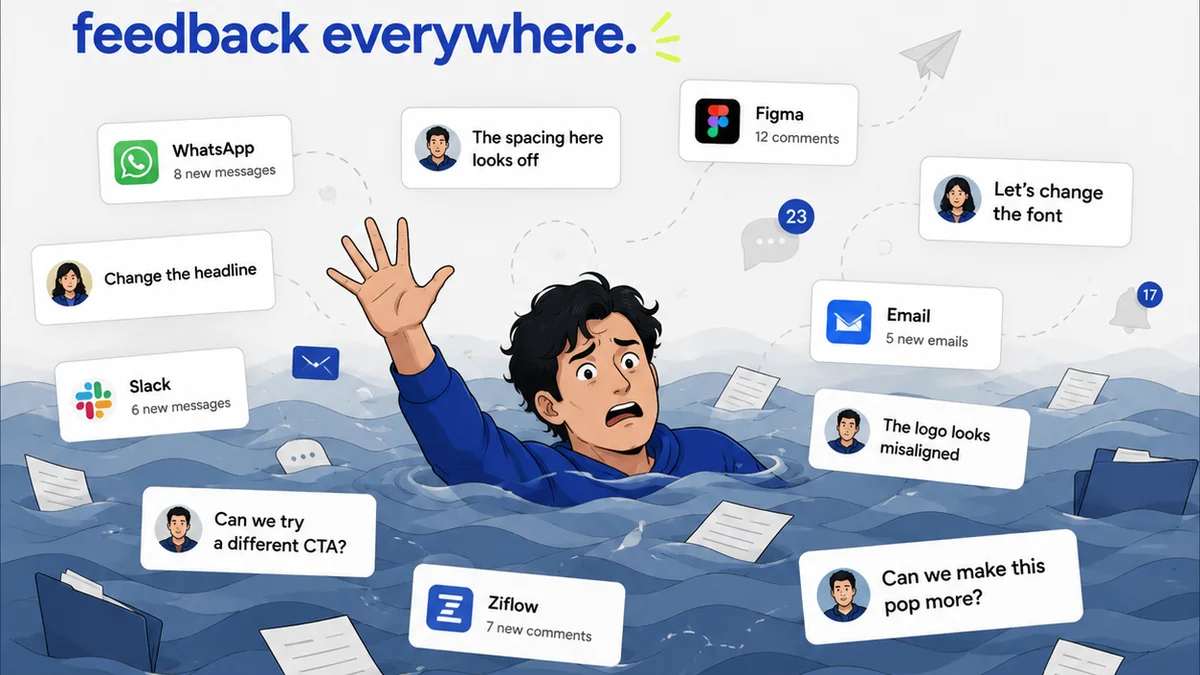
The most common symptom of a broken QA process is how feedback is handled. It’s often a chaotic, scattered mess.
Emails, Slack messages, random Word docs, scribbled notes on PDFs – feedback arrives from everywhere, from everyone.
Then, someone has to consolidate it. This person becomes the de facto QA manager, translator, and often, the scapegoat.
This leads to:
- Missed feedback points.
- Misinterpreted instructions.
- Endless clarification loops.
- Disagreements over who said what and when.
- The inevitable
Frequently asked questions
What is the difference between design QA and testing?
Design QA focuses on ensuring the creative output meets strategic objectives, brand standards, and user experience goals. Testing is a broader term that can include functional testing (does it work?), usability testing (is it easy to use?), and performance testing, which often happens after design QA is largely complete.
When should design QA start?
Design QA should not be a final step. It should begin as early as the concept or wireframing stage and continue through every iteration and deliverable. This means checking for strategic alignment and feasibility from the outset.
Who is responsible for design QA?
Ideally, quality is a shared responsibility. The creative team ensures their work meets standards, the project manager tracks progress and alignment, and a dedicated QA specialist (if available) or senior team member performs a final review. However, the core principles of QA should be understood and applied by everyone involved.
How can a centralized tool improve design QA?
Centralized tools like Revue consolidate feedback, track revisions, and provide a clear audit trail. This eliminates scattered communication, reduces misinterpretations, and ensures all stakeholders are working from the latest approved versions, significantly streamlining the QA process.