Enterprise marketing teams assume that bigger means better when it comes to design reviews. More stakeholders, more eyes, more opinions—surely that leads to better creative work, right?
None of that is wrong. But it’s incomplete.
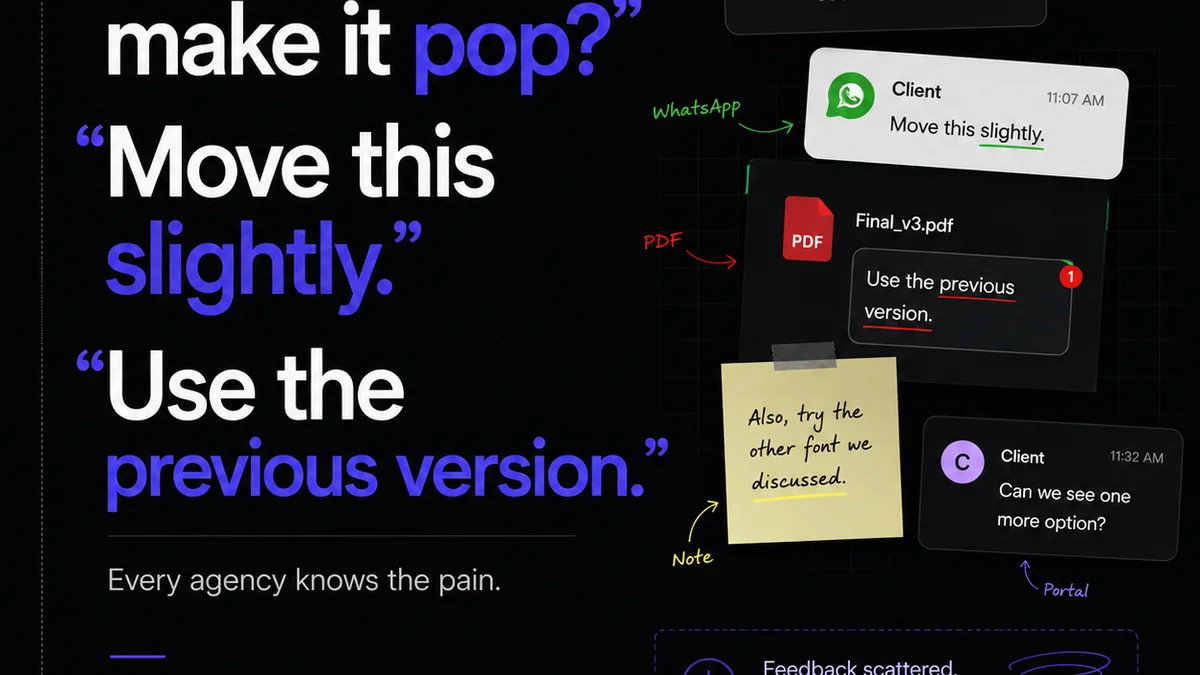
The hard truth is that for enterprise marketing teams, “more” often means “more chaos.” Without a structured process, more feedback becomes more noise, slowing down production and diluting creative vision.
1. Define the 'Why' Before the 'Who'
Before you even think about who needs to see a design, you need to be crystal clear on what success looks like for that specific piece of creative.
What is the single, overarching goal of this campaign? What action do we want the audience to take? What message must land?
This clarity dictates who needs to provide input and what kind of input they’re qualified to give.
Aligning Stakeholders to Objectives
Not every stakeholder needs to weigh in on every pixel. Categorize your reviewers:
- Strategic Approvers: Those who sign off on the core message and brand alignment.
- Functional Experts: Those who ensure compliance, technical accuracy, or legal adherence.
- Creative Mentors: Those who provide aesthetic and conceptual feedback.
- End-User Representatives: Those who can speak to audience reception (often via research).
If a stakeholder doesn't directly impact the stated objective, their feedback might be optional or even detrimental.
2. Establish a Single Source of Truth for Feedback
The biggest drain on enterprise creative teams isn't bad feedback; it's *disorganized* feedback.
Email chains, Slack messages, annotated PDFs, scribbled notes on printouts—this is the graveyard of good intentions and the breeding ground for errors.
You need one place where all feedback lives, is consolidated, and is actionable.
Centralized Feedback Platforms
This isn't about adding another tool to the stack. It's about consolidating your process.
A platform designed for creative review should allow for:
- Direct annotation on visuals (images, videos, web pages).
- Clear attribution of who provided what feedback.
- Status tracking for each piece of feedback (e.g., pending, addressed, resolved).
- Version control so everyone sees the latest iteration and knows what changed.
When feedback is centralized, you eliminate confusion about which version is current and whose comments are relevant.
3. Implement a Structured Review Cadence
Ad-hoc reviews are the enemy of efficiency. You need a predictable rhythm.
This means defining clear stages for review and setting expectations for turnaround times at each stage.
The Standard Review Flow
A typical flow might look like this:
- Internal Creative Review: The core team reviews for concept, execution, and objective alignment.
- Functional/Legal Review: Subject matter experts check for accuracy and compliance.
- Stakeholder/Marketing Lead Review: Key decision-makers approve for strategic alignment and brand voice.
- Final Approval: The ultimate gatekeeper signs off.
Each stage should have a defined deadline. If feedback isn't provided by the deadline, the project moves forward based on the input received. This forces accountability.
Timeboxing Feedback
Don’t let feedback linger indefinitely. Set clear time limits for each reviewer.
For example:
- Internal Creative: 24 hours
- Functional/Legal: 48 hours
- Marketing Lead: 24 hours
This prevents bottlenecks and keeps the project momentum high.
4. Empower a Central Point of Contact
Trying to manage feedback from multiple stakeholders directly can be overwhelming and inefficient.
Designate one person—often a creative producer, project manager, or senior designer—to be the gatekeeper and consolidator of all feedback.
The Feedback Wrangler
This person is responsible for:
- Ensuring feedback is submitted through the designated channel.
- Consolidating and clarifying conflicting feedback.
- Prioritizing feedback based on project goals and strategic importance.
- Communicating feedback to the design team in a clear, actionable way.
- Tracking the resolution of each feedback item.
This role acts as a buffer, protecting the creative team from direct stakeholder noise and ensuring feedback is constructive and aligned.
5. Differentiate Between Feedback and Directives
This is a subtle but crucial distinction. Not all input is created equal.
Feedback is commentary, suggestion, or critique. A directive is an order or a mandate.
The problem arises when feedback is treated as a directive by the design team, or when stakeholders issue directives without understanding the creative implications.
Navigating Subjectivity
Creative work is inherently subjective. A stakeholder might say, “I don’t like this blue.”
Is that feedback based on brand guidelines, audience research, or personal preference?
The feedback wrangler’s job is to probe:
- “Can you help me understand why the blue isn’t working?”
- “Does this conflict with a specific brand color?”
- “What feeling were you hoping this color would evoke?”
If the answer is “I just don’t like it,” that feedback carries less weight than, “This blue doesn’t align with our Q3 campaign palette.”
6. Automate Where Possible, Standardize Always
Enterprise workflows are complex. The more you can standardize and automate, the fewer opportunities for error and delay.
Think about:
- Standardized briefs: Ensure all projects start with the same essential information.
- Templated review checklists: For different types of creative assets.
- Automated notifications: For review deadlines and status updates.
- Version control systems: To track changes and prevent confusion.
Standardization isn’t about stifling creativity; it’s about creating a predictable, efficient framework within which creativity can flourish.
Where Revue Fits In
Managing feedback for large-scale marketing projects can feel like juggling chainsaws. You need a system that brings order to the chaos.
Revue is built for this. It acts as the central hub where all your creative assets live. Stakeholders can leave precise, contextual feedback directly on the visuals. You can track every version, every comment, and every approval in one place.
This means less time chasing down emails, less confusion about revisions, and more confidence that you’re delivering high-quality work that meets strategic objectives. Revue streamlines the entire review and approval process, ensuring your enterprise marketing team can move faster and smarter.
Final Thought
Are you optimizing your design review process for efficiency and quality, or are you just collecting opinions?
Frequently asked questions
What is the biggest challenge for enterprise marketing teams in design reviews?
The biggest challenge is often the sheer volume of stakeholders and feedback, leading to disorganized communication, conflicting opinions, and significant delays if not managed through a structured process and a centralized platform.
How can I ensure feedback is actionable and not just personal preference?
Clearly define project objectives beforehand. Empower a feedback wrangler to ask clarifying questions that tie feedback back to strategic goals, brand guidelines, or technical requirements, differentiating between subjective opinions and objective critiques.
What role does a centralized platform play in design reviews?
A centralized platform like Revue provides a single source of truth for all creative assets and feedback. It allows for direct annotation, clear attribution, version control, and status tracking, eliminating confusion and streamlining the entire review and approval cycle.
How often should design reviews occur in an enterprise setting?
Instead of a fixed frequency, it's more effective to implement a structured review cadence tied to project milestones. This involves defining clear stages (e.g., internal creative, functional, stakeholder) with set deadlines for feedback at each stage.