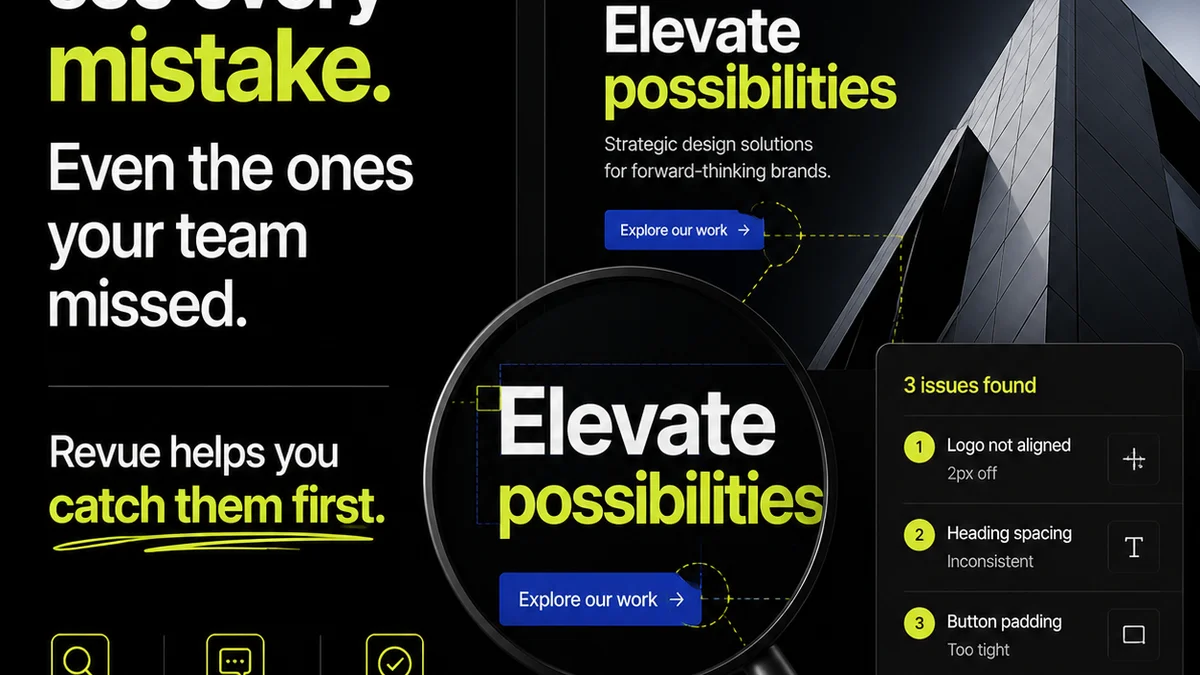
Everyone talks about design reviews. They’ll tell you a good checklist prevents typos, broken links, and misaligned logos. None of that is wrong. But it’s incomplete.
The hard truth? A checklist focused solely on visual polish is a waste of time. It’s a band-aid on a broken process. In 2026, your design review process needs to be about more than just aesthetics. It needs to be about strategic impact, client collaboration, and measurable results.
1. The Assumption: Visuals Are King
The common assumption is that a design review checklist is about catching every stray pixel, every grammatical error, every slightly off-brand color. It’s about making the design *look* right.
This is where most agencies get it backward.
Focusing only on the visual layer means you’re missing the forest for the trees. You’re debating the shade of blue while the entire strategy might be off-target.
The Deeper Truth: Strategy and Goals First
Before a single pixel is debated, a design review must confirm alignment with the project’s core objectives. Is this design solving the actual business problem? Does it speak to the target audience? Does it fulfill the brief?
This is the real work.
- Does the design address the primary KPIs?
- Is the user journey clear and intuitive?
- Does it reflect the agreed-upon brand voice and tone?
- Is the messaging accurate and compelling?
If the strategy is sound, the visual execution becomes a matter of refinement, not a fundamental overhaul.
2. The Assumption: Feedback is Universal
Another myth: everyone involved understands what good feedback looks like. That a comment like “I don’t like it” or “Make it pop more” is actionable.
It’s not. It’s noise.
Unstructured, subjective feedback derails projects. It leads to endless revisions and frustration for both the client and your team.
The Deeper Truth: Structured, Objective Feedback is Crucial
A robust design review process requires clarity on *who* provides *what* feedback, and *how* it should be delivered. This means defining roles and establishing clear criteria for feedback.
Think about it:
- Who is the final decision-maker?
- What are the bounds of their authority (e.g., strategic vs. aesthetic)?
- What constitutes constructive, actionable feedback vs. personal preference?
- What is the timeline for feedback submission?
When feedback is structured, it’s easier to process, implement, and track. It moves the project forward, rather than stalling it.
3. The Assumption: Revisions are Linear
Many teams operate as if revisions are a simple, one-way street. You get feedback, you make changes, you resubmit. Repeat until done.
This is a recipe for scope creep and budget blowouts.
It assumes a perfect understanding of the requested changes and their ripple effects.
The Deeper Truth: Revisions Require Context and Collaboration
Every revision impacts other elements. Changing a headline might affect the layout. Adjusting a button might require new copy. Effective revision management isn't just about making the requested change; it's about understanding the implications and communicating them.
This involves:
- Tracking the history of feedback and revisions.
- Understanding the rationale behind each change.
- Assessing the impact of a requested change on the overall design and project goals.
- Communicating any potential scope or timeline implications back to the client proactively.
This level of transparency prevents misunderstandings and keeps everyone aligned.
4. The Assumption: Quality Checks are the Final Step
The final quality assurance (QA) phase is often seen as the last hurdle. A quick once-over to catch any lingering issues before launch.
This is a reactive approach.
It assumes that all the critical decisions and refinements have already been made correctly.
The Deeper Truth: Quality is Built-In, Not Bolted On
Quality assurance shouldn't be a separate, final event. It needs to be an integrated part of the entire design and development process. Every stage, from initial concept to final delivery, should have quality checkpoints.
Consider these integrated checks:
- Brief Alignment Check: Does the initial concept meet the core brief?
- Usability Review: Is the user flow logical and easy to navigate? (Think usability testing principles.)
- Accessibility Audit: Does the design meet accessibility standards? (e.g., WCAG guidelines.)
- Brand Consistency Scan: Are all brand elements used correctly and consistently?
- Technical Feasibility Check: Can this design be realistically implemented within the project constraints?
Building quality in from the start reduces the likelihood of major issues surfacing late in the game, saving time and resources.
5. The Assumption: Tools Solve Everything
There’s a belief that the right software—be it a design tool, a project management platform, or a feedback app—will magically fix a broken review process.
Tools are only as good as the process they support.
A powerful tool in the hands of a team with a flawed workflow will only amplify those flaws.
The Deeper Truth: Process Dictates Tool Effectiveness
Your chosen tools should *enable* a strong process, not *replace* it. They should streamline communication, centralize information, and provide visibility, but they can’t invent strategic thinking or clear communication protocols.
The best tools support these process elements:
- Centralized feedback repositories.
- Clear version control and revision history.
- Defined approval workflows with clear roles.
- Integrated communication channels.
- Dashboards for tracking progress and identifying bottlenecks.
Without a solid underlying process, even the most sophisticated tool will fail to deliver the desired outcomes.
Where Revue Fits In
This is why tools designed specifically for creative workflows are essential. They bridge the gap between assumptions and reality.
Revue, for example, is built to address these common pitfalls head-on. It’s not just another comment box.
It provides a centralized hub for all client feedback, eliminating the chaos of scattered emails and Slack messages. This ensures that feedback is captured, organized, and easily accessible, directly addressing the problem of unstructured input.
With Revue, you can track the entire revision history, providing context for every change and making the revision process collaborative rather than linear. This transparency helps manage scope and expectations.
Furthermore, Revue facilitates clear approval workflows. This clarifies decision-making authority and ensures that feedback is routed correctly and acted upon efficiently, moving beyond the
Frequently asked questions
What are the key components of a modern design review checklist?
A modern design review checklist should prioritize strategic alignment with project goals, clarity of target audience, effectiveness of messaging, and user experience, in addition to visual and technical accuracy. It should also include criteria for structured, actionable feedback and integrated quality assurance steps.
How can agencies ensure feedback is constructive and actionable?
Agencies can ensure constructive feedback by establishing clear guidelines for reviewers, defining their roles and authority, and specifying the format for feedback. This includes focusing on objective criteria tied to project goals rather than subjective opinions, and using tools that facilitate organized annotation and discussion.
What is the role of technology in design reviews?
Technology plays a crucial role in streamlining design reviews by centralizing feedback, tracking revisions, automating approval workflows, and providing visibility into the process. Tools like Revue help manage communication and documentation, ensuring that feedback is captured and acted upon efficiently, moving beyond scattered emails and spreadsheets.
How does a focus on strategy impact the design review process?
Focusing on strategy means that design reviews assess whether the design effectively solves the business problem and meets objectives, rather than just its aesthetic appeal. This leads to more impactful design decisions, fewer subjective arguments, and a clearer path to achieving client goals, as the 'why' behind the design is always present.