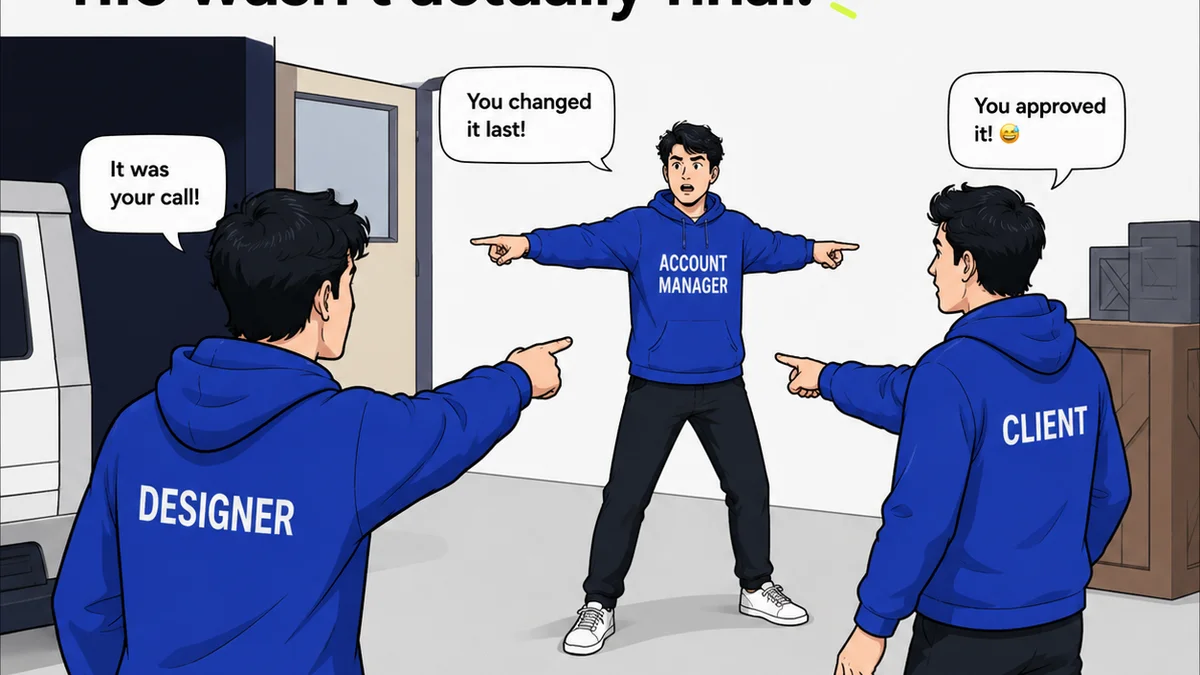
The common wisdom is that design review is about getting client sign-off. Make sure the client likes the colors, the logo, the layout. That's it. None of that is wrong. But it’s incomplete. Especially when your agency is handling design for manufacturing.
The hard truth? For manufactured goods, design review is far more than a client's aesthetic check. It's a critical gate for quality, cost, and feasibility. It's where costly mistakes are caught, or missed.
1. Beyond Pretty Pictures: The Real Stakes of Manufacturing Design Review
When a client signs off on a website mockup, the worst that usually happens is a few extra hours of coding. When they sign off on a product design destined for a factory floor, the stakes are exponentially higher.
A design flaw missed in review can mean:
- Expensive tooling rework.
- Material waste.
- Assembly line delays.
- Product recalls.
- Brand damage.
This isn't just about client satisfaction. It's about operational risk and financial liability. Your agency's reputation hinges on catching these issues before they hit production.
The Client's Limited View
Clients often focus on the end-user experience – how the product looks and feels. They might not grasp the intricacies of:
- Material tolerances.
- Manufacturing processes (injection molding, CNC machining, etc.).
- Assembly sequences.
- Component sourcing.
- Regulatory compliance for physical products.
Your role as an agency is to bridge that gap. You need to ensure the design is not only beautiful but also buildable, affordable, and compliant.
2. Defining the Scope: What's Actually Under Review?
A robust design review for manufacturing must go beyond visual mockups. It needs to encompass technical specifications and functional requirements.
Key Areas to Cover
Your review checklist should include:
- Technical Drawings: Are dimensions precise? Are tolerances clearly defined?
- Material Specifications: Is the chosen material suitable for the intended use, manufacturing process, and cost targets?
- Bill of Materials (BOM): Are all components listed? Are they sourced reliably?
- Assembly Instructions: Can the product be easily and correctly assembled?
- Testing Protocols: How will the product be tested for quality and durability?
- Regulatory Compliance: Does the design meet relevant safety and industry standards (e.g., FCC, CE, UL)?
This requires collaboration not just with the client, but often with engineers, manufacturers, and compliance experts.
The Role of Prototypes
Physical prototypes are invaluable. They allow for:
- Form, fit, and function testing.
- Ergonomic evaluation.
- Early identification of assembly issues.
- Material and finish verification.
Reviewing a functional prototype is orders of magnitude more effective than reviewing CAD files alone.
3. Establishing the Process: Who Reviews What, When?
A chaotic review process leads to missed details and costly delays. You need a structured approach.
Internal Agency Review
Before client eyes ever see the design, your internal team must vet it rigorously. This includes:
- Designers: Aesthetic and user experience checks.
- Engineers (if applicable): Technical feasibility and manufacturability.
- Project Managers: Scope adherence, budget, and timeline implications.
- Quality Assurance: Potential failure points and compliance risks.
This internal gatekeeping is crucial. It ensures you present a polished, viable design to the client.
Client Review Stages
Break down client review into logical phases:
- Concept Review: High-level approval of direction and form factor.
- Detailed Design Review: Focus on technical specifications, materials, and functionality. This is where prototypes are often reviewed.
- Pre-Production Review: Final check of tooling, samples, and assembly processes.
Each stage should have clear objectives and deliverables. The client needs to understand what they are approving at each step.
Manufacturer Involvement
Where possible, involve the manufacturing partner early. They can provide critical feedback on:
- Design for Manufacturability (DFM).
- Cost optimization.
- Material selection based on their capabilities.
This prevents designing something that is technically possible but prohibitively expensive or difficult to produce.
4. Documentation is King: Recording Every Decision
In manufacturing, ambiguity is the enemy. Every decision, every change, every approval needs to be meticulously documented.
The Centralized Record
A single source of truth is essential. This record should track:
- Design iterations and versions.
- Client feedback and approvals.
- Internal team comments and actions.
- Technical specifications and changes.
- Meeting minutes and decisions.
Email chains and scattered notes are recipes for disaster. You need a system that provides a clear, auditable trail.
Formal Sign-offs
Use formal sign-off procedures for each critical stage. This creates accountability and clarity. Ensure clients understand that signing off on technical documents means they are approving the design for production, with all its implications.
Where Revue Fits In
Managing this complex review process for manufacturing requires more than just email and spreadsheets. It demands a system designed for clarity and accountability.
Revue acts as that central hub. It allows you to:
- Upload and organize all design files, technical drawings, and specifications.
- Centralize all client and internal feedback in one place, linked directly to the relevant assets.
- Track revisions and approvals with clear version history, ensuring everyone is working from the latest information.
- Facilitate structured review cycles, ensuring all necessary checks are performed before moving to the next stage.
- Provide visibility into the entire review and approval process, reducing misunderstandings and accelerating timelines.
This streamlined approach minimizes errors, reduces back-and-forth, and builds confidence with your clients and manufacturing partners.
5. The Cost of Getting It Wrong
Think about the last time a project went sideways. Chances are, a breakdown in communication or a missed detail during review was involved. For manufactured goods, these breakdowns are far more expensive.
Consider a simple plastic part. A slight design oversight might mean:
- Tooling needs to be modified ($5,000 - $50,000+).
- A different, more expensive plastic must be used ($0.50 - $2.00+ per unit).
- Assembly becomes more complex, adding minutes per unit ($1.00 - $5.00+ per unit).
These costs add up fast. A single missed detail can erode profit margins entirely, or worse, turn a profitable project into a loss leader.
The Ripple Effect
Mistakes don't just impact cost. They impact timelines, client trust, and your team's morale. A botched manufacturing review can lead to:
- Missed market launch dates.
- Client frustration and potential loss.
- Reputational damage within the industry.
- Internal team burnout from constant firefighting.
Preventing these issues starts with treating design review for manufacturing with the seriousness it deserves.
Final Thought
Is your agency treating design review as just another checkbox, or as the critical control point it is for manufacturing? The difference could be the making or breaking of your next client project.
Frequently asked questions
What's the difference between design review for digital products and manufactured goods?
For digital products, review often focuses on UI/UX and functionality, with relatively low cost to iterate. For manufactured goods, review must encompass technical specifications, materials, tolerances, and manufacturability, as errors can lead to extremely high costs for tooling, materials, and production rework.
How can agencies ensure clients understand the technical implications of their design approvals?
Break down the review process into clear stages (concept, detailed design, pre-production). Use visual aids, prototypes, and clear documentation. Explain the consequences of design choices on manufacturing, cost, and quality. Involve technical experts where necessary to clarify complex points.
What role does a manufacturer play in the design review process?
Manufacturers provide critical Design for Manufacturability (DFM) feedback. They can advise on material suitability, production processes, cost optimization, and potential challenges in assembling or producing the design. Early involvement prevents costly redesigns later.
How important is documentation in manufacturing design reviews?
Extremely important. Meticulous documentation—including design iterations, feedback, approvals, and technical specifications—creates an auditable trail. This minimizes ambiguity, ensures accountability, and prevents costly disputes or errors during production.