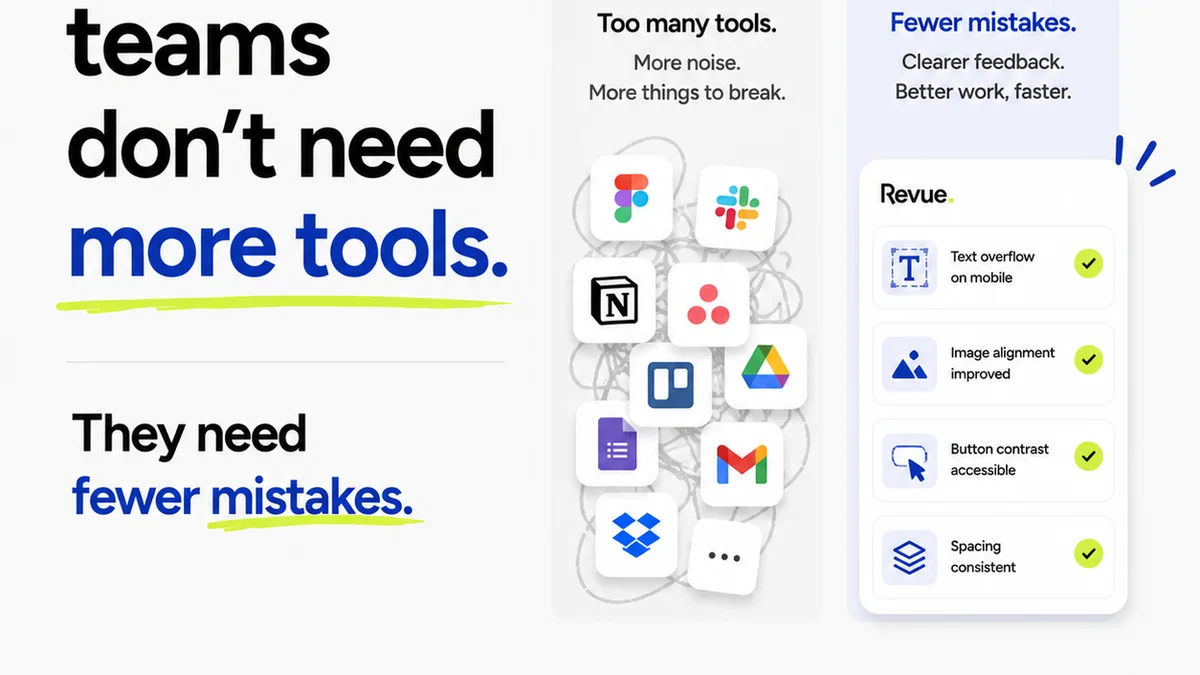
Everyone thinks they know how to conduct a design review. You gather stakeholders, point out what you like and don't like, and send it back for revisions. Simple, right?
Wrong. That’s the surface-level understanding. The real problem with most design reviews isn't the feedback itself, but the broken system that generates and manages it. This leads to endless cycles, missed deadlines, and frustrated teams.
1. The 'Gut Feeling' Trap
The biggest mistake? Relying on subjective opinions disguised as objective feedback. People say, "It just doesn't feel right," or "I don't like the color." This is useless.
Design decisions should be grounded in strategy, user needs, and brand guidelines. Without that framework, feedback becomes a popularity contest, leading to designs that satisfy no one and achieve no goals.
Symptoms of the Gut Feeling Trap:
- Vague, unspecific comments.
- Feedback that contradicts previous decisions.
- Decisions based on personal preference, not project goals.
- Endless, circular revisions.
The hard truth is that design is a discipline, not just an aesthetic pursuit. Reviews must assess work against defined criteria, not just fleeting impressions.
2. The 'Too Many Cooks' Deluge
Inviting everyone to the review party is a common, yet disastrous, approach. More feedback seems better, but it usually means more noise.
When you have too many stakeholders with differing opinions, the feedback becomes diluted and contradictory. The designer is left trying to appease a crowd, often leading to a compromised, mediocre outcome.
This isn't about excluding people; it's about curating the feedback loop. Identify the key decision-makers and subject matter experts. Their input is crucial. Others can be informed or consulted on specific aspects.
How to Streamline Stakeholder Input:
- Define clear roles for each reviewer (e.g., strategic approval, technical feasibility, brand alignment).
- Limit the number of direct feedback providers per round.
- Establish a single point of contact for consolidating feedback.
3. The 'Black Hole' Feedback Loop
You've gathered feedback. Now what? If it disappears into an email chain or a shared document without clear action, you have a black hole.
This is where many creative agencies and in-house teams fail. Feedback is given, but it's not tracked, assigned, or verified. Revisions are made, but there's no clear record of what changed or why.
This lack of visibility is a major time and money drain. It leads to duplicated effort, missed revisions, and the dreaded "we already discussed this" arguments.
Consequences of a Black Hole Process:
- Lost revisions and repeated work.
- Lack of accountability for feedback provided.
- Difficulty in tracking project progress and version history.
- Erosion of trust between teams and clients.
4. The 'Revision Roulette' Gamble
This is the chaotic aftermath of the 'gut feeling' and 'black hole' mistakes. Without clear direction, revisions become a game of chance.
Designers are given a laundry list of changes, often without context or prioritization. They make the changes, and then the cycle repeats, often with new, conflicting feedback.
This isn't efficient iteration; it's operational paralysis. It kills morale and burns through budgets with little to show for it.
The goal isn't just to revise; it's to iterate intelligently towards a defined objective.
5. The 'No Clear Definition of Done' Blunder
When does a design review actually end? For many, it's never truly over. There's no objective benchmark for sign-off.
A successful review process has a clear definition of 'done'. This means the design meets all strategic requirements, technical specifications, and brand standards. It’s not just about client approval; it’s about readiness.
Without this, projects can linger indefinitely, subject to "one last tweak" that never ends.
Establishing 'Done':
- Define project success metrics upfront.
- Create a comprehensive checklist based on project requirements.
- Ensure all feedback aligns with these defined criteria before final approval.
Where Revue Fits In
Managing design feedback and revisions effectively requires more than just good intentions. It demands a structured workflow.
Revue is built to eliminate these common design review mistakes. It centralizes all client feedback, comments, and approvals in one place. This means no more digging through endless email threads or scattered documents.
With Revue, you can:
- Centralize Feedback: All comments and annotations are tied directly to the creative asset.
- Manage Revisions: Track every version and iteration, ensuring clarity on what changed and why.
- Streamline Approvals: Get clear sign-offs from stakeholders, reducing ambiguity and delays.
- Maintain Visibility: Everyone on the team and the client side sees the same, up-to-date information.
This structure transforms chaotic review processes into predictable, efficient workflows. It ensures that feedback is actionable, revisions are tracked, and projects move toward a clear 'definition of done'.
Design Review Checklist
Use this checklist to assess and improve your current design review process. Are you falling into any of these traps?
- Strategy First: Is feedback tied to defined project goals and strategy?
- Clear Roles: Are reviewer roles and responsibilities clearly defined?
- Limited Input: Is the number of primary reviewers managed effectively?
- Centralized Platform: Is all feedback and communication happening in a single, accessible location?
- Actionable Feedback: Is feedback specific, objective, and constructive?
- Version Control: Are all revisions clearly tracked and documented?
- Defined 'Done': Is there a clear, agreed-upon set of criteria for final approval?
- Stakeholder Alignment: Are all key stakeholders aligned on the project objectives and the review process?
- Accountability: Is there clear accountability for providing and acting on feedback?
- Efficiency Metrics: Are you tracking review cycles and revision times to identify bottlenecks?
Final Thought
The true cost of a bad design review isn't just wasted hours or budget. It's the diluted creative vision and the eroded trust between teams and clients.
Are your design reviews a bottleneck, or are they a catalyst for better creative work?
Frequently asked questions
What is the biggest mistake in design reviews?
The biggest mistake is relying on subjective 'gut feelings' rather than objective criteria tied to project strategy and goals. This leads to vague feedback, endless revisions, and compromised designs.
How can I avoid too many cooks in a design review?
Streamline the process by defining clear roles for each stakeholder. Limit the number of direct feedback providers per round and establish a single point of contact for consolidating feedback to avoid conflicting opinions.
What is a 'black hole' feedback loop?
A 'black hole' feedback loop occurs when feedback is given but not tracked, assigned, or verified, often disappearing into email chains. This leads to lost revisions, duplicated effort, and a lack of accountability.
How do I define 'done' for a design review?
Establish a clear definition of 'done' by setting objective benchmarks upfront. This means the design meets all strategic requirements, technical specifications, and brand standards, not just subjective client approval.
How can a tool like Revue help with design reviews?
Revue centralizes feedback, manages revisions with version control, and streamlines approvals, eliminating the chaos of scattered communication. It provides visibility for all stakeholders and ensures feedback is actionable, leading to more efficient workflows.