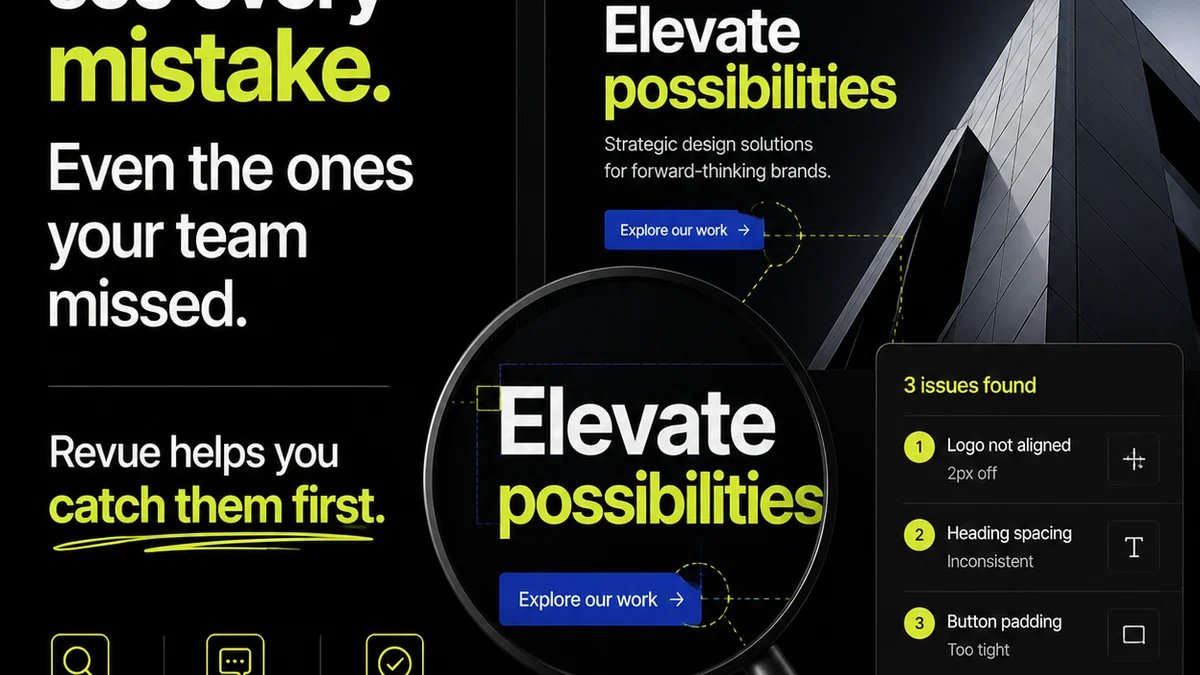
Everyone agrees a design review process is essential. You’ve probably heard you need clear briefs, defined stakeholders, and maybe a feedback checklist. None of that is wrong. But it’s incomplete.
The hard truth? Most design review processes are built on wishful thinking, not operational reality. They assume good intentions and perfect communication. They break down because they don’t account for human nature, project chaos, or the simple friction of moving files around.
A truly effective design review process isn’t just about collecting feedback; it’s about structuring the *entire* creative lifecycle to minimize misinterpretation, accelerate decisions, and ensure quality. It’s about building a system, not just a set of guidelines.
1. The Myth of 'Just Send It Over'
The biggest killer of design review processes is the idea that it’s a discrete, one-time event. You finish a draft, you send it. People comment. You revise. Send again.
This is not a process. It’s a ping-pong match with fuzzy rules.
A real process integrates reviews at every stage, not just at the end. It acknowledges that feedback isn’t just about *what* to change, but *why*, and *who* is authorized to make that call.
The Symptoms of a Broken Review
- Endless rounds of revisions with no clear end in sight.
- Conflicting feedback from different stakeholders.
- Missed deadlines due to unexpected feedback delays.
- Creative teams feeling demoralized by vague or contradictory critiques.
- Clients feeling unheard or frustrated by the revision process.
- A lack of clarity on who has the final say.
These aren't minor annoyances. They are symptoms of a fundamental flaw in how you manage creative feedback and approvals.
2. Define Your Review Gates
Think of your design project not as a single deliverable, but as a series of gates. Each gate represents a point where work is formally reviewed and approved before moving to the next stage.
This isn't about adding bureaucracy; it's about building checkpoints to catch issues early, when they are cheapest and easiest to fix.
Common Review Gates in Design
- Concept/Ideation Review: Early stage, high-level feedback on direction.
- Wireframe/Structure Review: Focus on layout, user flow, and information architecture.
- Mockup/Visual Design Review: Feedback on aesthetics, branding, and UI elements.
- Content Review: Ensuring copy is accurate, on-brand, and meets requirements.
- Usability/QA Review: Testing functionality, identifying bugs, and checking against requirements.
- Final Approval: The sign-off before launch or handover.
Each gate needs clear objectives, defined participants, and specific deliverables.
Who Needs to Be There?
Not everyone needs to review everything. Identify your key players for each gate:
- Creative Lead/Director: Ensures brand consistency and quality standards.
- Project Manager: Tracks progress, manages scope, and ensures alignment with client goals.
- Client Stakeholder(s): The ultimate decision-makers, providing business context and final approval.
- Subject Matter Experts (SMEs): For technical accuracy or specific domain knowledge.
- Development Team: For feasibility checks early on.
Involve the right people at the right time. Too many cooks spoil the broth, but too few leave important ingredients out.
3. Standardize Your Feedback Capture
Vague feedback is the enemy of efficient revisions. “Make it pop more” or “I don’t like the colors” are useless on their own.
Your process must mandate clarity. This starts with how feedback is collected and structured.
Make Feedback Actionable
- Require Specificity: Feedback should point to exact elements and explain the impact of the suggested change.
- Context is Key: Why is this change needed? Does it align with project goals or user needs?
- Separate Opinion from Requirement: Distinguish between subjective preferences and objective requirements.
- Centralize Everything: Feedback shouldn't live in scattered emails, Slack messages, or random documents.
When feedback is captured consistently, the creative team can address it efficiently. When it’s chaotic, they’re left guessing.
4. Establish Clear Approval Workflows
Feedback is one thing. Approval is another. A design review process must have a clear path for final sign-off.
Who gives the final approval? What happens if they don't respond within a certain timeframe? What constitutes a 'no' versus a 'request for revision'?
The Approval Chain
Map out the hierarchy of decision-making. For client projects, this means understanding who on the client side has the ultimate authority.
For internal reviews, it might be the Creative Director or Head of Design.
A common mistake is assuming everyone involved has equal authority. They don't.
Timeboxing Feedback and Approvals
Set clear deadlines for feedback and approvals at each gate. If feedback isn't provided by the deadline, you have a few options:
- Proceed based on the feedback received.
- Proceed with the assumption that the absent reviewer approves.
- Escalate to a designated decision-maker.
This prevents projects from stalling indefinitely. It forces timely engagement.
5. Document Everything
Your process document is your single source of truth. It should be accessible to everyone involved in a project.
This document should cover:
- The purpose and goals of the design review process.
- The different review gates and their objectives.
- Who participates in each review and their roles.
- How feedback should be provided (format, tools, required detail).
- The approval workflow and decision-making hierarchy.
- Timelines for feedback and approvals.
- Escalation procedures for disagreements or delays.
Don't let your process live only in people's heads. Write it down. Refer to it often.
Where Revue Fits In
Managing this entire workflow manually is a recipe for disaster. Scattered feedback, version control nightmares, and unclear approval statuses drain creative energy and client trust.
Revue is built to solve these exact problems. It provides a centralized platform for all your creative assets and feedback.
- Centralized Feedback: All comments, annotations, and discussions live directly on the creative asset, eliminating scattered emails and messages.
- Clear Revision History: Track every version, every change, and every feedback iteration. No more confusion about which version is the latest.
- Streamlined Approvals: Designate reviewers and approvers, set deadlines, and track approval status in real-time. Get clear sign-offs without the back-and-forth.
- Quality Assurance: Ensure all feedback and revisions align with project requirements before final delivery.
By structuring your reviews and centralizing communication, you move from reactive chaos to proactive control.
6. Iterate and Refine Your Process
No process is perfect out of the box. The real strength of a design review system lies in its ability to adapt.
After each project, or at regular intervals, conduct a retrospective:
- What worked well in our review process?
- What caused friction or delays?
- Were the feedback loops efficient?
- Were approvals clear and timely?
- What adjustments can we make for the next project?
Treat your process itself as a design project. It needs user testing (your team and clients), iteration, and continuous improvement.
Final Thought
A robust design review process isn't about slowing things down; it's about speeding up the *right* things. It’s about ensuring creative excellence by building clarity, accountability, and efficiency into every step. Are you building a process, or just collecting comments?
Frequently asked questions
What are the key stages of a design review process?
A typical design review process includes stages like Concept Review, Wireframe Review, Visual Design Review, Content Review, Usability/QA Review, and Final Approval. Each stage has specific objectives and requires input from defined stakeholders.
How can I ensure feedback is specific and actionable?
Mandate that feedback includes specific references to design elements, explains the 'why' behind the suggestion, and ideally distinguishes between subjective preference and objective requirements. Centralizing feedback also helps maintain context.
What is the role of approvals in a design review process?
Approvals are the formal sign-off at critical stages, indicating that the work meets requirements and can proceed. A clear approval workflow defines who has final authority and what constitutes an approval versus a revision request.
How often should a design review process be updated?
Your design review process should be treated as a living document. It's beneficial to conduct retrospectives after major projects or at regular intervals (e.g., quarterly) to identify what's working and what needs refinement based on team and client experiences.