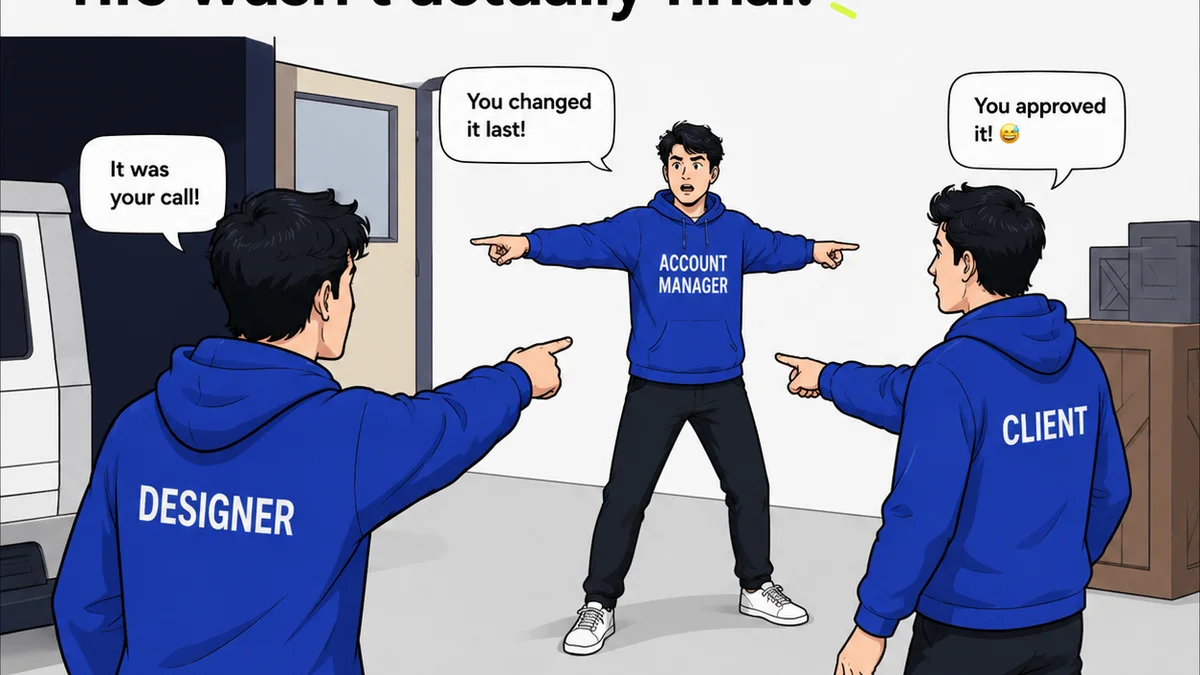
Everyone agrees that a good design review process is crucial for agency success. You’ve probably heard it a million times: establish clear goals, define roles, use the right tools. None of that is wrong. But it’s incomplete.
The hard truth is that most design review processes fail not because of a lack of structure, but because they ignore the human element and the inherent friction in creative collaboration. They become bottlenecks, not bridges.
In 2026, your design review process needs to be more than just a checklist. It needs to be a dynamic system that fosters clarity, accountability, and efficiency. Let's break down how to build one that actually works.
1. Define
Frequently asked questions
What are the key stages of a design review process?
Typically, a design review process involves stages like initial concept review, iterative feedback rounds on specific deliverables, a pre-production review, and a final approval sign-off. Each stage should have clear objectives and defined deliverables.
How can I reduce the number of design revisions?
Reduce revisions by ensuring a clear brief upfront, involving stakeholders early and often, centralizing feedback to avoid conflicting comments, and setting strict limits on the number of revision rounds allowed per project phase. Educating clients on the process also helps manage expectations.
What is the role of technology in a design review process?
Technology can automate workflows, centralize communication and feedback, track version history, and provide clear audit trails. Tools like Revue are designed to streamline these aspects, making the process more efficient and transparent.
How do you handle subjective feedback during design reviews?
Subjective feedback is best handled by grounding it in the original brief and project goals. If feedback is purely aesthetic without strategic justification, it's the project lead's role to question its relevance and impact on the objectives. Documenting the rationale behind design decisions is key.