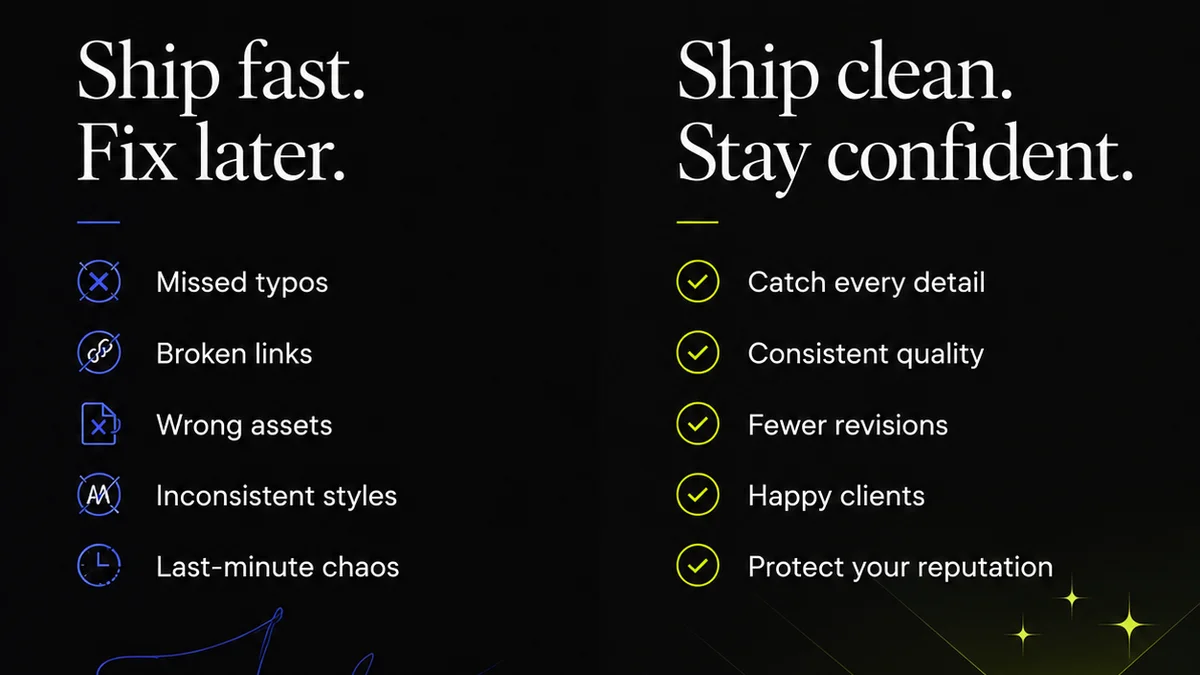
Everyone talks about design reviews. They say it’s about catching errors before launch. Or ensuring brand consistency.
None of that is wrong. But it’s incomplete.
The hard truth is, a truly effective design review process is less about policing and more about amplifying. It’s the engine that drives clarity, alignment, and ultimately, better creative output. Without one, you’re just hoping for the best. And hope is a terrible project management tool.
1. The Real Purpose of Design Reviews
Too many teams treat design reviews like a final gate. A hurdle to jump. This mindset is flawed.
A good design review process starts early and iterates often. It’s not a single event, but a continuous conversation woven into the project lifecycle.
Its core purpose is to:
- Ensure alignment with project goals and client objectives.
- Surface potential issues *before* they become costly problems.
- Provide clear, actionable feedback that moves the work forward.
- Foster collaboration between designers, stakeholders, and clients.
- Validate that the design meets technical and usability standards.
Think of it as a collaborative problem-solving session, not a judgment day.
2. Common Pitfalls to Avoid
You know a bad review when you see one. The feedback is vague. The comments are contradictory. The designer is left more confused than before.
These aren’t accidents. They’re symptoms of broken processes.
Here are the most common traps:
- Vague Feedback: Comments like “I don’t like it” or “Make it pop more” are useless. Feedback must be specific and tied to objectives.
- Comment Overload: Too many cooks spoil the broth. Unfiltered feedback from everyone can create chaos.
- Late Reviews: Waiting until the end of a sprint to review work means significant rework if major issues are found.
- No Clear Ownership: Who is responsible for giving feedback? Who consolidates it? Who makes the final call?
- Focusing on Aesthetics Only: Great design solves problems. Reviews that only touch on looks miss the strategic impact.
- Unstructured Communication: Relying on scattered emails, Slack messages, or ad-hoc meetings leads to lost feedback and missed details.
These issues kill momentum and breed frustration. They turn reviews into roadblocks.
3. Designing Your Design Review Process
Building a robust process requires intentionality. You need to define the steps, the roles, and the tools.
3.1. Define Your Review Stages
Not all reviews are created equal. Tailor the process to the project phase.
- Concept/Wireframe Review: Focus on structure, user flow, and information architecture. Is the core idea sound?
- Mid-Fidelity/Prototype Review: Evaluate usability, interaction design, and content hierarchy. Does it work as intended?
- High-Fidelity/Visual Design Review: Assess brand alignment, visual appeal, micro-interactions, and overall polish. Does it look and feel right?
- Pre-Production/Final Review: Final check for consistency, accuracy, technical readiness, and adherence to specifications. Is it ready to go?
3.2. Assign Clear Roles and Responsibilities
Who does what? This is critical for efficiency.
- The Presenter: Usually the designer or project lead, responsible for clearly articulating the design and its rationale.
- The Reviewers: Stakeholders, clients, subject matter experts who provide feedback. Limit this group to key decision-makers.
- The Synthesizer/Moderator: Often the project manager or creative lead. This person collects, clarifies, and consolidates feedback, ensuring it’s actionable and prioritized.
- The Decision-Maker: The individual with the final authority to approve or reject the design based on consolidated feedback.
3.3. Establish Feedback Protocols
How should feedback be given? Make it structured.
- Be Specific: Reference exact elements, screens, or user flows.
- Be Actionable: Suggest concrete changes or ask clarifying questions that lead to solutions.
- Be Objective: Ground feedback in project goals, user needs, or brand guidelines, not personal preference.
- Use a Centralized Platform: Avoid scattered comments. Use a tool where feedback can be logged, tracked, and resolved.
3.4. Set Review Cadence and Timing
When do reviews happen? Integrate them naturally.
Avoid “big bang” reviews. Schedule smaller, more frequent check-ins. This allows for early course correction and prevents major surprises late in the project.
Consider:
- Daily stand-ups for quick syncs.
- Weekly sprint reviews for substantive feedback.
- Milestone reviews at key project phases.
4. The Design Review Checklist
Use this as a starting point. Adapt it to your specific project needs.
Pre-Review Checklist (for Presenter)
- Is the design clearly articulated with its goals?
- Are the specific areas for feedback highlighted?
- Are there any constraints or known issues to disclose?
- Is the review session time-boxed appropriately?
- Are the correct stakeholders invited?
During-Review Checklist (for Reviewers & Moderator)
- Is the feedback specific and actionable?
- Is feedback tied to project objectives or user needs?
- Are aesthetic comments justified with rationale?
- Are potential technical or usability issues flagged?
- Is consensus being reached, or are blockers identified?
- Is feedback being logged in a central place?
Post-Review Checklist (for Presenter & Moderator)
- Has all feedback been consolidated and clarified?
- Are action items clearly defined with owners and deadlines?
- Are decisions documented?
- Is the next review or iteration planned?
5. Where Revue Fits In
Managing feedback across multiple stakeholders, projects, and review stages can quickly become chaotic. Emails get lost. Comments in Slack disappear. Version control is a nightmare.
This is where a centralized platform like Revue becomes essential for a streamlined design review process.
Revue helps you:
- Centralize Feedback: All comments, annotations, and discussions live on the design asset itself. No more hunting through email chains or chat logs.
- Manage Revisions: Track every version of a design, see what changed, and which feedback was addressed in each iteration. This provides crucial context for reviewers and designers alike.
- Streamline Approvals: Clearly mark designs as approved or rejected, with clear audit trails. Everyone knows where things stand.
- Ensure Quality Checks: Use Revue’s structured feedback and versioning to conduct thorough final reviews, ensuring all requirements are met before delivery.
By bringing structure and visibility to the feedback loop, Revue transforms design reviews from a point of friction into a catalyst for better, faster creative work.
6. Final Thought
A well-oiled design review process isn’t just about efficiency; it’s about building trust. Trust between the creative team and stakeholders. Trust that the work is strategically sound and creatively excellent.
Are your design reviews building trust, or eroding it?
Frequently asked questions
What is the primary goal of a design review?
The primary goal is to ensure alignment with project objectives, surface potential issues early, provide clear and actionable feedback, foster collaboration, and validate that the design meets usability and technical standards, ultimately leading to better creative output.
How often should design reviews occur?
Design reviews should occur frequently and at multiple stages of the project. This includes concept reviews, mid-fidelity reviews, visual design reviews, and final pre-production checks, rather than relying on a single, late-stage review.
What makes feedback 'actionable' in a design review?
Actionable feedback is specific, objective, and provides clear direction. Instead of saying 'I don't like it,' an actionable comment might be, 'The call-to-action button on this screen is hard to find because it lacks contrast against the background. Consider increasing its saturation or adding a border.'
Who should be involved in a design review?
Key stakeholders, clients, subject matter experts, and the core creative team should be involved. However, it's crucial to limit the number of direct reviewers to key decision-makers to avoid conflicting feedback and streamline the process. Roles like presenter, reviewer, synthesizer, and decision-maker should be clearly defined.
How can a design review process be improved?
Improvement comes from defining clear stages, assigning specific roles, establishing feedback protocols (specificity, actionability, objectivity), setting a regular cadence for reviews, and utilizing a centralized platform for feedback and version control to ensure clarity and trackability.