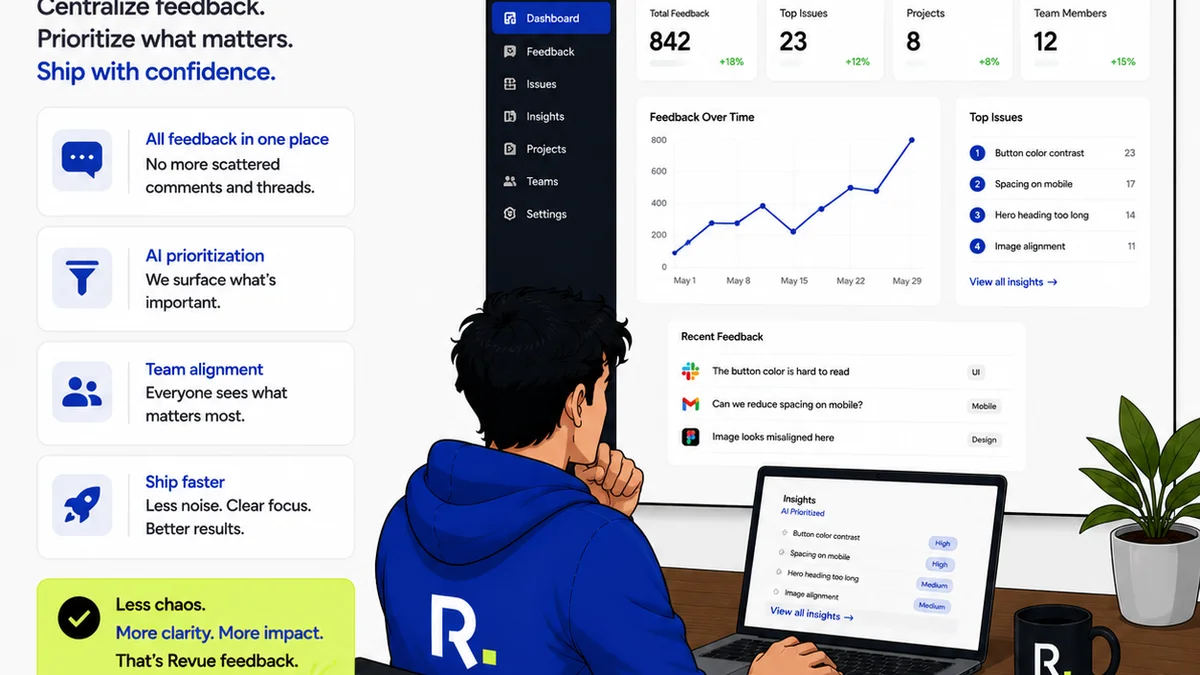
Everyone agrees that a robust design review process is crucial for enterprise teams. It’s the gatekeeper of quality, the shield against costly mistakes, and the engine of brand consistency. That's the common wisdom.
None of that is wrong. But it’s incomplete.
The deeper truth? A design review process isn't just about catching errors. It's about managing complexity, aligning stakeholders, and ensuring strategic goals are met through design. It’s a system, not a single meeting.
For enterprise teams, this means moving beyond ad-hoc feedback loops and embracing a structured, scalable approach. It requires clarity, accountability, and the right tools.
1. Defining the Purpose: Beyond Aesthetics
What's the *real* point of a design review in a large organization? Most people would say 'to ensure quality' or 'to check for brand compliance'.
Those are outcomes, not the core purpose. The purpose of a design review for enterprise teams is to:
- Mitigate risk: Financial, legal, reputational.
- Ensure strategic alignment: Does the design support business objectives?
- Optimize resources: Prevent rework by catching issues early.
- Facilitate collaboration: Bring diverse perspectives together constructively.
- Drive adoption: Ensure the end product is usable and desirable.
When you frame reviews around these strategic pillars, their importance shifts from a tactical chore to a business necessity. This reframing is key to getting buy-in and resources.
Understanding Stakeholder Needs
Every stakeholder has a different lens. Legal worries about compliance. Marketing focuses on brand messaging. Engineering considers technical feasibility. Product management looks at user needs and business goals.
A good process anticipates these diverse needs and provides structured ways for each group to contribute effectively without derailing the project.
The Cost of Poor Reviews
Think about the enterprise project that went sideways. Often, the root cause is a breakdown in communication or a lack of clear checkpoints during the design phase. Rework, missed deadlines, and even product failures can be traced back to insufficient or ineffective design review.
2. Mapping the Workflow: From Brief to Launch
A design review process isn't a single event; it's a series of checkpoints woven into the entire project lifecycle. You need to map out where and when reviews happen.
Consider these stages:
Concept & Strategy Review
Before any pixel is pushed, is the core concept sound? Does it align with the brief and business objectives? This review involves:
- Reviewing the problem statement and proposed solution.
- Assessing alignment with user research and market analysis.
- Validating the strategic direction.
This is where you prevent building the wrong thing.
Design Iteration Reviews
As designs evolve, they need regular check-ins. These aren't for final sign-off but for course correction.
- Focus on specific design elements or user flows.
- Gather targeted feedback from relevant team members.
- Track changes and decisions made.
This is where you refine the execution.
Pre-Production Readiness Review
Just before handing off to development or production, a thorough check is essential.
- Verify adherence to specifications and style guides.
- Confirm accessibility standards are met.
- Conduct a final check against the original brief and objectives.
This is where you ensure it's ready to be built.
Post-Launch Review
The process doesn't stop at launch. What can be learned?
- Analyze user feedback and performance data.
- Identify areas for future improvement.
- Document lessons learned for the next project.
This is where you improve for next time.
Visualizing the Flow
A visual workflow, perhaps on a whiteboard or a project management tool, helps everyone understand the process. It clarifies:
- Who needs to review what.
- When their input is needed.
- What the output of each review stage is.
Clarity here reduces confusion and delays.
3. Establishing Roles and Responsibilities
Who owns the review process? Who provides feedback? Who makes the final decision?
Ambiguity here is a recipe for disaster. Clear roles prevent scope creep and ensure accountability.
The Review Facilitator
This person (or role) is crucial. They:
- Schedule reviews.
- Prepare materials.
- Guide the discussion.
- Document feedback and decisions.
- Ensure action items are assigned and tracked.
This role is often a project manager, a design lead, or a dedicated QA specialist.
The Feedback Providers
These are the subject matter experts and stakeholders who offer input. Their feedback should be:
- Constructive and actionable.
- Focused on the review stage's objectives.
- Delivered within agreed-upon timelines.
Set clear expectations for the *type* and *quality* of feedback required.
The Decision Maker(s)
In enterprise settings, there might be multiple decision-makers or a single ultimate approver. This needs to be explicit.
- Who has the authority to approve the design?
- What are the criteria for approval?
- What happens if consensus can't be reached?
Define escalation paths for unresolved disagreements.
The Design Owner
The designer or design team responsible for implementing the feedback and making revisions. They need to understand:
- The feedback received.
- The decisions made.
- The rationale behind them.
This ensures they can execute revisions effectively.
4. Crafting Effective Feedback Guidelines
Feedback is only useful if it's clear, constructive, and focused. This is especially true in enterprise environments where feedback can come from many disparate sources.
Establish clear guidelines for providing feedback:
- Be specific: Instead of “I don’t like this,” say “The button contrast ratio on the checkout page doesn’t meet WCAG AA guidelines.”
- Be objective: Ground feedback in data, user research, or established principles, not personal preference.
- Be actionable: Suggest a clear path forward or ask clarifying questions that lead to a solution.
- Be timely: Provide feedback within the agreed-upon review window.
- Focus on the goal: Does the feedback help achieve the project’s objectives?
These guidelines should be communicated to all participants and reinforced by the review facilitator.
The Feedback Matrix
A simple matrix can help categorize feedback:
- Must Fix: Critical issues that block progress or pose significant risk (e.g., legal non-compliance, critical bug).
- Should Fix: Important issues that significantly impact usability or business goals but aren't showstoppers.
- Could Fix: Nice-to-haves, minor aesthetic improvements, or suggestions that are outside the current scope.
This helps prioritize revisions and manage scope.
Documenting Decisions
Every review should result in documented decisions. This prevents
Frequently asked questions
What are the key stages of an enterprise design review process?
Key stages typically include Concept & Strategy Review, Design Iteration Reviews, Pre-Production Readiness Review, and Post-Launch Review. Each stage has a specific purpose and set of participants.
Who should be involved in a design review for enterprise teams?
Involvement depends on the stage, but typically includes designers, product managers, engineering leads, marketing, legal, and potentially executive stakeholders. Clear roles and responsibilities are essential to avoid confusion.
How can enterprise teams ensure feedback is actionable?
Establish clear feedback guidelines emphasizing specificity, objectivity, and actionability. Use a feedback matrix to categorize input (e.g., Must Fix, Should Fix, Could Fix) to prioritize revisions effectively.
What is the role of a design review facilitator?
The facilitator schedules reviews, prepares materials, guides discussions, documents feedback and decisions, and ensures action items are assigned and tracked. They are key to keeping the process efficient and on track.