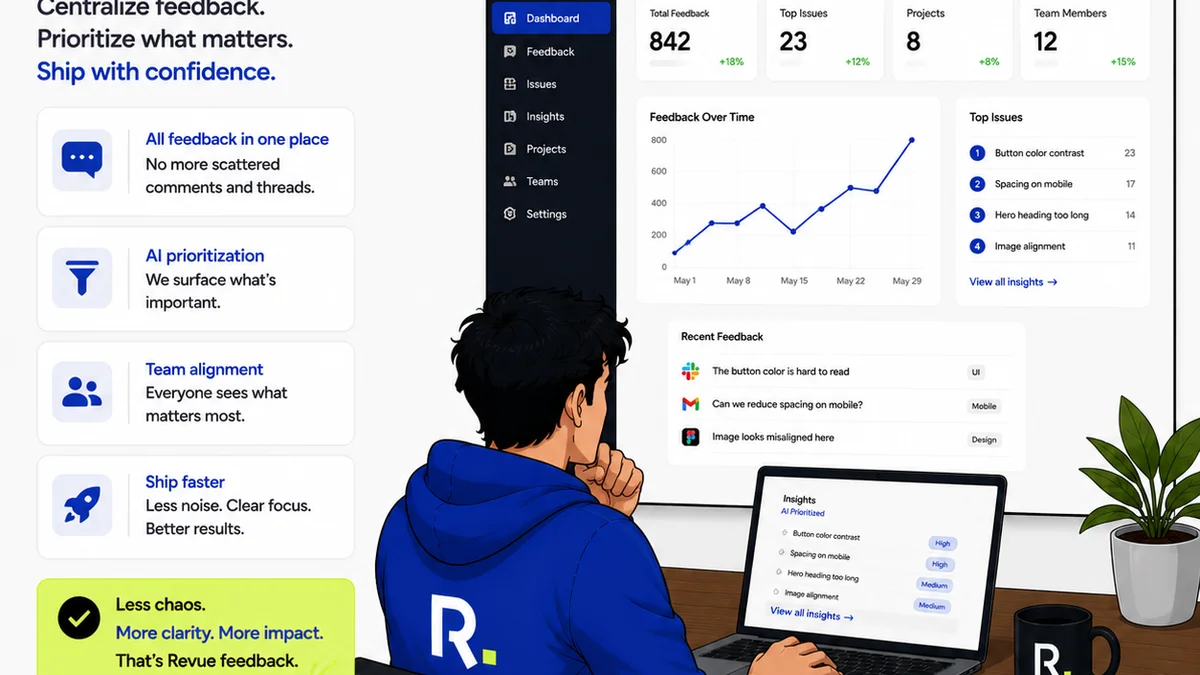
Everyone knows you need design review software. You've probably heard it's about faster approvals, fewer emails, and keeping clients happy. None of that is wrong. But it’s incomplete. It misses the core operational challenge: unstructured feedback killing your creative momentum.
The hard truth? Most design review software doesn't solve the *real* problem. It just digitizes the chaos.
1. The Feedback Black Hole
Think about a typical design review. A client gets a link. They scribble notes, send emails, reply-all to threads, or even resort to phone calls. Information gets lost. Context evaporates. Revisions become a guessing game.
This isn't a communication breakdown. It's a workflow breakdown.
Common Symptoms:
- Endless
Frequently asked questions
What is the primary benefit of using design review software?
The primary benefit is streamlining the feedback and approval process, reducing miscommunication, and ensuring all stakeholders are on the same page, leading to faster project completion and higher quality output.
How does design review software improve client communication?
It centralizes all feedback in one place, providing a clear, documented history of comments and revisions. This eliminates scattered emails and phone calls, making communication more efficient and transparent for the client.
Can design review software help with version control?
Yes, most robust design review platforms offer version control, allowing you to track different iterations of a design, compare them, and ensure everyone is reviewing the latest version, preventing confusion and rework.
Is design review software only for large agencies?
No, design review software is beneficial for agencies and in-house teams of all sizes. Even small teams can save significant time and reduce errors by centralizing feedback and approvals.