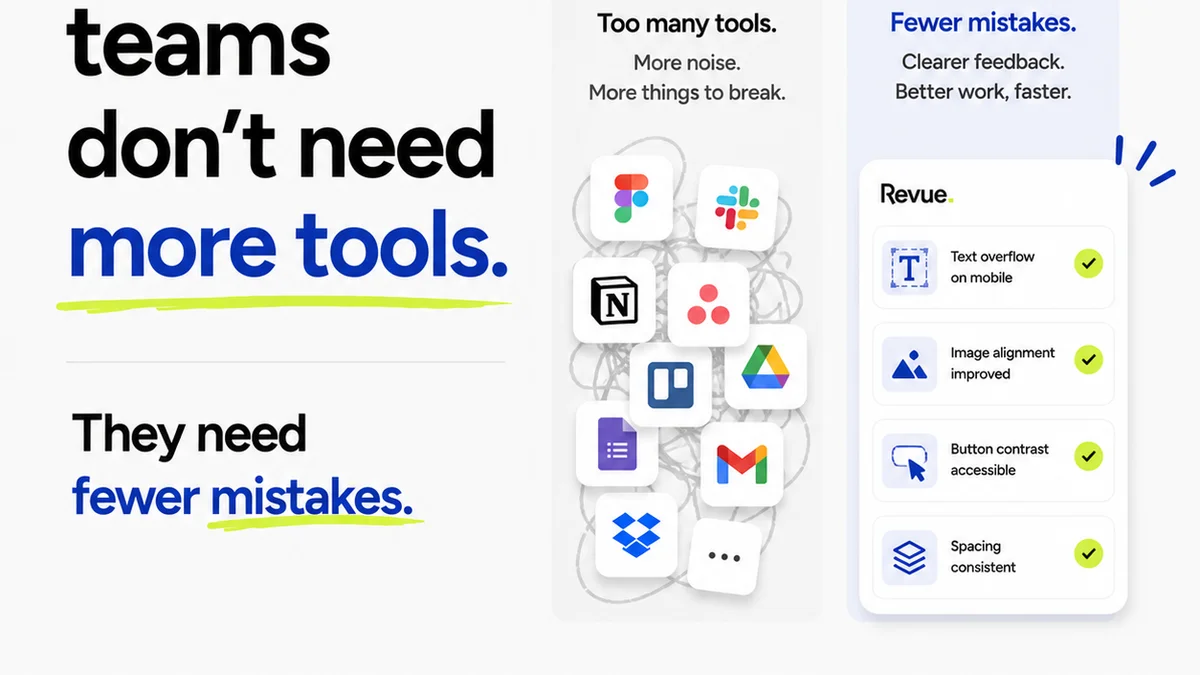
Everyone assumes the best design review software for enterprise teams is about faster approvals. Upload a file, get comments, approve. Simple, right?
None of that is wrong. But it’s incomplete.
The hard truth for enterprise creative teams is that true efficiency isn't about speeding up individual reviews. It’s about managing the entire feedback loop, from initial brief to final sign-off, across dozens of stakeholders and multiple complex projects. It’s about visibility, accountability, and ensuring quality at scale.
1. Beyond Basic Annotation: The Need for Structured Feedback
Sure, basic annotation tools are table stakes. You need to draw a box around something and type a comment. But for enterprise teams, this is where most tools fall short.
Think about it: how many times have you seen feedback like:
- “Make it pop more.”
- “I don’t like the color.”
- “This feels off.”
This isn’t actionable feedback. It’s noise. Good design review software needs to enable structure.
Centralized Communication Hubs
Enterprise projects involve layers of stakeholders: clients, legal, marketing, product managers, executives. Each has a role, and often, a unique way of communicating. The software must act as a single source of truth for all creative discussions, not a fragmented email chain or a Slack thread that gets lost.
Version Control and Revision History
When you’re dealing with multiple rounds of revisions, tracking changes is paramount. You need to see exactly what changed between versions, who requested it, and why. This prevents the dreaded “who moved that pixel?” scenario and ensures everyone is working from the latest approved iteration.
Clear Assignment and Accountability
Who is responsible for providing feedback? Who needs to approve? Who is implementing the changes? Enterprise tools must facilitate clear assignment of tasks and responsibilities. This moves beyond passive commenting to active participation and accountability.
2. Managing Stakeholder Complexity at Scale
Enterprise environments are inherently complex. Projects involve multiple departments, global teams, and often, external agencies. The design review process needs to accommodate this complexity without breaking down.
Role-Based Permissions and Workflows
Not everyone needs to see everything, and not everyone has the same level of authority. Enterprise-grade software allows for granular control over who can view, comment, approve, and manage projects. Custom workflows can ensure that feedback follows the correct channels – for example, legal review before client sign-off.
Integration with Existing Ecosystems
Enterprise teams rarely operate in a vacuum. Your design review tool needs to play nice with your existing tech stack. Integrations with project management tools (like Asana, Jira), cloud storage (Google Drive, Dropbox), and communication platforms (Slack) streamline workflows and reduce manual data transfer.
Onboarding and Adoption
With a large number of users, ease of use and effective onboarding are critical. If the tool is too complex, adoption rates will plummet, defeating the purpose. The best software offers intuitive interfaces and clear training resources.
3. Ensuring Quality and Compliance
Beyond aesthetics, enterprise projects often have strict quality and compliance requirements. Design review software can play a crucial role in meeting these standards.
Automated Quality Checks
While human review is essential, automated checks can catch common errors early. This could include things like:
- Pixel-perfect comparisons against mockups.
- Checking for broken links or missing alt text.
- Ensuring adherence to brand guidelines (color palettes, typography).
- Accessibility checks against standards like WCAG.
These automated checks, when integrated into the review process, save significant time and reduce the risk of costly errors.
Brand Consistency and Governance
Maintaining brand consistency across countless assets and touchpoints is a major challenge for enterprises. Review tools can help by providing a central repository of approved brand assets and ensuring that all creative output aligns with established guidelines.
Audit Trails and Compliance Documentation
In regulated industries, meticulous record-keeping is non-negotiable. A robust design review platform provides a clear audit trail of all feedback, decisions, and approvals, serving as essential documentation for compliance purposes.
Where Revue Fits In
Managing the feedback and approval process for enterprise creative work is a monumental task. It requires more than just a digital whiteboard or a shared folder.
Revue is built to tackle these complexities head-on. It provides a centralized hub for all client feedback, ensuring that every comment, revision, and approval is logged, tracked, and visible to the right people. This eliminates the chaos of scattered communications and provides a clear, auditable history of the creative process.
For enterprise teams, this means:
- Centralized Feedback: All comments and discussions live in one place, linked to specific project assets.
- Revision Management: Easily track iterations, compare versions, and manage approvals with clear status indicators.
- Quality Oversight: Ensure that feedback is actionable and that final deliverables meet project requirements and brand standards.
Revue streamlines the workflow, reduces ambiguity, and empowers creative teams to deliver exceptional work, efficiently and compliantly.
4. The Hidden Cost of Inefficient Reviews
Many organizations underestimate the true cost of poor design review processes. It’s not just about wasted time; it’s about missed opportunities and damaged relationships.
Project Delays and Budget Overruns
Every extra round of revisions, every misunderstood comment, adds hours to project timelines and eats into budgets. For enterprise projects, these small inefficiencies compound into significant financial impacts.
Client Dissatisfaction and Lost Business
When clients feel their feedback isn’t heard or that the process is chaotic, trust erodes. This can lead to strained client relationships, lost repeat business, and negative word-of-mouth.
Team Burnout and Frustration
Creative teams are often the ones bearing the brunt of inefficient review processes. Constant back-and-forth, unclear direction, and endless revisions lead to burnout, decreased morale, and high turnover.
Reputational Damage
In the enterprise world, reputation is everything. Consistently missing deadlines or delivering subpar work due to internal process failures can tarnish a brand’s image.
5. Selecting the Right Enterprise Solution
Choosing the best design review software for enterprise teams isn't about picking the tool with the most features. It’s about finding the one that best solves your specific workflow challenges at scale.
Scalability and Performance
Can the platform handle hundreds of users, thousands of assets, and complex project structures without slowing down? Enterprise solutions must be robust and performant.
Security and Compliance
For enterprise clients, data security and compliance are paramount. Ensure the software meets industry standards for data protection and privacy.
Customization and Flexibility
Can the tool be adapted to your unique workflows and processes? Look for options that allow for customization of user roles, permissions, and approval stages.
Reporting and Analytics
Insight into your review process can drive continuous improvement. The best tools offer reporting on review cycles, approval times, and common feedback types.
Final Thought
The goal of enterprise design review software isn't just to collect comments. It’s to build a bridge of clarity and accountability between creative teams and their stakeholders. Are your current tools enabling that bridge, or are they just adding more traffic to an already congested road?
Frequently asked questions
What makes design review software suitable for enterprise teams?
Enterprise-grade software offers scalability, robust security, role-based permissions, complex workflow management, and integration capabilities that go beyond basic annotation tools required for smaller teams.
How does design review software improve collaboration?
It centralizes feedback, provides version control, assigns clear responsibilities, and creates an auditable history of all communications, reducing miscommunication and ensuring everyone is on the same page.
Can design review software help with brand consistency?
Yes, by acting as a central repository for approved assets and guidelines, and by ensuring all creative output is reviewed against these standards, it helps maintain brand consistency across all projects.
What are the key benefits of using structured feedback in design reviews?
Structured feedback makes comments actionable, reduces ambiguity, speeds up the revision process, and ensures that the right decisions are made based on clear, objective input, rather than vague subjective opinions.