Everyone talks about design systems. They’re the hot new thing, the silver bullet for consistency, the ultimate collaboration tool. You see them everywhere, from massive tech companies to boutique agencies.
And none of that is wrong. But it’s incomplete.
The real power of a design system isn't just in its pretty UI components or its meticulously documented guidelines. It’s in what it *enables* operationally.
The hard truth is, a design system is only as good as the workflow it supports. If your process is broken, your design system will just be a beautiful, expensive bandage.
Leading agencies don't just *build* design systems; they *master* them. They embed them into their core operations. They treat them like the engine of their creative output, not just a decorative part.
1. Design Systems as Operational Blueprints
Think of a design system less as a library of UI elements and more as an operational blueprint for creative delivery.
It’s not just about how things *look*. It's about how things get *done*. How decisions are made. How feedback is incorporated. How quality is assured.
This operational mindset shifts the focus from mere aesthetics to systemic efficiency.
The Operational Shift
When you view a design system this way, several things change:
- Scope Expands: It’s not just UI. It includes processes, documentation standards, testing protocols, and even team onboarding.
- Ownership Deepens: It’s not just design’s problem. It’s engineering, product, and project management’s responsibility too.
- Value Becomes Tangible: ROI isn't measured in pixel perfection, but in reduced rework, faster time-to-market, and fewer client misunderstandings.
This is where the real competitive advantage lies. Not in having a design system, but in using it to run a tighter, more predictable business.
2. From Style Guide to Single Source of Truth
A common mistake is treating a design system like a glorified style guide. A static document that lives on a server, occasionally referenced, more often ignored.
Top agencies build systems that become the *single source of truth* for everything creative.
This means the system isn't just a reference; it's the active source from which everything is built and validated.
Key Components of a Living System
- Component Libraries: Not just visual designs, but coded components that are *the* building blocks.
- Usage Guidelines: Clear rules, but also *examples* of what works and what doesn't, with context.
- Brand Voice & Tone: Documented and integrated, not just a separate document.
- Accessibility Standards: Built-in from the ground up, not an afterthought.
- Performance Metrics: Guidelines for load times, interaction speed, etc.
- Content Strategy: How copy fits, patterns for different types of content.
When the system is the source of truth, inconsistencies become impossible. Revisions become faster because the core elements are already validated and built.
3. Embedding the System into Workflow
A design system is useless if it sits in a silo. Leading agencies weave it into the fabric of their daily operations.
This isn't a one-time setup. It's a continuous process of integration and refinement.
Workflow Integration Points
Where does it fit?
- Discovery & Strategy: Use the system's principles to define project scope and feasibility early on.
- Design & Prototyping: Designers work directly with system components, not from scratch.
- Development: Engineers pull directly from the coded component library.
- Client Feedback: Presenting work using system-approved patterns makes feedback clearer and more focused.
- QA & Testing: Automated checks against the system’s rules ensure consistency and quality.
- Post-Launch Iteration: New features or updates leverage existing patterns, ensuring brand cohesion.
This integration ensures that the design system isn't just a set of rules, but an active participant in every stage of the creative process.
4. The Feedback Loop: From Static to Dynamic
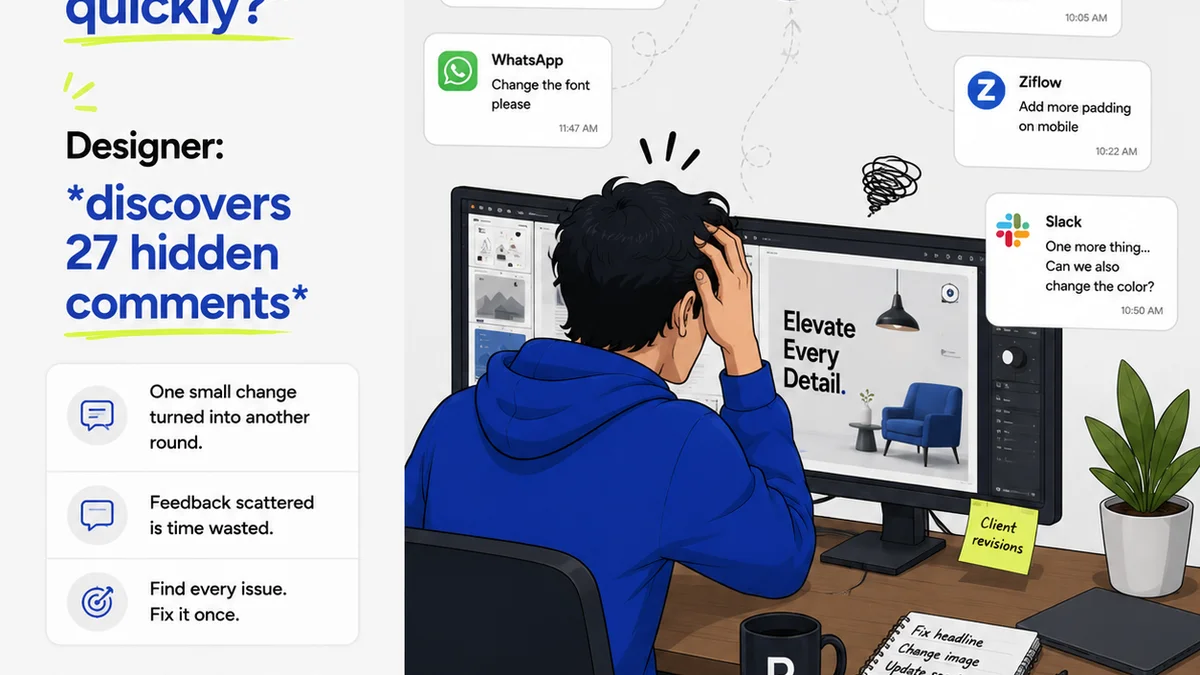
The biggest operational bottleneck in agencies? Client feedback. It’s often vague, contradictory, and leads to endless rounds of revisions.
A mature design system can transform this chaos into clarity.
When clients understand and approve the underlying system, their feedback becomes more targeted. They're critiquing the application of a pattern, not reinventing the wheel.
How Systems Improve Feedback
- Shared Language: The system provides a common vocabulary for discussing design elements.
- Contextual Revisions: Feedback is tied to specific components or patterns, making it easier to address.
- Reduced Scope Creep: Deviations from the system are immediately visible, prompting discussions about necessity.
- Faster Approvals: When clients trust the system, they approve more quickly.
This dynamic interaction turns feedback from a drag on productivity into a driver of focused improvement.
5. Where Revue Fits In
Managing client feedback, tracking revisions, and ensuring quality checks across multiple projects can feel like herding cats. Especially when the approved assets are scattered across emails, cloud drives, and Slack messages.
This is precisely where a robust workflow tool becomes indispensable, amplifying the value of your design system.
Revue helps agencies connect their carefully crafted design system to the messy reality of client collaboration.
Streamlining Operations with Revue
- Centralized Feedback: All client comments live on the asset itself, within the context of the revision. No more digging through email chains.
- Version Control Visibility: Clearly see every iteration, who approved what, and when. This transparency reduces disputes and speeds up approvals.
- Structured Review Cycles: Define clear steps for feedback, revisions, and final sign-off, all tied to your project timelines.
- Quality Assurance Checklists: Integrate your design system's rules and standards into actionable QA checklists that every team member can follow.
By centralizing the feedback and approval process, Revue ensures that your design system's principles are not just documented, but actively adhered to, project after project.
6. The Evolution: From System to Culture
The ultimate goal isn't just to *have* a design system, or even to *use* one. It's to let the principles of the design system permeate your agency's culture.
This means everyone, from the newest intern to the most senior strategist, understands and values the system's purpose.
It becomes the default way of working.
Cultivating a Systemic Mindset
- Onboarding: Make the design system a core part of training for all new hires.
- Internal Communication: Regularly discuss system updates, best practices, and successes.
- Recognition: Highlight teams or individuals who champion the system and its principles.
- Continuous Improvement: Actively solicit feedback on the system itself and iterate based on real-world usage.
When a design system becomes part of the culture, consistency and efficiency are no longer goals; they are the natural outcome.
Final Thought
A design system is a powerful tool. But like any tool, its effectiveness depends entirely on the skill of the craftsperson and the robustness of the workshop.
Are you building a beautiful artifact, or are you building an operational engine?
Frequently asked questions
What's the difference between a style guide and a design system?
A style guide primarily focuses on visual elements and branding. A design system expands on this by including coded components, interaction patterns, accessibility standards, and operational guidelines, serving as a single source of truth for both design and development.
How can a design system improve client feedback?
By establishing a clear set of approved patterns and components, a design system provides a common language for discussions. Client feedback becomes more contextual and focused on the application of established elements, rather than subjective preferences, leading to faster, more productive revisions.
Is a design system only for large agencies?
No. While large organizations often have mature systems, agencies of all sizes can benefit. Even a basic system can bring significant improvements in consistency and efficiency. The key is to start with what's manageable and scale as your needs grow.
How does Revue integrate with a design system?
Revue centralizes client feedback and revision tracking directly on assets. This process ensures that feedback is contextualized against your design system's components and guidelines, making it easier to manage approvals and maintain consistency throughout the project lifecycle.