Everyone says design systems are essential for enterprise creative teams. They talk about consistency, brand recognition, and faster design. None of that is wrong. But it’s incomplete.
The real value of a design system in a large organization isn't just aesthetic alignment. It's about streamlining complex workflows, reducing friction, and enabling creative teams to scale their output without sacrificing quality.
1. The Hard Truth: It’s an Operational System, Not Just a Design One
Most companies treat their design system like a digital style guide. They build a library of components, document them, and expect magic to happen. That’s a recipe for a beautiful, underutilized asset.
A true enterprise design system is an operational framework. It dictates how work gets done, how decisions are made, and how collaboration flows across many teams, departments, and even geographies. It’s about process as much as pixels.
The Silo Problem
In large enterprises, design and development often live in separate universes. Marketing owns brand, product teams own UI, engineering owns code. Without a unifying operational system, these silos create:
- Inconsistent user experiences across different products and touchpoints.
- Duplication of effort, with multiple teams building similar components.
- Longer release cycles due to communication breakdowns and manual handoffs.
- Frustration for both designers and developers.
This isn't a lack of talent. It's a lack of a shared operational language and process.
Beyond the Component Library
A robust design system needs to address:
- Governance: Who owns the system? Who approves changes? How are contributions managed?
- Contribution: How do new components or patterns get added? What’s the process for requesting modifications?
- Adoption: How do you ensure teams actually *use* the system? What training and support are provided?
- Maintenance: How is the system kept up-to-date with evolving technology and business needs?
This operational layer is where the real heavy lifting happens. And it’s where most design systems fail to deliver their full potential.
2. Building for Scale: The Enterprise Context
Enterprises aren't small agencies. They have multiple product lines, diverse user bases, and a complex web of stakeholders. A design system must account for this scale from day one.
Diverse Audiences, Diverse Needs
Your enterprise likely serves different customer segments with distinct needs. A single, monolithic design system might be too rigid. Consider:
- Product-Specific Patterns: Do certain products require unique UI elements or interactions that don't fit the core system?
- Regional Variations: Are there localization or compliance needs that affect design?
The system needs flexibility. This doesn't mean chaos. It means defining clear boundaries for customization and extension.
Cross-Functional Collaboration is Non-Negotiable
Forget the idea of a purely design-led initiative. An enterprise design system requires buy-in and active participation from:
- Product Management: To align with business goals and user needs.
- Engineering: To ensure feasibility, performance, and maintainability.
- Marketing & Brand: To uphold brand integrity and messaging.
- Legal & Compliance: To ensure adherence to regulations.
This cross-functional buy-in isn't a nice-to-have; it's a prerequisite for success. It requires dedicated resources and clear communication channels.
The Technology Stack Challenge
Enterprises often have a fragmented technology landscape. Your design system needs to be adaptable:
- Multiple Front-End Frameworks: React, Vue, Angular, plain HTML/CSS? The system needs a strategy for supporting these, perhaps through separate codebases or a universal design token layer.
- Legacy Systems: How does the design system integrate with or influence older, established products?
A one-size-fits-all code implementation rarely works. Focus on a shared language of design tokens and principles that can be translated across different tech stacks.
3. Governance: The Unsung Hero
This is where most teams stumble. Without clear governance, a design system devolves into a free-for-all, negating its purpose.
Who's In Charge?
Define ownership clearly. Is there a dedicated Design Systems team? Is it a shared responsibility? Establish:
- Core Team: Responsible for the system's strategy, roadmap, and core components.
- Steering Committee: Representatives from key stakeholder groups to provide direction and resolve conflicts.
- Contributors: Guidelines for how other teams can propose new components or patterns.
This structure prevents the system from becoming a bottleneck or a ghost town.
The Change Management Process
How do changes get proposed, reviewed, and implemented? This is critical for maintaining integrity and trust.
- Contribution Workflow: A clear path for submitting new components or pattern updates.
- Review Process: Design, development, and product reviews to ensure quality and alignment.
- Versioning and Release Cadence: How are updates communicated? How are breaking changes handled?
Document this process. Make it transparent. It builds confidence in the system.
4. Driving Adoption: Making it Easy to Use
A design system is useless if no one uses it. Adoption is an ongoing effort, not a one-time launch.
Onboarding and Training
Don't just throw documentation over the wall. Provide:
- Workshops: Hands-on sessions for designers and developers.
- Starter Kits: Templates and boilerplate code to get teams up and running quickly.
- Clear Documentation: Easy-to-navigate guides, examples, and best practices.
Integration into Workflows
The design system should be part of the daily tools and processes:
- Design Tool Integration: Libraries in Figma, Sketch, Adobe XD.
- Developer Tooling: Packages in npm, Storybook integration.
- Project Management: Clear guidelines on when and how to leverage the system.
Make it the path of least resistance to build things correctly.
Show, Don't Just Tell
Highlight successful implementations. Showcase teams that have benefited from using the system. Share case studies (internal ones work best) that demonstrate tangible improvements in speed, consistency, or user satisfaction.
5. Where Revue Fits In
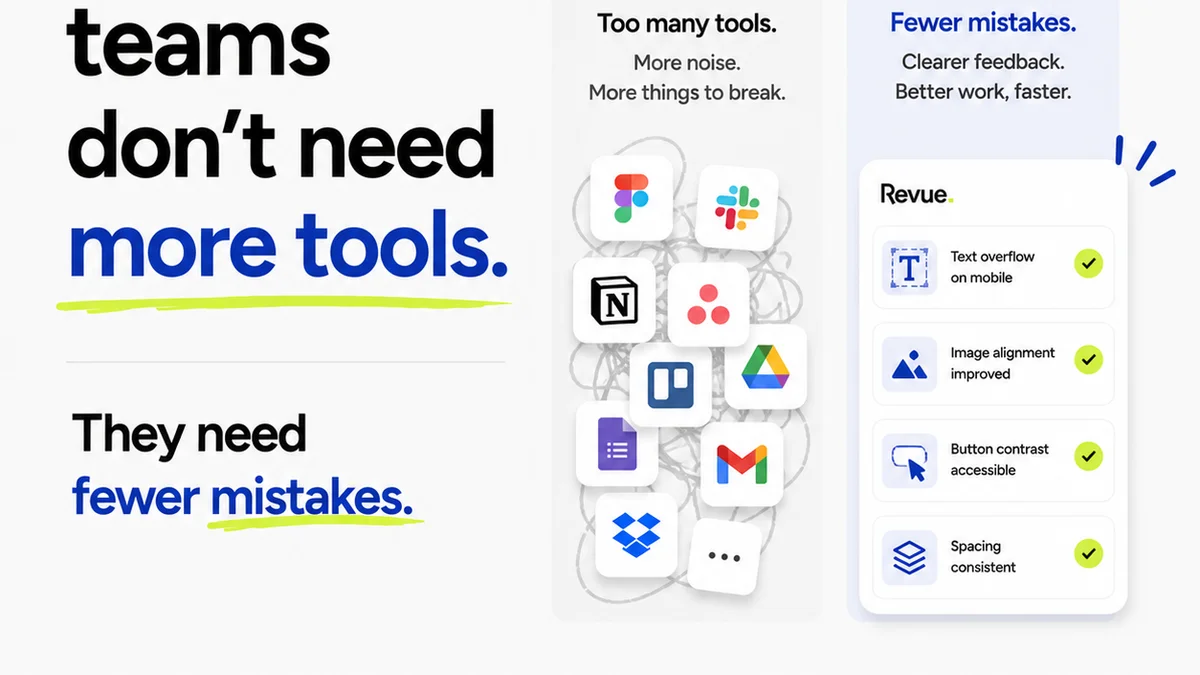
Managing a large-scale design system, especially across distributed teams, presents significant communication and collaboration challenges. This is where a centralized platform like Revue becomes invaluable.
Think about the lifecycle of a new component or a pattern update. It needs to be proposed, designed, developed, tested, and approved. Each step involves feedback from multiple stakeholders.
Revue acts as that central hub for creative collaboration. It allows you to:
- Centralize Feedback: Gather consolidated feedback on design mockups, prototypes, and development builds directly within the context of the work. No more scattered email threads or Slack messages.
- Manage Revisions and Approvals: Track the evolution of designs, streamline the approval process, and maintain a clear audit trail. This is crucial for governance and accountability.
- Ensure Quality Checks: Integrate quality assurance steps, ensuring that components and designs adhere to the established system standards before they go live.
By providing a single source of truth for feedback and approvals, Revue helps enforce the operational rigor that a successful enterprise design system demands. It bridges the gap between design intent and final implementation, ensuring consistency and reducing costly rework.
6. Final Thought
A design system is a living, breathing entity. It requires continuous investment, adaptation, and a deep understanding of the operational realities of your organization.
Are you building a beautiful library, or are you building a system that fundamentally changes how your enterprise creates?
Frequently asked questions
What's the difference between a style guide and a design system?
A style guide primarily focuses on visual branding and aesthetics (colors, typography, logos). A design system encompasses this but also includes reusable UI components, code snippets, design principles, and crucially, governance and contribution processes to ensure consistency and efficiency across an organization's digital products.
How do you get buy-in for a design system in a large enterprise?
Focus on the operational benefits: reduced costs, faster time-to-market, and improved consistency. Build a cross-functional coalition (product, engineering, marketing) early on. Demonstrate value with pilot projects and clear ROI. Secure executive sponsorship.
What are the key roles needed for an enterprise design system team?
Typically, you need Design System Leads (strategy, vision), Designers (component design, documentation), Developers (implementation, tooling), and a Product Manager (roadmap, prioritization). Depending on scale, you might also need dedicated QA, Content Strategists, and Community Managers.
How can a design system handle different product needs within an enterprise?
Use a layered approach. Establish a core set of foundational elements (design tokens, basic components) that all products share. Then, allow for product-specific extensions or variations that are clearly documented and governed, ensuring they don't break the core system's integrity.