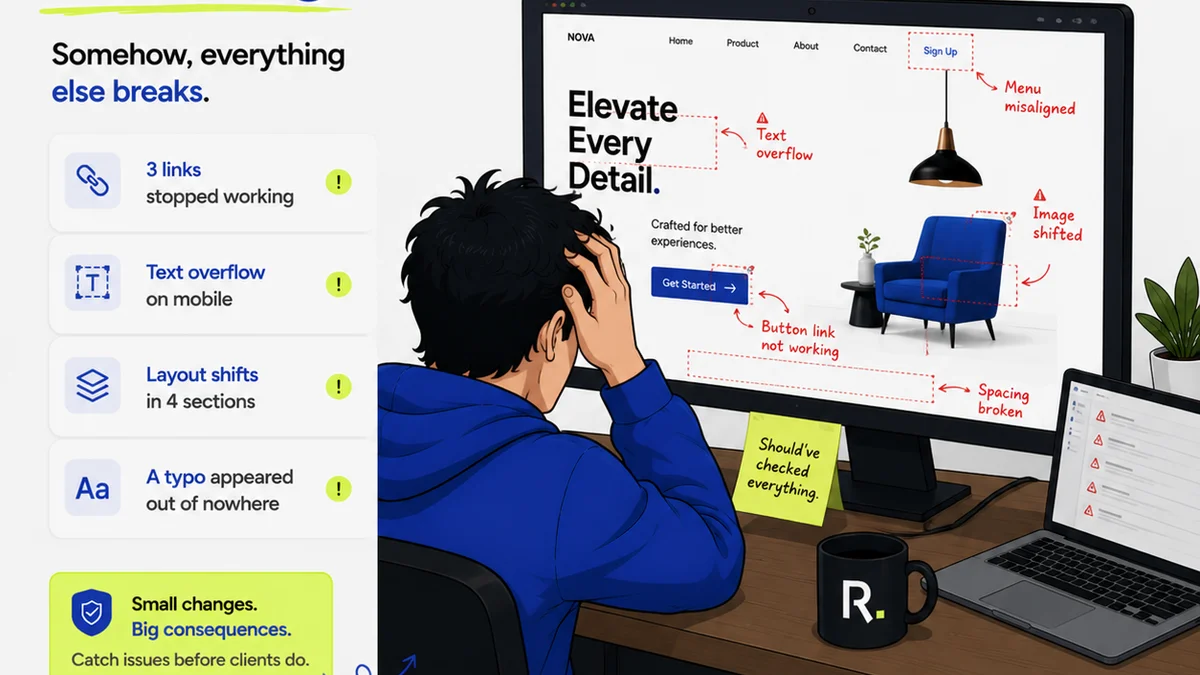
Everyone talks about design systems. They say it’s about consistency. About efficiency. About brand alignment.
None of that is wrong. But it’s incomplete.
For design agencies on the rise, a design system is more than just a library of components. It’s the operational backbone that allows you to scale without breaking.
The hard truth? Without a well-defined design system, your growth will eventually outstrip your capacity. You’ll drown in custom work, client confusion, and internal chaos. You’ll become a bottleneck, not a growth engine.
1. The Myth of Infinite Customization
Agencies love to promise bespoke solutions. It’s our job, right? We tailor everything to the client. We pride ourselves on our unique approach.
But here’s the kicker: clients don’t actually want endless, arbitrary customization. They want solutions that work, delivered on time and on budget. They want to trust that you know what you’re doing.
When every button, every form field, every typographic choice is a fresh, unrepeatable decision, you’re not being bespoke. You’re being inefficient.
The Cost of Reinventing the Wheel
- Endless internal debates over minor UI elements.
- Scope creep disguised as
Frequently asked questions
What is a design system in the context of an agency?
For an agency, a design system is a centralized library of reusable UI components, design principles, and guidelines that ensures consistency, speeds up production, and facilitates collaboration across projects and teams.
How does a design system help an agency scale?
By providing pre-built, approved components and clear guidelines, a design system drastically reduces the time spent on repetitive design and development tasks. This allows agencies to take on more projects and clients without a proportional increase in headcount, enabling sustainable growth.
Isn't building a design system time-consuming and expensive?
Initially, yes, there's an investment. However, the long-term savings in time, reduced errors, and increased efficiency far outweigh the upfront cost. Think of it as investing in infrastructure that pays dividends over time.
How do I get clients to buy into using a design system?
Frame it around their benefits: faster delivery, consistent brand experience across all touchpoints, reduced long-term maintenance costs, and a more reliable product. Show them how it de-risks their investment.