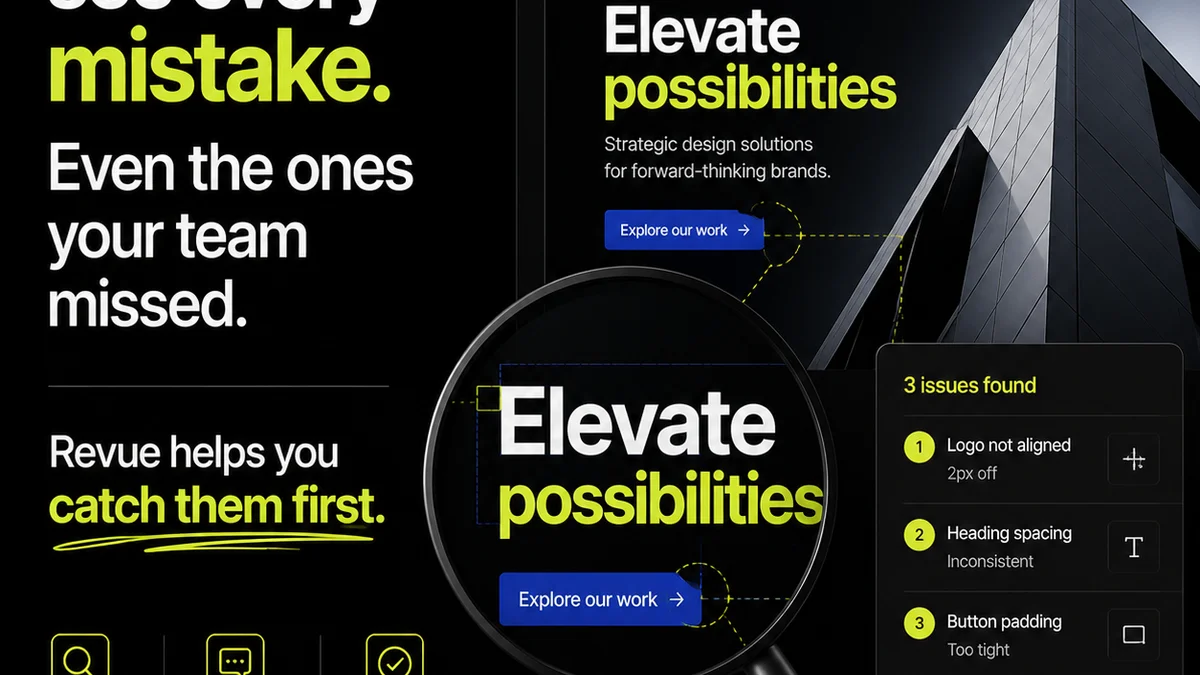
Every agency owner and creative director I talk to believes they have a handle on their design workflow. They’ve got the client brief, the kickoff meeting, the concepting phase, the revisions, the final delivery. It feels complete.
None of that is wrong. But it’s incomplete.
The missing piece, the quiet killer of profitability and client trust, is a formal Quality Assurance (QA) process for creative work. It’s the step everyone *thinks* they do, but rarely does systematically.
The Hard Truth: You’re Shipping Flawed Work
Most teams operate on a “good enough” principle for final delivery. A final check by the project manager, a quick look by the art director, maybe a sign-off from the client. That’s not QA. That’s a guess.
This isn’t about designers being sloppy. It’s about the inherent complexity of creative projects and the pressure to move fast. Details get missed. Brief requirements get misinterpreted. Brand guidelines get bent without a second thought.
The result? Client confusion, unexpected revision rounds, and a nagging feeling that something isn’t quite right, even after delivery.
1. The Illusion of Completion
What does “done” really mean in a creative agency?
For most, it means the client has signed off. But what if the sign-off was based on incomplete understanding or a rushed review?
The Client’s Blind Spot
Clients aren’t designers. They often don’t see the technical nuances, the accessibility issues, or the subtle inconsistencies that can undermine the entire project.
They’re looking at the big picture, and sometimes, the big picture is hiding a thousand tiny problems.
The Team’s Familiarity Trap
Your team has lived with the project for weeks, maybe months. They’re too close. They see what they *expect* to see, not what’s actually there.
This is why fresh eyes are crucial, but relying on a quick glance from a busy colleague isn’t a system.
2. The Cost of “Good Enough”
Skipping formal QA isn’t saving you time. It’s costing you money and reputation.
Think about it:
- Unexpected, last-minute client requests that should have been caught internally.
- Revisions that spiral because the initial feedback was based on a flawed deliverable.
- A damaged client relationship because they perceive your work as sloppy or unreliable.
- Team frustration and burnout from constant firefighting instead of focused delivery.
- Wasted hours re-doing work that should have been right the first time.
This isn’t just about fixing typos. It’s about ensuring the strategic goals of the design are met, technically and aesthetically.
3. What Real Design QA Looks Like
Formal QA isn’t about adding bureaucracy. It’s about building rigor into your process. It’s a dedicated step with clear objectives and accountability.
The Checklist Approach
A good QA process starts with a comprehensive checklist. This isn’t a generic template; it’s tailored to the project type and client needs.
Key Areas to Cover:
- Brand Compliance: Are logos, colors, fonts, and tone of voice used correctly and consistently?
- Technical Accuracy: Are files exported correctly? Are all links working? Is the code clean? Are there any visual glitches or rendering issues across intended platforms/devices?
- Requirement Fulfillment: Does the final output meet all points outlined in the brief and scope of work?
- Usability & Accessibility: Is the design intuitive? Are contrast ratios sufficient? Are interactive elements clearly defined?
- Content Accuracy: Are all text elements correct? Are there any typos or grammatical errors? Are image captions and alt text present and accurate?
- Consistency: Is there visual consistency across all elements and pages?
Dedicated Reviewers
QA should be performed by someone who wasn’t deeply involved in the day-to-day creation. This could be a dedicated QA specialist, a senior designer, or a project manager with a keen eye for detail.
Crucially, this person needs the authority to flag issues and halt delivery until they are resolved.
4. Integrating QA into Your Workflow
QA shouldn’t be an afterthought. It needs to be a defined stage, ideally *after* internal sign-off but *before* client delivery.
When to Implement QA:
- Pre-Client Review: This is the most critical point. Catching issues here prevents client frustration and saves face.
- Post-Client Feedback (for major revisions): If a client requests significant changes, a mini-QA round can ensure those changes haven’t introduced new problems.
- Before Final Asset Handover: A final check of exported files, naming conventions, and packaging.
The goal is to make QA a proactive measure, not a reactive fix.
Where Revue Fits In
Managing feedback and revisions can quickly become chaotic, especially without a clear system. This is where Revue shines.
Revue provides a centralized hub for all client feedback, making it visible and actionable. You can track every revision, every approval, and every change request in one place.
- Centralized Feedback: No more hunting through email chains or Slack messages. All comments and annotations are tied directly to the creative asset.
- Revision Visibility: Understand the history of changes, who requested them, and why. This context is invaluable for QA.
- Clear Approval Tracking: Know exactly when and what has been approved, reducing ambiguity.
- Streamlined Quality Checks: With all feedback and revisions documented, your QA team has a clear audit trail to verify against the brief and ensure all requirements are met before final delivery.
By bringing order to the feedback and revision process, Revue naturally supports a more robust QA function.
Final Thought
Are you delivering polished, pixel-perfect work that truly meets strategic objectives, or are you just hoping the client doesn’t notice the flaws?
Implementing a dedicated QA step isn't about slowing down; it's about speeding up your *reliable* delivery and building a reputation for excellence that clients can truly count on.
Frequently asked questions
What is Quality Assurance (QA) in a design context?
In design, QA is a systematic process of reviewing creative work to ensure it meets all project requirements, brand standards, technical specifications, and quality benchmarks before it's delivered to the client. It goes beyond a simple proofread to catch errors in functionality, consistency, and adherence to the brief.
Why is a formal QA step often missing from design workflows?
It's often overlooked due to pressure to meet deadlines, a belief that existing checks are sufficient, or a lack of understanding about the true cost of shipping flawed work. Teams can also fall into the trap of familiarity, where they're too close to the project to spot errors.
Who should be responsible for design QA?
Ideally, QA should be performed by someone who was not directly involved in the creation process to ensure fresh, objective eyes. This could be a dedicated QA specialist, a senior team member, or a project manager with a strong eye for detail and the authority to flag issues.
How can a tool like Revue help with design QA?
Revue centralizes all client feedback and revision history, creating a clear audit trail. This makes it easier for QA reviewers to verify that all feedback has been addressed, all requirements are met, and that the final deliverable is consistent and accurate before it goes to the client.
What are the biggest risks of skipping design QA?
Skipping QA can lead to client dissatisfaction, unexpected revision cycles, damage to your agency's reputation for quality, and increased costs due to rework. It undermines the professional perception of your agency's output.