Everyone talks about DesignOps. It’s the buzzword of the moment for scaling creative output. You hear it’s about tools, processes, and collaboration. That none of that is wrong. But it’s incomplete.
The hard truth about DesignOps in enterprise settings is that it’s not just about making pretty pictures faster. It’s about building a robust, predictable, and scalable creative engine that can handle the immense pressure and complexity of a large organization. It’s about operationalizing creativity.
1. The Myth of the 'Creative Genius' Silo
Many enterprise creative teams operate under the assumption that brilliant ideas emerge from isolated geniuses. That a designer, locked away, will spontaneously generate the next big campaign idea. This is a romantic notion, but it’s a structural flaw in high-volume, high-stakes environments.
In reality, breakthrough creative work in an enterprise context is rarely a solo act. It’s the result of structured collaboration, clear briefs, iterative feedback, and a deep understanding of business objectives. The 'genius' is often the team that can execute flawlessly, not just the individual with the initial spark.
The Problem with Unstructured Ideation
When creative work is left to chance, you get:
- Inconsistent brand messaging across departments.
- Missed deadlines due to unclear scope or direction.
- Wasted resources on ideas that never gain traction.
- Frustrated stakeholders and a perception of the creative team as a bottleneck.
This isn't sustainable. It’s a recipe for burnout and underperformance.
2. Operationalizing the Creative Workflow
DesignOps, at its core, is about bringing operational discipline to the creative process. It’s about treating creative output like any other critical business function: with defined inputs, predictable processes, measurable outputs, and continuous improvement.
This means moving beyond ad-hoc requests and embracing structured workflows. Every project, from a small social graphic to a full-scale brand campaign, needs a clear path from brief to final delivery.
Key Pillars of Operationalized Creativity
- Standardized Briefing: A clear, comprehensive brief is non-negotiable. This isn't just about asking for a banner ad; it's about understanding the objective, target audience, key message, and desired outcome.
- Defined Feedback Loops: How and when will feedback be given? Who is authorized to give it? Ambiguity here is a creativity killer.
- Revision Management: Tracking changes, understanding the rationale, and ensuring versions don't get mixed up is crucial for avoiding chaos.
- Asset Management: Where are final assets stored? How are they accessed? Version control is paramount.
- Quality Assurance: A final check against brand guidelines and project objectives before delivery.
These aren't bureaucratic hurdles; they are guardrails that protect creativity and ensure efficiency.
3. Building a Scalable Creative Infrastructure
Enterprise creative teams don't just produce work; they manage a constant demand stream. This requires an infrastructure that can absorb volume without sacrificing quality or speed.
Think of it like a factory. You don't just throw raw materials at the production line and hope for the best. You have specialized stations, quality checks, and efficient movement of goods. Your creative process needs the same.
The Components of a Scalable System
- Centralized Intake: A single point of entry for all creative requests.
- Project Management Tools: To track progress, assign tasks, and manage timelines.
- Collaboration Platforms: For seamless team communication and stakeholder updates.
- Feedback and Approval Systems: To streamline reviews and prevent endless email chains.
- Template Libraries and Style Guides: To ensure brand consistency and speed up common tasks.
When these systems are in place, your team can handle more requests, more consistently, and with less friction.
4. The Human Element: Empowering Your Team
DesignOps isn't just about tools and processes; it’s about people. It’s about creating an environment where your creative talent can do their best work, free from unnecessary distractions and frustrations.
When your team isn't bogged down by administrative overhead, chasing feedback, or navigating internal politics, they have more time for what they do best: creating impactful work.
Fostering a High-Performing Creative Culture
- Clear Roles and Responsibilities: Everyone knows their part.
- Professional Development: Investing in skills and growth.
- Recognition and Reward: Acknowledging contributions.
- Reducing Friction: Eliminating pain points in the workflow.
- Psychological Safety: An environment where ideas can be shared and challenged constructively.
A well-oiled DesignOps machine empowers individuals and elevates the entire team.
5. Where Revue Fits In
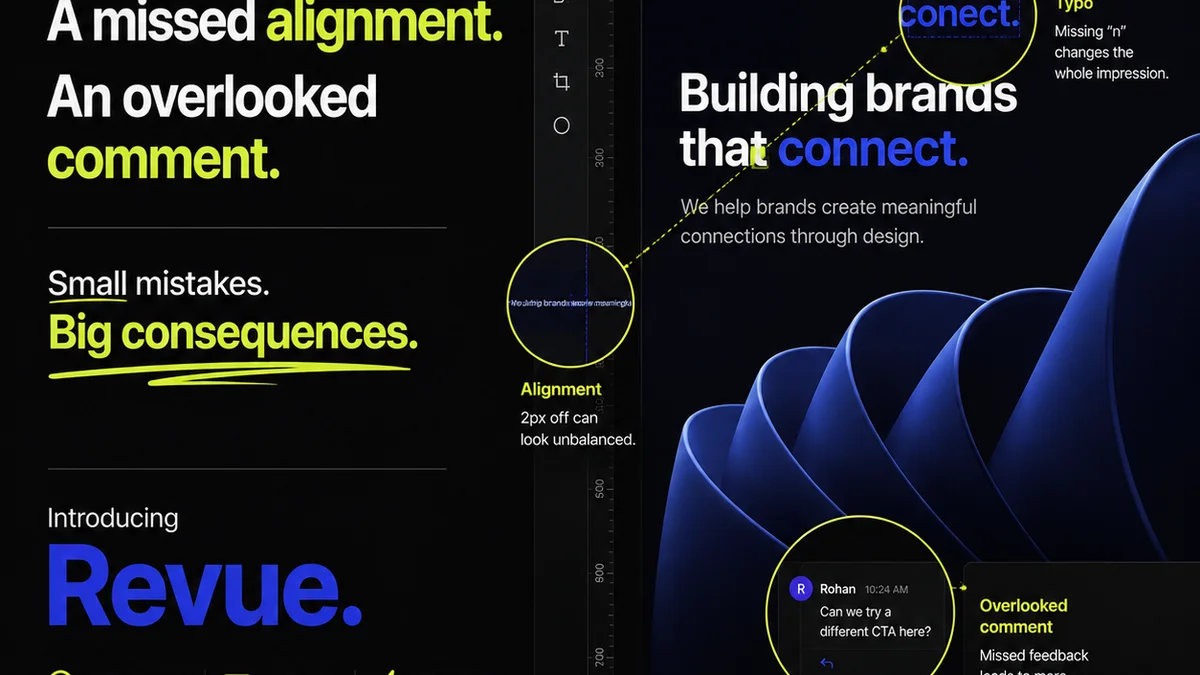
Managing the complexity of enterprise creative feedback, revisions, and approvals can feel like juggling chainsaws. This is where a dedicated platform like Revue becomes invaluable.
Instead of scattered email threads, endless Slack messages, and lost feedback in shared drives, Revue provides a centralized hub. You can gather all stakeholder feedback directly on the creative asset. Revisions are tracked, and approval statuses are crystal clear.
This isn't just about convenience. It’s about de-risking the entire approval process. It ensures that everyone is working from the same version, that feedback is contextual, and that approvals are documented. For enterprise teams, this level of clarity and control is not a luxury; it’s a necessity for maintaining velocity and mitigating costly errors.
Final Thought
Is your enterprise creative team truly optimized for the demands of modern business, or are you still operating on a romanticized notion of creative output? The difference is operational discipline.
Frequently asked questions
What is the primary goal of DesignOps in an enterprise setting?
The primary goal is to bring operational discipline to the creative process, ensuring efficiency, scalability, and consistency in creative output within a large organization.
How does DesignOps differ from traditional project management?
While project management focuses on timelines and resources for specific projects, DesignOps is broader, focusing on the entire creative system – the people, processes, and tools that enable creative work at scale, including aspects like brand consistency and talent development.
What are the biggest challenges for enterprise creative teams that DesignOps addresses?
DesignOps addresses challenges like inconsistent brand messaging, inefficient feedback loops, difficulty scaling creative output, managing multiple stakeholders, and ensuring quality control across a high volume of creative assets.
How can a centralized feedback system improve enterprise creative workflows?
A centralized system like Revue consolidates all feedback on a specific creative asset, providing context, tracking revisions, and clarifying approval statuses. This eliminates confusion, reduces back-and-forth, and speeds up the review process significantly.