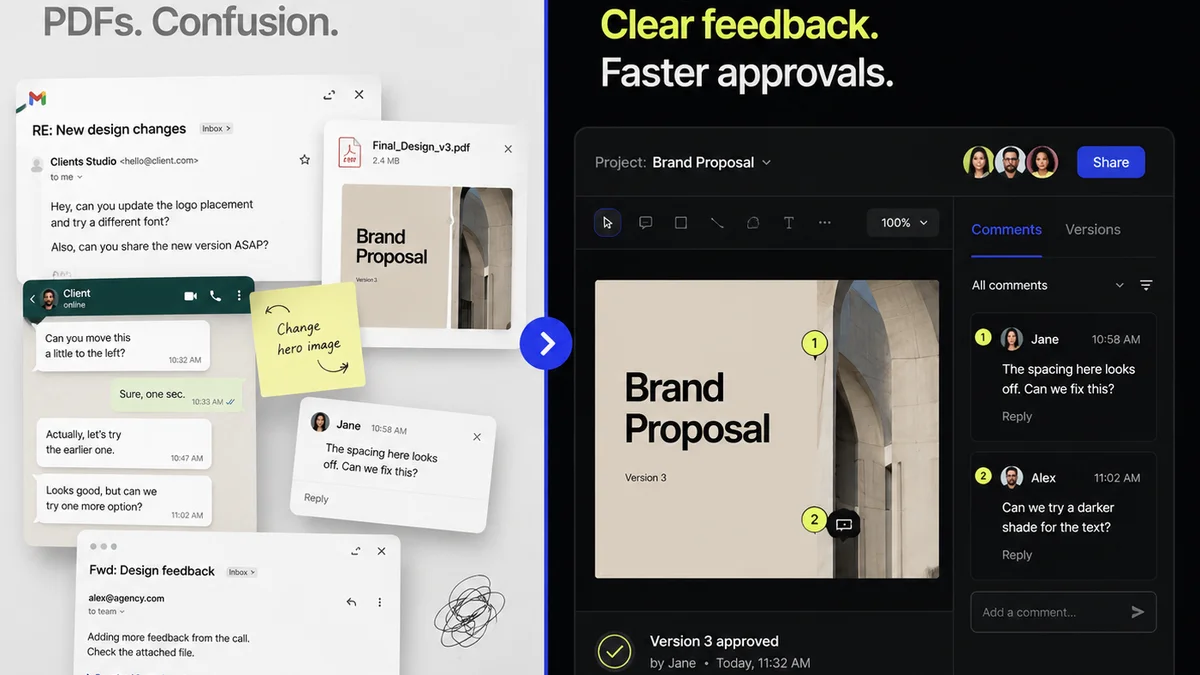
Everyone agrees DesignOps is the future. It’s the buzzword that promises to tame the creative beast, banish bottlenecks, and turn chaos into calm.
None of that is wrong. But it’s incomplete.
The real truth? DesignOps isn’t a magic wand. It’s a discipline. A rigorous, structured approach that requires more than just good intentions and a few new tools.
It demands a framework. A step-by-step blueprint that acknowledges the messy reality of creative work while building a robust system around it.
1. Define Your DesignOps Vision
Before you can build anything, you need to know *why*. What are you trying to achieve with DesignOps?
Is it faster turnaround times?
Improved client satisfaction?
Reduced team burnout?
Better quality of creative output?
Your vision should be specific and measurable. It’s the North Star for all your DesignOps initiatives.
Common Pitfalls to Avoid
- Treating DesignOps as a one-off project.
- Focusing solely on tools without addressing process.
- Not getting buy-in from your creative team.
- Having a vague, unmeasurable vision.
A clear vision sets the stage. It gives you a target to aim for and a benchmark against which to measure success.
2. Audit Your Current Design Workflow
You can’t fix what you don’t understand. A thorough audit is crucial.
Map out every stage of your current design process, from initial brief to final delivery.
Identify the pain points. Where do things get stuck?
- Where does feedback get lost?
- What steps cause the most delays?
- Where are communication breakdowns most frequent?
- Which tasks are repetitive and prone to error?
- Where do team members feel most overwhelmed or frustrated?
Be brutally honest. This isn’t about blame; it’s about data.
Talk to your designers, project managers, and even clients (if appropriate). Gather qualitative and quantitative data. Look at project timelines, revision cycles, and resource allocation.
3. Establish Core DesignOps Pillars
DesignOps typically rests on a few key pillars. You’ll need to build processes and systems for each.
a) Workflow and Process Optimization
This is the engine of DesignOps. It’s about creating predictable, repeatable processes.
- Standardize project kickoff and briefing.
- Define clear roles and responsibilities for every stage.
- Implement consistent version control.
- Establish a feedback loop structure.
- Formalize your revision and approval process.
The goal is to remove ambiguity and friction.
b) Tools and Technology
Tools are enablers, not solutions. Choose them strategically.
- Centralized asset management (DAM).
- Project management and task tracking.
- Communication and collaboration platforms.
- Feedback and annotation tools.
- Design system management.
Ensure your tools integrate and support your workflows, not dictate them.
c) Communication and Collaboration
Design doesn’t happen in a vacuum. Effective communication is paramount.
- Set clear expectations for response times.
- Define channels for different types of communication.
- Facilitate cross-functional collaboration.
- Establish regular team syncs and critiques.
Break down silos and foster a sense of shared ownership.
d) Team Enablement and Growth
DesignOps should support your people.
- Onboarding processes for new designers.
- Training on new tools and methodologies.
- Career pathing and skill development.
- Workload balancing and burnout prevention.
A supported team is a productive team.
e) Quality Assurance and Governance
Ensuring consistency and brand integrity.
- Brand guideline enforcement.
- Accessibility checks.
- Usability testing protocols.
- Final deliverable checks.
This pillar ensures the output meets high standards.
4. Implement and Iterate
You’ve got your framework. Now, build it.
Start with one pillar or one process. Don’t try to boil the ocean.
Roll out changes incrementally. Pilot new processes with a small team or project.
Gather feedback constantly.
- What’s working?
- What’s not?
- What needs adjustment?
DesignOps is not a static system. It’s an evolving practice.
Be prepared to adapt as your team, projects, and business needs change.
5. Measure and Refine
Remember that vision you set in step one?
Now it’s time to measure your progress against it.
Track key metrics related to your initial goals.
- Project completion times.
- Number of revision rounds per project.
- Client feedback scores.
- Team satisfaction surveys.
- Reduction in errors or rework.
Use this data to identify areas for further refinement. Celebrate wins, but don’t get complacent.
Continuous improvement is the name of the game.
Where Revue Fits In
The best DesignOps frameworks rely on tools that streamline critical stages. Revue is built for exactly this.
Centralized Feedback: No more scattered emails or Slack threads. All client feedback on designs is in one place, linked directly to the creative asset. This eliminates confusion and ensures everyone is working from the same source of truth.
Revision and Approval Visibility: Track every version, every comment, and every approval status. This provides a clear audit trail and prevents costly
Frequently asked questions
What is the primary goal of DesignOps?
The primary goal of DesignOps is to improve the efficiency, productivity, and overall effectiveness of design teams by optimizing workflows, processes, tools, and communication.
How do I start implementing a DesignOps framework?
Start by defining your DesignOps vision, auditing your current workflow to identify pain points, establishing core pillars (workflow, tools, communication, team enablement, QA), implementing changes incrementally, and then measuring and refining your processes.
What are the key components of a DesignOps framework?
Key components typically include workflow and process optimization, strategic tools and technology, effective communication and collaboration, team enablement and growth, and quality assurance and governance.
Can DesignOps help reduce team burnout?
Yes, by streamlining processes, reducing repetitive tasks, improving communication, and ensuring better workload balance, DesignOps can significantly reduce friction and stress, contributing to a healthier work environment and less burnout.