Everyone talks about scaling a design agency by hiring more creatives. More designers, more account managers, more business development. That’s the obvious path, right?
None of that is wrong. But it’s incomplete.
The hard truth is, you can hire all the talent in the world, but if your internal processes are a mess, you’ll just be amplifying chaos. Growth isn't just about adding headcount; it's about making the headcount you have, and the work they produce, far more efficient and effective.
This is where DesignOps steps in. It’s not another layer of management or a buzzword. It’s the operational backbone that allows creative teams to do their best work, consistently.
1. The Myth of the Solo Genius and the Team of Geniuses
Many agencies are built on the idea of individual brilliance. One superstar designer, one visionary strategist. And when you grow, you assume you just need more superstars.
But a collection of individual geniuses doesn't automatically make a high-performing team. In fact, it can often create friction.
Think about it:
- Multiple feedback loops that don't connect.
- Inconsistent file management.
- Unclear revision histories.
- Duplicated effort.
- Clients confused by conflicting opinions.
These aren't problems of talent; they're problems of process. DesignOps addresses these operational roadblocks head-on.
The Operational Reality
DesignOps is about systematizing the creative process. It's about creating predictable, repeatable workflows that free up your creatives to focus on the actual creative problem-solving, not the busywork of managing their own workflow.
It’s the difference between a beautifully chaotic jam session and a tightly orchestrated symphony. Both can be brilliant, but only one scales predictably.
2. Streamlining Client Feedback: The Bottleneck of All Bottlenecks
Client feedback is the lifeblood of agency work. It’s also, notoriously, a giant pain point. How many times have you seen projects stall because feedback was late, unclear, or contradictory?
Common assumption: Clients are difficult. Hard truth: Your feedback *process* is likely the real culprit.
You’re probably juggling feedback via:
- Endless email chains.
- Scattered Slack messages.
- Random comments in shared docs.
- Verbal notes from account managers that get lost.
This isn't just inefficient; it's a recipe for scope creep and client frustration. When feedback is siloed, it's impossible to get a clear, unified view of what the client actually wants. It’s hard to track what’s been addressed and what hasn’t.
The DesignOps Solution
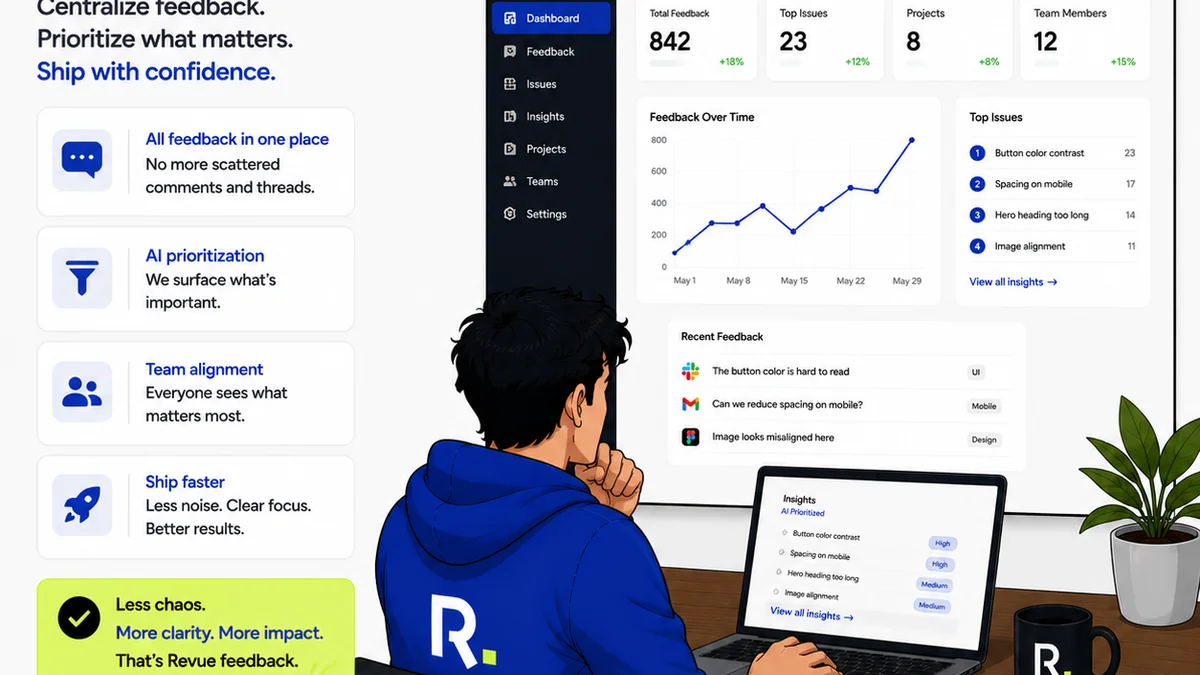
A structured feedback system centralizes all communication. It ensures that every comment is logged, attributed, and linked to a specific version of the creative asset.
This means:
- Clearer communication.
- Faster iterations.
- Reduced misunderstandings.
- Easier stakeholder alignment.
- A documented audit trail for every decision.
When feedback is managed, not just collected, your team can move with speed and confidence.
3. Managing Revisions and Approvals: From Chaos to Clarity
Revision rounds are where projects go to die. Or at least, where they get incredibly expensive and time-consuming.
The assumption is that revisions are just part of the deal. The reality is that *unmanaged* revisions are what kill profitability.
Without a clear system, you’re dealing with:
- Endless back-and-forth on minor tweaks.
- Difficulty tracking which version is the current
Frequently asked questions
What exactly is DesignOps?
DesignOps (Design Operations) is the discipline of optimizing the design process. It focuses on improving efficiency, streamlining workflows, managing tools, and ensuring clear communication so that design teams can produce their best work consistently and at scale.
Do small agencies really need DesignOps?
Yes. While often associated with large enterprises, DesignOps principles are incredibly valuable for growing agencies. Implementing even basic operational efficiencies early on prevents significant workflow bottlenecks and client frustrations as you scale.
How does DesignOps help with client relationships?
By centralizing feedback, clarifying revision processes, and providing clear approval stages, DesignOps reduces misunderstandings and delays. This leads to a smoother client experience, increased trust, and more predictable project outcomes.
Is DesignOps just about software tools?
Software tools are a component, but DesignOps is fundamentally about process, people, and collaboration. It’s about establishing clear guidelines, communication protocols, and systems that leverage technology effectively, rather than just adopting tools for their own sake.