Everyone’s talking about DesignOps. The buzzwords are everywhere: efficiency, scalability, streamlined workflows. It sounds like the silver bullet for every creative team’s operational headaches.
And that’s the first mistake.
The assumption is that DesignOps is primarily about implementing new tools, building better processes, or creating more documentation. None of that is wrong. But it’s incomplete. It misses the core of what makes any operational framework — especially one for creative work — actually *work*.
The hard truth about DesignOps is that it’s fundamentally about people. It’s about understanding the human dynamics of creative collaboration, managing ego, fostering psychological safety, and enabling individual creativity within a structured system. Without that focus, your DesignOps initiative will be dead on arrival, no matter how slick your new software stack is.
1. The Tool-First Fallacy
Many teams jump straight to the software. They see a problem — maybe feedback is messy, or revisions take too long — and think, “We need a new tool!”
They implement a fancy new platform. They mandate its use. And then… nothing much changes. Or worse, frustration mounts.
Why?
- Tools are only as good as the people using them.
- Processes are only effective if they’re understood and adopted.
- Culture eats strategy (and software) for breakfast.
You can buy the most sophisticated project management software on the market, but if your team isn’t communicating effectively, if there’s a lack of trust, or if people are resistant to change, the tool becomes just another expense. It becomes shelfware.
DesignOps isn't just about finding the *right* tool. It’s about ensuring the tool serves the *people* and the *goals*.
Focus on the 'Why' Before the 'What'
Before you even look at software, ask:
- What specific problems are we trying to solve?
- Who is affected by these problems?
- What are their current workflows and pain points?
- What does success look like for *them*?
Answering these questions reveals the human context. It tells you what kind of tool or process would actually help, not just what looks impressive on a demo.
2. Overlooking the Feedback Loop’s Human Element
Client feedback is the lifeblood of creative work. But it’s also a notorious bottleneck and a source of friction. Many teams think DesignOps means building a more rigid feedback process.
They create forms, templates, and strict approval stages. This can help, sure. But it often misses the nuances.
Feedback isn't just data. It’s communication. And communication is inherently human.
- Tone matters.
- Context matters.
- Relationship matters.
A blunt email feedback can derail an entire project, regardless of how well-structured the feedback *content* is. A designer feeling unheard or undervalued will produce less inspired work, no matter how efficient the revision tracking.
The Real DesignOps Fix for Feedback
DesignOps should focus on making feedback:
- Clear: Is it specific? Actionable?
- Concise: Is it to the point? Free of jargon?
- Constructive: Is it delivered with respect? Does it aim to improve, not just criticize?
- Centralized: Is there one place to find all feedback, reducing confusion?
- Connected: Is the feedback directly linked to the creative asset being discussed?
This isn't just about a tool. It's about training, clear communication protocols, and fostering a culture where constructive critique is welcomed and understood.
3. Treating Revision Management as Purely Administrative
Revision rounds. We all know them. They’re often seen as a necessary evil, a purely administrative task to tick off.
The assumption is that managing revisions is just about tracking versions and getting sign-offs.
But here’s the kicker: uncontrolled or poorly managed revisions are a symptom of deeper issues.
- Unclear initial briefs.
- Scope creep disguised as “minor tweaks.”
- Lack of clear decision-makers.
- Poor communication between client and creative team.
A DesignOps strategy that only looks at version control software is like putting a band-aid on a broken bone. It doesn't address the root cause of *why* so many revisions are happening in the first place.
The Human Cost of Revision Chaos
Excessive, inefficient revisions drain:
- Team morale
- Creative energy
- Profitability
It leads to burnout and a feeling of being on a hamster wheel. Good DesignOps addresses this by ensuring clarity at the outset and visibility throughout the process.
It’s about making sure everyone understands the scope, the goals, and the implications of each revision. It’s about clear communication and accountability, not just version numbers.
4. Neglecting Quality Control as a Human Endeavor
Quality control (QC) is often an afterthought. A final check before delivery. Many teams see it as a simple checklist exercise.
But true quality isn't just about ticking boxes. It’s about upholding standards, ensuring brand consistency, and delivering work that truly meets the brief and the client’s objectives.
A rigid, purely technical QC process can stifle creativity. It can feel like a bureaucratic hurdle.
The real failure in QC often stems from:
- Lack of shared understanding of quality standards.
- Insufficient time allocated for proper review.
- No clear ownership or accountability for the final output.
- Designers not being empowered to push back on unrealistic constraints.
DesignOps should elevate QC from a perfunctory task to a strategic part of the creative process. It means embedding quality checks throughout, not just at the end.
Building Quality into the Workflow
This involves:
- Defining clear quality benchmarks *with* the team.
- Integrating review points at critical stages, not just the end.
- Ensuring designers have the autonomy and support to meet these standards.
- Using DesignOps tools to provide visibility into potential quality issues *before* they become major problems.
It’s about fostering a culture where quality is a shared responsibility, not just a final gatekeeper’s job.
5. Ignoring the 'Ops' in DesignOps: The Culture Gap
The biggest mistake? Treating DesignOps as purely a process or technology initiative, separate from the day-to-day culture of the team.
DesignOps is supposed to *enable* creativity and collaboration. But if the underlying culture is one of fear, blame, or siloed working, no amount of process will fix it.
You can’t Ops your way out of a toxic environment.
Think about it:
- Does your team feel safe to experiment and fail?
- Is feedback given and received constructively?
- Are people recognized for collaboration, not just individual output?
- Is there transparency about project status and challenges?
These are cultural questions. And they are at the heart of successful DesignOps.
The Culture-First Approach
Effective DesignOps requires:
- Psychological Safety: People need to feel safe to speak up, challenge ideas, and admit mistakes without fear of retribution.
- Clear Communication Channels: Information flows freely, reducing misunderstandings and fostering trust.
- Defined Roles & Responsibilities: Everyone knows their part, reducing confusion and conflict.
- Empowerment & Autonomy: Creative professionals are trusted to do their best work, with support systems in place.
- Continuous Improvement: The team actively seeks feedback on its own processes and culture.
This is the human infrastructure that makes DesignOps thrive. Without it, the structure will always be shaky.
Where Revue Fits In
Revue isn't a magic wand, but it's built with the human element of creative operations in mind. It tackles the common pitfalls by providing a central hub designed for clarity and collaboration.
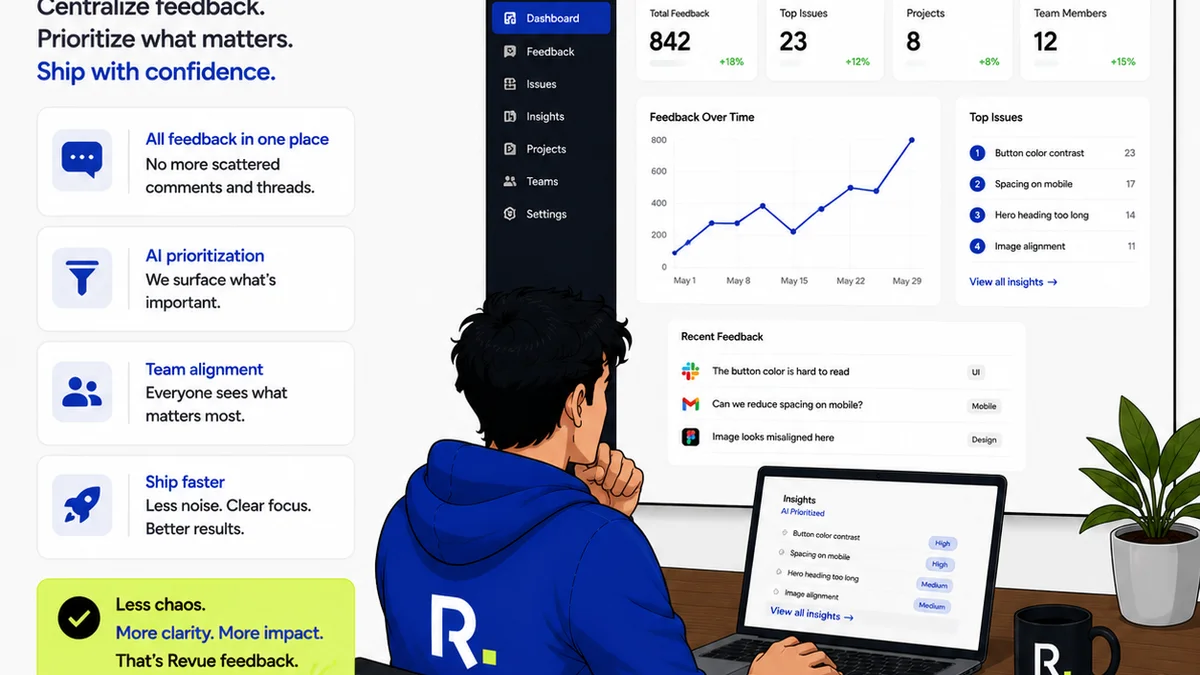
Instead of fragmented feedback scattered across emails, Slack messages, and random documents, Revue centralizes client feedback directly on the creative assets themselves. This brings clarity and context, ensuring feedback is actionable, not just a wall of text.
Revision management becomes transparent. Stakeholders can see the history of changes, understand the scope of revisions, and approve final versions with confidence. This reduces the administrative burden and the potential for scope creep.
By providing a single source of truth for feedback and approvals, Revue helps teams build better quality checks into their workflow naturally. It ensures everyone is aligned on what needs to be delivered, reducing errors and rework.
Ultimately, Revue helps operationalize the *human* side of creative workflows, freeing up teams to focus on what they do best: creating amazing work.
Final Thought
DesignOps is more than just a buzzword or a new set of tools. It’s a philosophy that places people at the center of operational efficiency.
Are you building systems to support your team, or are you just trying to fit your team into a system?
Frequently asked questions
What is the biggest mistake teams make with DesignOps?
The biggest mistake is focusing solely on tools and processes while neglecting the human element. DesignOps is fundamentally about people, culture, and communication. Without addressing these, any operational framework will fail.
How does DesignOps relate to client feedback?
DesignOps should make client feedback clearer, more concise, constructive, and centralized. It's not just about having a feedback form, but about fostering a culture where feedback is understood and acted upon effectively, respecting both the client's needs and the creative team's process.
Can DesignOps help with scope creep and excessive revisions?
Yes, by improving clarity in briefs, establishing clear communication channels, and providing visibility into the revision process. Effective DesignOps addresses the root causes of scope creep and inefficient revisions, rather than just managing the symptoms.
Is DesignOps just for large agencies?
No, DesignOps principles are valuable for any team producing creative work, regardless of size. Smaller teams can benefit immensely from streamlining workflows, improving collaboration, and reducing friction, which helps them scale effectively.