Everyone thinks digital asset management (DAM) is about having a big hard drive. A place to dump all your logos, photos, and videos. So you can find them later.
None of that is wrong. But it’s incomplete.
The hard truth is, most companies fail at digital asset management because they treat it like a glorified filing cabinet. They focus on the *storage* and neglect the *management*. The real value isn't in having the assets; it's in controlling how they're used, by whom, and ensuring they’re always the right version.
1. The Illusion of Centralization
You buy a DAM system. You upload everything. You tell everyone, “This is the new source of truth.” Problem solved, right?
Wrong.
The real problem isn't where assets live. It's the chaos that surrounds them. Without clear processes and governance, assets get uploaded incorrectly, tagged poorly, or not at all. The system becomes a black hole, not a source of truth.
Metadata Mishaps
Bad metadata is the silent killer of DAM. If assets aren't tagged accurately and consistently, finding anything becomes a treasure hunt.
- Missing keywords
- Inconsistent naming conventions
- Outdated descriptive information
- Generic tags that apply to everything
This isn't a technical problem; it's a human one. People don't understand the importance of metadata, or they don't have the time to do it right.
Version Control Nightmares
“Is this the final logo?” “Which version of the campaign creative should I use?” These questions plague teams daily.
A DAM system should eliminate this. But if it’s not configured properly, or if users bypass it, you’ll still have teams working off old, unapproved versions. This leads to costly reprints, inconsistent branding, and wasted creative effort.
2. Ignoring Workflow and Governance
A DAM system isn't a magic wand. It needs to integrate into your existing workflows. If it doesn't, people won't use it.
Think about how creative assets are actually produced, reviewed, and approved. Where do those conversations happen? How is feedback collected? How are revisions tracked?
If your DAM system sits separate from these critical processes, it becomes an afterthought. A place to store files *after* the real work is done.
Feedback Fragmentation
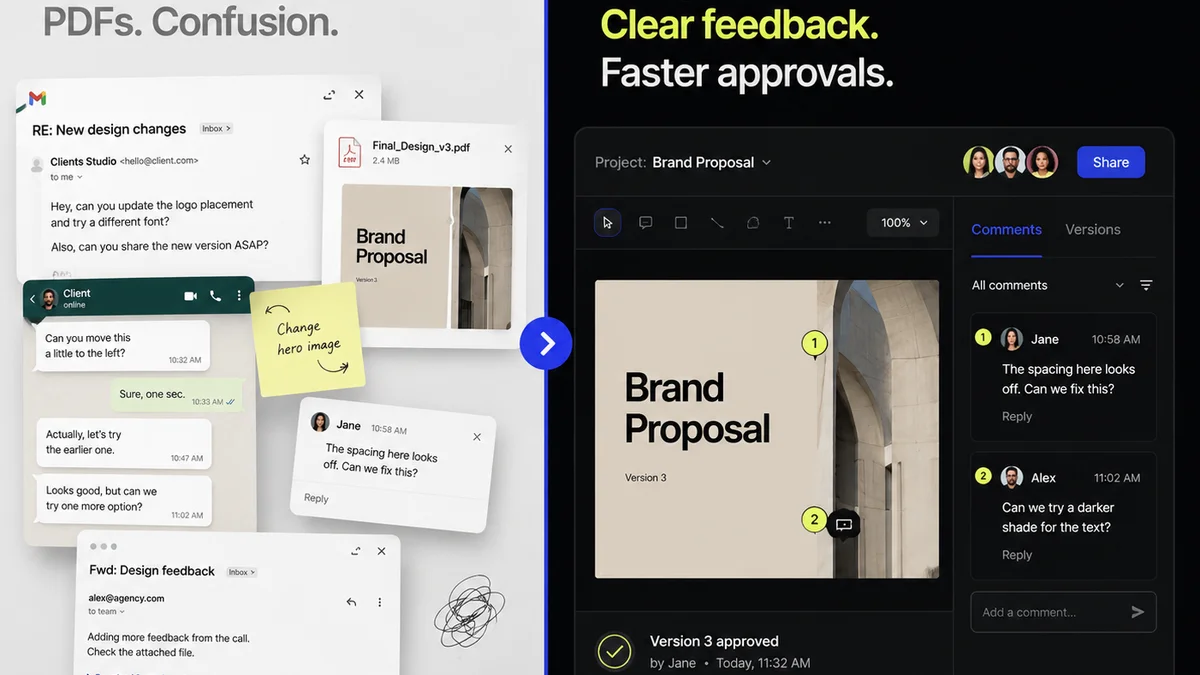
Client feedback is notoriously difficult to manage. It comes via email, Slack, calls, even sticky notes.
When this feedback isn't systematically captured and linked to specific asset versions, it’s lost. Revisions become a game of telephone, leading to misunderstandings and errors.
Approval Bottlenecks
Getting sign-off on creative work can be a slow, painful process. Without clear visibility into who needs to approve what, and when, projects stall.
A DAM system, when integrated with approval workflows, can streamline this. But many systems are too complex, or simply not set up to manage the approval lifecycle effectively.
3. The Human Element: Training and Adoption
The most sophisticated DAM system is useless if your team doesn't know how to use it, or worse, chooses not to.
Adoption is the biggest hurdle. People are creatures of habit. They’ll stick with what they know, even if it’s inefficient.
Lack of Proper Training
Simply pointing people to a new system and saying “good luck” is a recipe for disaster. Training needs to be role-specific and ongoing.
- How to upload and tag assets correctly
- How to search and retrieve assets efficiently
- How to use the system for approvals and revisions
- Understanding the governance policies
Resistance to Change
Your team might be comfortable using shared drives, email attachments, or cloud storage links. They might see a DAM as just another tool to learn, another barrier to getting work done.
Overcoming this requires clear communication about the benefits, strong leadership buy-in, and making the system as intuitive and integrated as possible.
4. Underestimating Integration Needs
Your DAM system shouldn't exist in a vacuum. It needs to talk to your other tools.
Think about your creative software, your project management tools, your marketing automation platforms. Assets need to flow seamlessly between these systems.
Disparate Tools, Disparate Data
If your DAM isn't integrated, you'll end up with duplicate assets across multiple platforms. This leads to confusion, inconsistent branding, and wasted storage space.
Imagine a designer needing the latest approved logo for a new campaign. If they have to manually download it from the DAM and then upload it to their design tool, something is wrong.
Limited Functionality
Without integration, the DAM's functionality is also limited. You can't easily push approved assets directly into a marketing campaign or a website CMS. The workflow breaks down.
Where Revue Fits In
This is where a tool like Revue becomes critical. It’s not a DAM in the traditional sense, but it addresses the core problems that lead to DAM failure: managing feedback, revisions, and approvals effectively.
Revue centralizes client feedback on creative work. Instead of scattered emails and messages, all comments are logged against specific versions of an asset. This provides a clear audit trail and reduces miscommunication.
When a client provides feedback, it’s visible to the entire team. Revisions can be tracked, and new versions uploaded directly within the platform. Approvals become clear, with digital sign-offs that leave no room for doubt.
By managing the crucial feedback and approval loop, Revue ensures that the *right* assets are being worked on and ultimately approved. This directly supports the core goal of effective digital asset management: ensuring that only accurate, on-brand, and approved assets are finalized and distributed. It bridges the gap between asset creation and final approval, a gap that often causes DAM systems to fail.
Final Thought
Digital asset management is not a technology problem; it's a process and people problem.
Are you buying a system to store files, or are you investing in a solution to control how your brand’s visual identity is managed and deployed?
Frequently asked questions
What is the biggest mistake companies make with DAM?
The biggest mistake is treating Digital Asset Management as just a storage solution, like a glorified filing cabinet. Companies fail to implement robust processes for tagging, version control, and integrating the DAM into their actual creative workflows, leading to poor adoption and a system that's difficult to use.
How does poor metadata impact a DAM system?
Poor metadata means assets are hard to find. If assets aren't tagged accurately and consistently with relevant keywords, users spend excessive time searching or give up entirely. This undermines the core purpose of a DAM system: to provide quick and easy access to the right assets.
Why is team adoption crucial for DAM success?
A DAM system is only effective if the team uses it consistently. If users aren't trained properly, don't understand the benefits, or find the system cumbersome, they will revert to old, inefficient methods like shared drives or email. Successful adoption requires clear communication, comprehensive training, and leadership buy-in.
Can a DAM system be integrated with other tools?
Yes, integration is key. A robust DAM system should connect with other essential tools like creative software, project management platforms, and content management systems. This ensures a seamless flow of assets, reduces duplication, and maintains brand consistency across all channels.