You hear a lot about Digital Asset Management (DAM) these days. Everyone’s talking about AI, cloud migration, and integration. It sounds like the future is here, and it’s all about seamless workflows and automated everything.
None of that is wrong. But it’s incomplete.
The real story of DAM isn’t about the shiny new tech. It’s about the messy, human workflows that tech is supposed to fix. And if you’re a creative leader, ignoring that is a fast track to chaos.
The hard truth is that DAM is less about the assets themselves and more about the people and processes managing them. The trends that matter are the ones that tackle the friction points in your actual day-to-day operations.
1. DAM as the Single Source of Truth, Not Just a File Cabinet
The old way of thinking about DAM is like a super-powered hard drive. You dump everything in, tag it, and hope you can find it later. It’s a digital filing cabinet.
That’s fine for archiving. It’s not fine for active creative production.
The modern DAM is the central nervous system for your creative output. It’s where the work *lives* and *breathes* from initial brief to final delivery.
Think about it:
- Briefs: Not just a separate document, but linked directly to the project.
- Feedback: All client comments, internal reviews, and stakeholder approvals attached to the relevant asset version.
- Revisions: A clear, chronological trail of changes, making it easy to see what was updated and why.
- Approvals: Formal sign-offs that are auditable and indisputable.
- Usage Rights: Clear parameters on how and where assets can be used, preventing costly mistakes.
This isn’t just about organization. It’s about accountability and transparency.
When a client says, “We never approved that,” you don’t have to dig through emails. The DAM shows the full picture.
2. AI-Powered Tagging and Search: Beyond Basic Keywords
AI in DAM gets a lot of buzz, often around automated tagging. And yes, that’s a big deal.
But the real power of AI isn’t just slapping keywords on files. It’s about understanding the *context* and *meaning* within your assets.
Imagine searching for:
- “Show me all the campaign visuals featuring a diverse family enjoying a picnic in a park, similar to the style of our Q3 2022 ads.”
- “Find me product shots of our new widget, optimized for Instagram Stories, with a blue background.”
- “Give me all testimonials from clients in the SaaS industry, specifically those who mentioned ‘scalability’.”
This level of semantic search is a game-changer. It moves beyond simple metadata to intelligent discovery.
It also means AI can help:
- Identify duplicates and near-duplicates.
- Suggest relevant assets for new projects based on past success.
- Automate the creation of different asset formats and sizes.
- Flag potential rights issues based on visual content.
The key is that AI should augment, not replace, human oversight. It’s there to speed up tedious tasks and surface insights, not to make critical decisions for you.
3. Integration is King: Connecting DAM to Your Entire Tech Stack
A standalone DAM is a silo. A connected DAM is a powerhouse.
The trend isn’t just about *having* a DAM; it’s about making it the central hub that talks to everything else.
This means seamless integration with:
- Project Management Tools: Link briefs, tasks, and asset status directly.
- Creative Software: Access and save assets from within Adobe Creative Cloud, Figma, or other design tools.
- Content Management Systems (CMS): Push approved assets directly to your website or other digital platforms.
- Marketing Automation: Ensure brand consistency across all outbound communications.
- Product Information Management (PIM): Connect product assets with their descriptive data.
When your DAM is integrated, you eliminate:
- Manual uploads and downloads.
- Wasted time searching across multiple platforms.
- Version control nightmares caused by assets living in different places.
- Inconsistent branding due to outdated or incorrect assets being used.
This isn’t just about convenience; it’s about operational efficiency. Every minute saved searching or re-uploading is a minute that can be spent on creative work.
4. Security and Permissions: Granular Control Becomes Non-Negotiable
As assets become more valuable and workflows more distributed, security isn't just a feature; it's a foundation.
The trend is moving towards highly granular permission controls.
This means you can define:
- Who can view specific assets or folders.
- Who can download assets.
- Who can edit or upload new versions.
- Who can approve assets.
- Who can share assets externally.
- Time-limited access for specific campaigns or partners.
This is crucial for:
- Protecting sensitive client work.
- Ensuring only approved versions are used.
- Managing complex rights and licensing agreements.
- Preventing accidental leaks or unauthorized use.
A robust permission system prevents internal errors and external breaches. It’s about protecting your agency’s reputation and your clients’ intellectual property.
5. Cloud-Native DAM: Scalability and Accessibility
On-premise servers are becoming a relic for most creative operations. The shift to cloud-native DAM solutions is about more than just remote access.
It’s about:
- Scalability: Easily scale storage and performance up or down as your needs change.
- Accessibility: Access assets from anywhere, on any device, with an internet connection.
- Reliability: Cloud providers offer robust uptime guarantees and disaster recovery.
- Updates: Software is automatically updated, ensuring you always have the latest features and security patches.
- Cost Efficiency: Often a more predictable operational expense (OpEx) versus a large capital expenditure (CapEx).
This isn’t just about convenience for a remote team. It’s about building a resilient infrastructure that can adapt to changing business needs and market demands.
Where Revue Fits In
You might be thinking, “This all sounds great, but how do I manage the *human* element of asset review and approval within this system?”
That’s where Revue comes in.
While a DAM is your central repository for assets, Revue is your command center for the feedback and approval process that *happens* to those assets.
Here’s how the trends we’ve discussed are amplified with Revue:
- Single Source of Truth: Revue integrates with your DAM, pulling in the latest approved versions. Your team and clients always work with the definitive asset, reducing confusion.
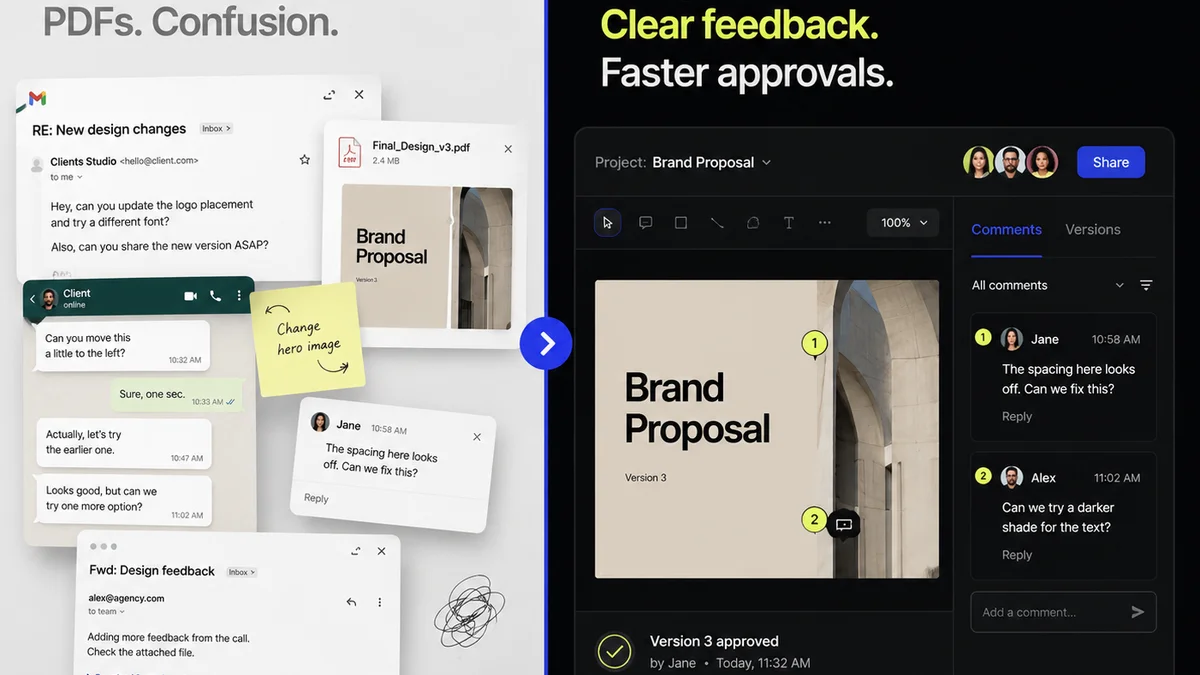
- Clear Feedback Loops: All client comments, internal critiques, and stakeholder sign-offs are captured directly on the asset version within Revue. No more digging through email chains or Slack messages. This creates an auditable trail, directly supporting the DAM’s role as a source of truth.
- Revision Visibility: See exactly what changed between versions, who requested it, and when. This transparency streamlines the revision process and provides context that can be fed back into the DAM’s metadata.
- Streamlined Approvals: Formalize the approval process with clear status updates and digital sign-offs. This recorded approval lives alongside the asset, enhancing the DAM’s integrity.
- Quality Checks: By centralizing feedback and approvals, you ensure that creative work meets defined standards before being finalized and pushed to the DAM for distribution.
Revue doesn’t replace your DAM, but it makes the human interaction *around* your assets incredibly efficient and transparent. It ensures the assets moving into and out of your DAM are the *right* assets, at the *right* stage of completion.
Final Thought
The evolution of Digital Asset Management is a story of technology enabling better human collaboration. It’s about moving from simply storing files to orchestrating complex creative workflows.
Are you looking at DAM trends through the lens of technology alone, or are you considering how they impact the people, processes, and ultimate output of your creative team?
Frequently asked questions
What is the primary goal of a modern DAM system?
The primary goal of a modern DAM system is to serve as the central hub for all creative assets, facilitating not just storage and retrieval, but also managing the entire lifecycle of an asset, including feedback, revisions, approvals, and usage rights, thereby streamlining creative workflows.
How does AI impact Digital Asset Management?
AI enhances DAM by automating tasks like tagging and categorization, enabling intelligent semantic search, identifying duplicates, suggesting relevant assets, and even helping to automate format conversions. This moves beyond simple keyword matching to understanding the context and meaning within assets.
Why is integration crucial for DAM systems?
Integration is crucial because it connects the DAM to other essential tools in the creative tech stack (like project management, creative software, and CMS). This eliminates manual work, reduces errors, ensures consistency, and makes assets more accessible and actionable across the entire organization.
What are the benefits of a cloud-native DAM?
Cloud-native DAM offers significant advantages including scalability, global accessibility, enhanced reliability, automatic software updates, and often a more predictable cost structure compared to on-premise solutions. It supports flexible and distributed creative teams.