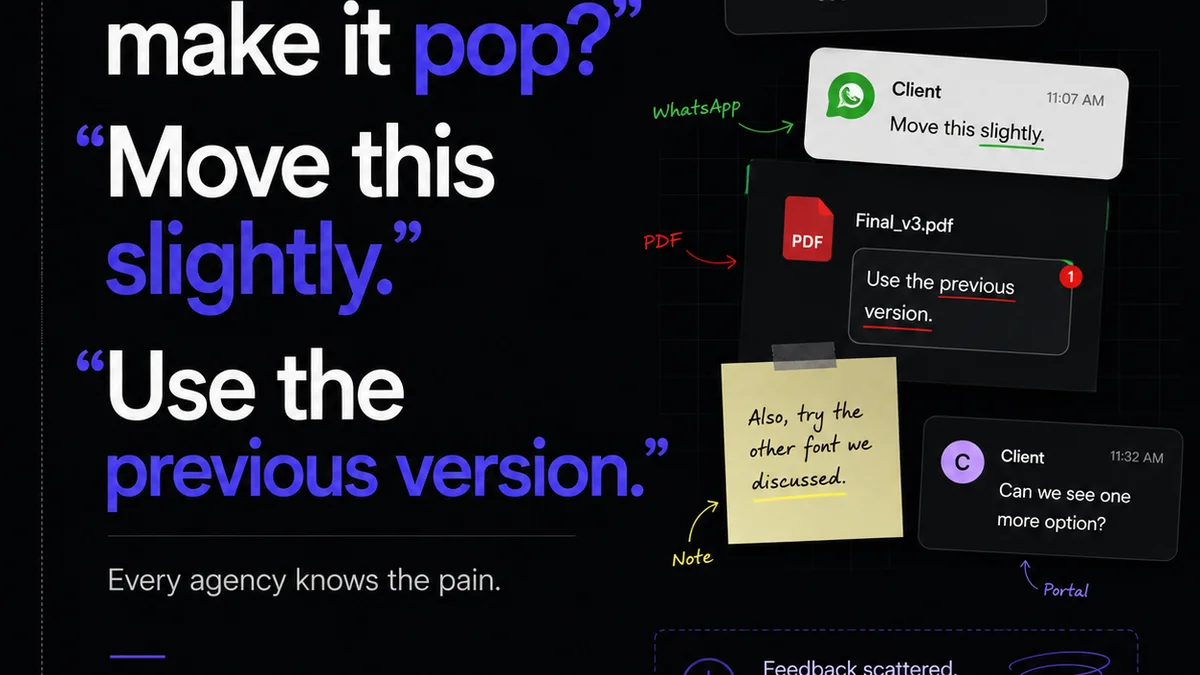
Everyone thinks an editorial approval workflow is just about getting a client's OK. A rubber stamp, a quick email reply, a checkmark in a box. None of that is wrong. But it’s incomplete.
The hard truth? A truly effective editorial approval workflow is far more than just a gate. It’s a structured process designed to ensure clarity, minimize miscommunication, and guarantee the quality of the final output. It’s about managing expectations and building trust, not just chasing signatures.
1. The Myth of the 'Final' Approval
The biggest mistake agencies and creative teams make is treating approval as a single, final event. It’s usually not.
Think about it. A client approves a concept. Then they approve a draft. Then they approve a near-final version. Each stage is a form of approval, and each carries its own risks and requirements.
Treating every step like the absolute last one leads to:
- Scope creep disguised as 'minor tweaks'.
- Frustrated clients who feel unheard.
- Burned-out creative teams redoing work unnecessarily.
- Missed deadlines and budget overruns.
This isn't about blaming clients. It's about structuring the process so everyone understands where they are, what's expected, and what 'approved' actually means at each stage.
2. Defining 'Approved': Clarity is King
What does 'approval' even mean in your context? It's rarely a simple 'yes' or 'no'.
An editorial approval workflow needs granular definitions.
Stakeholder Roles and Responsibilities
Who has the authority to approve? Is it one person? A committee? Different people approve different things?
Clearly map out:
- The primary approver.
- Secondary approvers (who can weigh in but don't have final say).
- Subject matter experts (who advise on specific aspects).
This prevents conflicting feedback and ensures the right voices are heard at the right time.
Levels of Feedback
Not all feedback is created equal. Some is strategic, some tactical, some purely aesthetic.
Your workflow should differentiate:
- Strategic Approval: Does this meet the core brief and business objectives?
- Content Approval: Is the messaging accurate, on-brand, and error-free?
- Design/Technical Approval: Does it meet brand guidelines, accessibility standards, and technical specs?
A client might approve the strategy but have notes on the design. This distinction is crucial for efficient revisions.
Defining 'Done' for Each Stage
What constitutes 'done' for a concept review? What about a draft?
For each milestone in your project, define:
- The specific deliverables expected.
- The criteria for approval.
- The expected turnaround time for feedback.
This sets clear expectations and prevents endless back-and-forth.
3. The Anatomy of a Robust Editorial Approval Workflow
A strong workflow isn't just about waiting for feedback. It's about guiding it.
Phase 1: Briefing and Kick-off
This is where the foundation is laid. Ensure the brief is crystal clear, signed off, and understood by all parties.
- Define project goals.
- Identify target audience.
- Outline key messages.
- Establish brand guidelines.
- Agree on success metrics.
A comprehensive creative brief is your first line of defense against misaligned approvals.
Phase 2: Creative Development & Internal Review
Before client eyes ever see the work, internal teams must align.
- Creative team develops concepts/drafts.
- Internal stakeholders (e.g., account managers, senior creatives) provide feedback.
- Refine based on internal consensus.
This internal gate prevents sending half-baked ideas to clients, saving everyone time and frustration.
Phase 3: Client Presentation & Feedback Round 1
Present the work clearly, referencing the brief. Guide the feedback process.
- Schedule a dedicated presentation meeting.
- Clearly state what you need feedback on (e.g., 'concept direction', 'messaging').
- Provide a structured way for feedback (e.g., a shared document, a dedicated platform).
Avoid vague presentations that invite vague feedback.
Phase 4: Revision and Re-presentation
Consolidate feedback. Discuss internally. Implement revisions.
- Triage client feedback against the brief and agreed scope.
- Communicate any scope issues or significant changes needed.
- Implement revisions systematically.
This is where clear communication about what was changed and why is vital.
Phase 5: Subsequent Approval Rounds
Repeat the presentation, feedback, and revision cycle as needed, getting progressively closer to final.
Crucially, each round should have a narrower focus.
- Round 2: Focus on refinement of the approved concept.
- Round 3: Focus on copy edits, minor design tweaks.
- Round 4: Final proofread and technical check.
Set limits on the number of revision rounds upfront in your contract.
Phase 6: Final Approval & Delivery
The moment of truth. Ensure all previous feedback is addressed and the final deliverable meets all criteria.
- Conduct a final quality assurance (QA) check.
- Secure formal sign-off.
- Deliver final assets.
This sign-off should be explicit, confirming acceptance of the final work and closing the loop on the project.
4. Common Pitfalls and How to Avoid Them
Even with a defined workflow, things can go sideways. Here’s what to watch out for.
- Vague Feedback: Clients say,
Frequently asked questions
What is an editorial approval workflow?
An editorial approval workflow is a structured process for reviewing and approving creative or editorial content. It defines the steps, stakeholders, and criteria involved in moving content from creation to final acceptance, ensuring clarity, quality, and alignment with project goals.
Why is a clear approval process important?
A clear approval process prevents miscommunication, manages client expectations, reduces scope creep, ensures quality, and streamlines revisions. It builds trust by providing transparency and accountability at each stage of the project.
How many approval rounds are typical?
The number of approval rounds can vary significantly depending on project complexity and client needs. It's best practice to define the expected number of revision cycles in your project contract upfront to manage expectations and prevent endless revisions.
What should be included in a client brief for approvals?
A client brief for approvals should clearly outline project goals, target audience, key messages, brand guidelines, technical requirements, and success metrics. A well-defined brief serves as the benchmark against which all feedback and approvals are measured.