Everyone knows an editorial approval workflow needs to get sign-off. That’s the obvious part.
But if you think approval is just a checkbox, you’re missing the engine that drives creative quality and client satisfaction. It’s not about getting a ‘yes’; it’s about getting the right ‘yes’, efficiently.
The hard truth? A broken approval process bleeds time, erodes trust, and kills creativity. It’s the silent killer of agency profitability and in-house team sanity.
1. The Myth of the Simple Sign-Off
We often treat editorial approval as the final hurdle. A client looks, a client clicks ‘approve’. Done.
This view is dangerously passive. It assumes the client knows exactly what they’re approving, that their feedback is clear, and that the creative team understands it perfectly.
In reality, approval is an active, iterative process. It’s where clarity is forged, or where confusion festers.
The Feedback Loop Breakdown
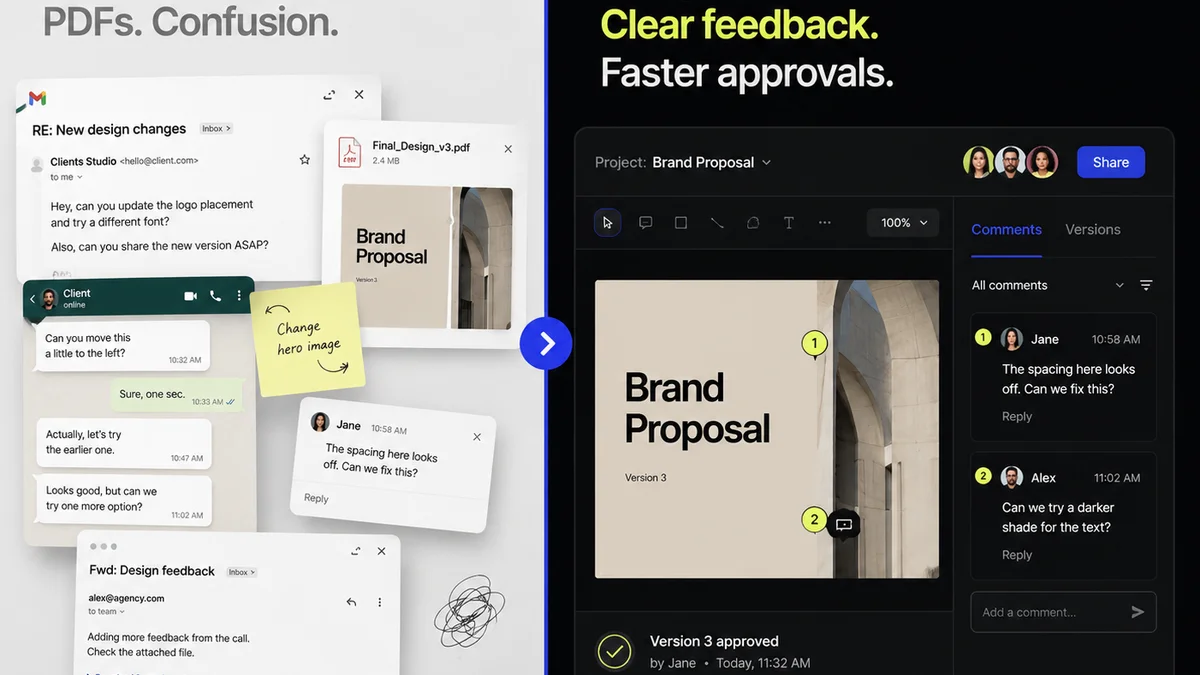
- Emails get lost.
- Slack messages are buried.
- Version control becomes a nightmare.
- Ambiguous comments (“Make it pop more!”) lead to endless cycles.
- Key stakeholders miss the review entirely.
This isn’t just inconvenient; it’s costly. Every extra revision cycle eats into margins and delays launch dates.
2. Defining Your Editorial Approval Workflow
A robust editorial approval workflow isn't just a list of steps; it’s a system designed for clarity, accountability, and efficiency.
It starts before the first draft is even shared.
Pre-Approval Foundations
- Clear Briefing: Does the brief capture all requirements, goals, and constraints?
- Defined Stakeholders: Who needs to approve, and what’s their role (e.g., final decision-maker, subject matter expert)?
- Established Criteria: What defines ‘done’? What are the success metrics for this piece of content?
- Timeline Alignment: When does feedback need to be submitted? When is final approval expected?
The Core Process: Step-by-Step
Think of this as the journey from draft to delivered asset.
- Internal Review: Before client eyes, does it meet brief requirements and quality standards?
- Client Share: Present the work clearly, highlighting key decisions or areas for feedback.
- Feedback Submission: Use a structured method. Avoid open-ended email threads.
- Feedback Consolidation: Gather all comments from all stakeholders in one place.
- Clarification: If comments are unclear, seek immediate follow-up. Don't guess.
- Revision: Implement feedback efficiently, tracking changes.
- Re-Review: Share revised work, focusing on addressed feedback.
- Final Approval: Formal sign-off.
Each step needs clear ownership and defined deliverables.
3. Common Bottlenecks and How to Fix Them
Where do approvals usually get stuck?
The Feedback Black Hole
This happens when feedback is vague, contradictory, or simply missing.
- Symptom: “I don’t like it.”
- Fix: Train clients on providing constructive, actionable feedback. Use structured forms or dedicated tools.
The Stakeholder Shuffle
Too many cooks, or the wrong cooks, spoiling the broth.
- Symptom: Conflicting opinions from different departments.
- Fix: Clearly designate the primary approver early on. Establish a protocol for how dissenting opinions are handled.
The Version Control Chaos
Which version is the latest? Which one are we even looking at?
- Symptom: Revisions made to the wrong draft.
- Fix: Implement a clear naming convention (e.g., `ProjectName_Asset_v3_ClientApproved.docx`) and use a central platform that tracks versions automatically.
The Scope Creep Sneak
Feedback that goes beyond the original brief.
- Symptom: Requests for new features or content unrelated to the initial scope.
- Fix: Refer back to the brief. If scope changes are necessary, initiate a change order process.
These aren’t minor annoyances. They are systemic failures.
4. Tools for Streamlining Editorial Approvals
The right tools can transform a chaotic process into a smooth operation.
- Project Management Software: Tools like Asana, Monday.com, or Trello help track tasks and deadlines.
- Dedicated Proofing Tools: Platforms designed specifically for visual and document review offer annotation and version control.
- Communication Platforms: Centralized chat like Slack can work, but needs strict protocols to avoid information silos.
- Digital Asset Management (DAM): For larger organizations, a DAM system ensures assets are organized and accessible.
The goal is a single source of truth.
Where Revue Fits In
Revue is built to solve these exact workflow challenges for creative teams.
It’s not just another place to store files. Revue centralizes client feedback, making it visible and actionable.
You can manage revisions and approvals directly within the platform. No more hunting through email chains or Slack messages.
This visibility ensures everyone is on the same page, reducing misunderstandings and speeding up the approval cycle.
Crucially, Revue helps maintain quality control by providing a clear history of feedback and revisions, ensuring that what gets approved aligns with the brief and meets your standards.
5. Cultivating a Culture of Clear Approvals
Technology is only part of the solution. The human element is critical.
Educate Your Clients
They might not be workflow experts. Guide them.
- Explain your process clearly during onboarding.
- Provide templates or guidelines for feedback.
- Highlight the benefits of their structured input (faster delivery, better results).
Empower Your Team
Your internal team needs clear guidelines, too.
- Train them on how to solicit and interpret feedback.
- Give them the authority to ask clarifying questions before proceeding with revisions.
- Foster an environment where pushing back on unclear feedback is encouraged.
Continuous Improvement
Your workflow isn't static.
- Regularly review your approval process.
- What worked? What didn’t?
- Solicit feedback from both your team and your clients.
Adapt and refine. That’s the key.
Final Thought
Is your editorial approval process a friction point or a facilitator? It’s a question every agency owner and creative director must ask. Because the difference between a smooth sign-off and a drawn-out battle isn't just about getting a signature. It’s about the health of your client relationships, the profitability of your projects, and the quality of the creative work you deliver.
Frequently asked questions
What is an editorial approval workflow?
An editorial approval workflow is a structured process designed to gather feedback, manage revisions, and obtain formal sign-off on creative or editorial content from relevant stakeholders before final delivery or publication.
Why is a clear approval workflow important?
A clear workflow prevents misunderstandings, reduces costly revision cycles, ensures alignment with project goals, maintains version control, and ultimately leads to faster, higher-quality creative output and better client relationships.
How can I get better feedback from clients?
Educate clients on providing specific, actionable feedback linked to project goals. Use structured feedback forms or tools, and always seek clarification for vague comments. Clearly define the primary approver early on.
What are the biggest mistakes in approval workflows?
Common mistakes include relying on disorganized communication channels (like email chains), unclear stakeholder roles, lack of defined approval criteria, poor version control, and failing to address scope creep. These lead to delays and frustration.
How does software like Revue help with approvals?
Revue centralizes feedback, making it visible and actionable for the entire team. It helps manage revisions and approvals in one place, improving clarity, accountability, and efficiency, thereby reducing misunderstandings and speeding up the sign-off process.