Everyone wants a faster design team. Clients demand quicker turnarounds, leadership pushes for higher output, and frankly, creatives want to spend less time on tedious tasks and more time making great work. The assumption is simple: to go faster, you just need more people, better tools, or a mandate to hustle harder.
None of that is wrong. But it’s incomplete.
The hard truth is that true design team efficiency isn't about accelerating individual actions. It’s about optimizing the entire workflow. It’s about building systems that reduce friction, clarify communication, and eliminate wasted effort. This is how you get real speed, sustainable output, and happier, more productive teams.
1. The Myth of the Solo Genius
We often romanticize the lone creative genius, the one who can conjure brilliance out of thin air. But even the most talented individuals operate within a system. If that system is broken, even a team of Einsteins will stumble.
The real bottleneck isn't talent; it's process.
The Hidden Costs of Ad Hoc Workflows
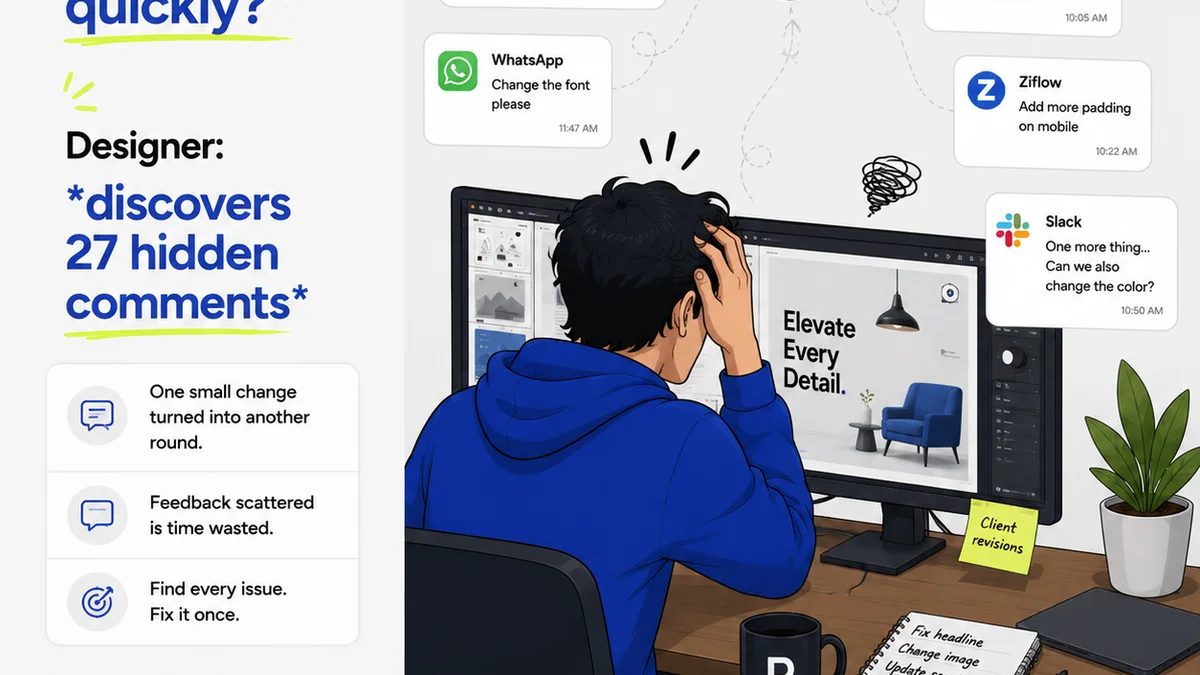
When your team relies on a patchwork of emails, Slack messages, and scattered cloud storage links to manage projects, you create chaos. Here’s what that looks like:
- Endless searching for the latest file version.
- Misinterpreting feedback buried in email chains.
- Redundant revisions because the right context was missing.
- Difficulty onboarding new team members or freelancers.
- A constant feeling of being reactive rather than proactive.
This isn't just frustrating; it's a direct drag on productivity. Every minute spent searching, clarifying, or redoing work is a minute not spent creating.
Building a Predictable Process
Efficiency starts with a shared understanding of how work flows. This means defining clear stages for every project, from brief to final delivery.
- Briefing: Standardize intake forms and kick-off meetings. Ensure all necessary information is gathered upfront.
- Concepting & Design: Establish clear internal review points. Define how feedback is given and received.
- Revisions: Create a structured revision process. Limit the number of rounds and specify what constitutes a
Frequently asked questions
How can I measure design team efficiency?
Measure efficiency by tracking key process metrics: time-to-completion for project stages, number of revision cycles per project, client feedback turnaround time, and the volume of rework. Focus on trends over absolute numbers.
What's the difference between speed and efficiency in design?
Speed is about how quickly tasks are completed. Efficiency is about minimizing wasted effort and resources throughout the entire workflow to achieve desired outcomes consistently and predictably. You can be fast but inefficient, leading to burnout and errors.
How do I get buy-in from my team for new processes?
Involve your team in defining and refining processes. Explain the 'why' – how it benefits them (less frustration, more creative time) and the business. Pilot new workflows with a small group and gather feedback before a full rollout.
Can technology alone make my design team more efficient?
Technology is an enabler, not a silver bullet. Tools like Revue can streamline feedback and approvals, but they are most effective when integrated into well-defined, understood processes. The best tools support a strong workflow; they don't replace it.