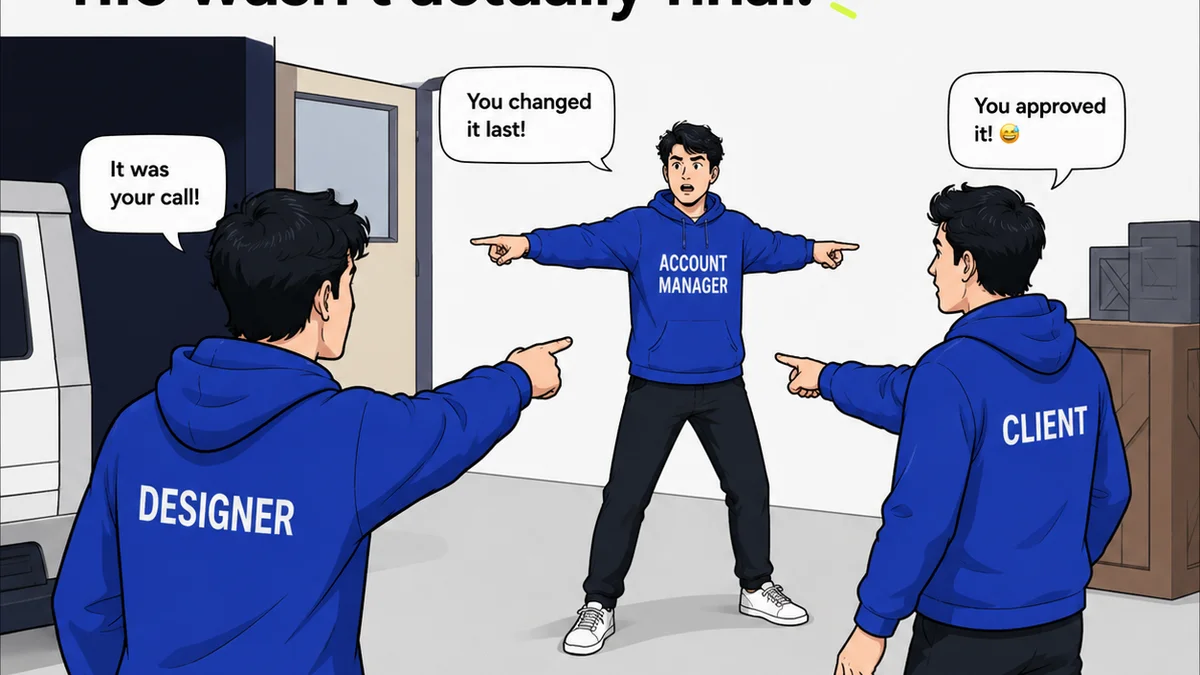
Everyone assumes that approval bottlenecks are a client problem. That the delay is solely on their end, a lack of urgency or a slow internal process. If only it were that simple.
The hard truth? Approval bottlenecks are almost always an *internal* workflow problem. The client is just the final gatekeeper, and they’re reacting to the information (or lack thereof) you’re giving them.
1. The Illusion of 'Final' Versions
We send over what we call a 'final' version. But is it *truly* final? Or is it just the latest iteration before the *real* final one? This ambiguity breeds indecision.
Clients see a file and think, “Is this it? Or is there more to come?” They hesitate because they don’t want to approve something that’s about to be changed again. This isn't malice; it’s rational behavior.
The Symptoms of Ambiguity
- Endless minor tweaks requested *after* what you deemed
Frequently asked questions
What is the most common cause of approval bottlenecks?
The most common cause isn't client delay, but internal workflow issues. This includes unclear communication, sending 'final' versions that aren't truly final, and a lack of standardized feedback processes.
How can I prevent clients from requesting endless revisions?
Ensure clear project scope and brief adherence. Manage client expectations by establishing a clear revision process with defined limits. Use tools that provide a single source of truth for feedback and approvals.
What's the difference between a bottleneck and slow client feedback?
A bottleneck is a systemic issue within your agency's process that impedes progress. Slow client feedback is when the client is the direct cause of delay, often due to their own internal processes or lack of clarity from your end.
Can technology truly solve approval bottlenecks?
Technology can significantly streamline the process by centralizing feedback, improving visibility, and automating certain steps. However, it's a tool that supports a well-defined workflow, not a magic bullet on its own.