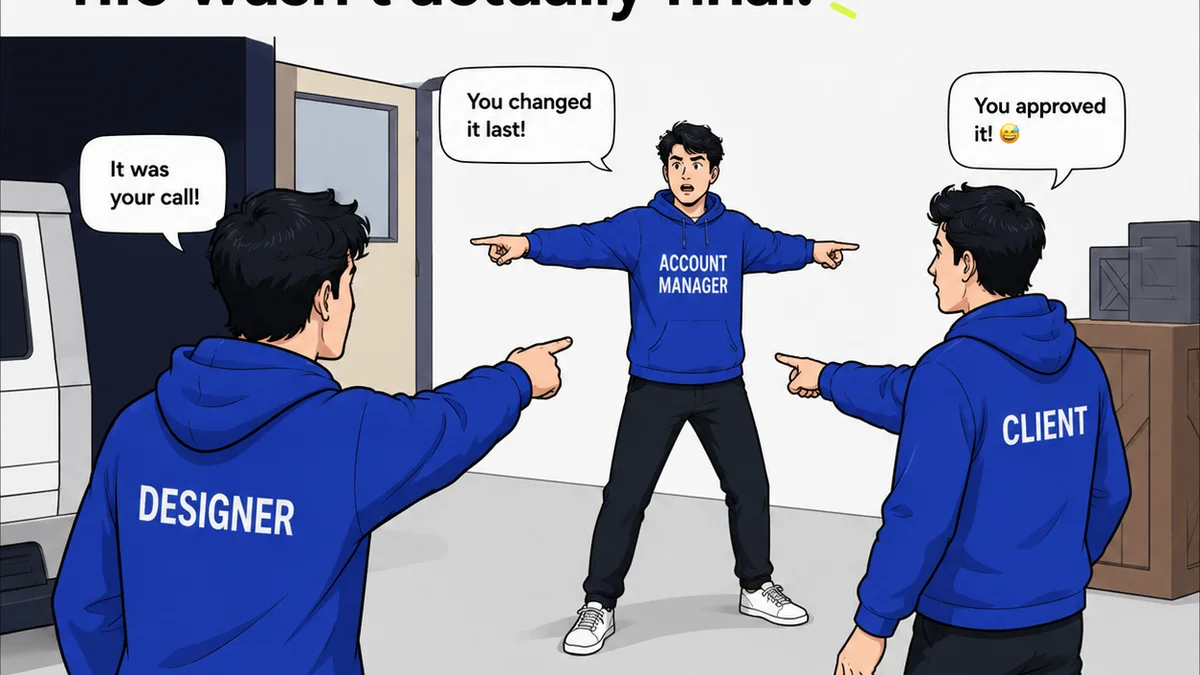
Everyone thinks campaign design bottlenecks are about slow designers or too many revisions. None of that is wrong. But it’s incomplete.
The real truth? Bottlenecks aren't usually about the creative work itself. They’re about broken communication and unclear processes that make good work impossible, no matter how talented your team is.
Fixing campaign design bottlenecks means looking beyond the obvious and digging into the operational weeds. It’s about building systems that support, rather than hinder, your team's ability to deliver.
1. The Illusion of 'More Resources'
When projects get stuck, the knee-jerk reaction is to throw more people at it. More designers, more account managers, more QA. This often makes things worse.
Why?
- More people means more communication overhead.
- It adds complexity without addressing the root cause of the delay.
- It can dilute accountability.
Adding people to a slow process is like adding more lanes to a traffic jam. It doesn't fix the congestion; it just adds more cars.
The real solution isn't more hands, but smarter workflows. It’s about clarity, not just capacity.
2. Unpacking the 'Revision Cycle' Myth
You’ve heard it: “We’re waiting on client feedback.” Or, “The client wants endless revisions.” This is often presented as an external force, something you just have to endure.
The hard truth is that most
Frequently asked questions
What are the most common causes of campaign design bottlenecks?
The most common causes are unclear briefs, poor client communication, inefficient feedback loops, lack of clear approval processes, scope creep, and a lack of centralized project visibility. These often lead to rework and delays.
How can I improve client feedback to avoid bottlenecks?
Establish clear feedback guidelines upfront. Define who provides feedback, when, and how. Use a centralized platform for all comments to avoid lost emails or conflicting messages. Schedule dedicated feedback sessions rather than relying on ad-hoc comments.
Can technology really help eliminate design bottlenecks?
Yes, absolutely. Tools for centralized feedback, version control, automated approvals, and project management provide clarity and streamline communication, directly addressing many common bottleneck causes.
What's the role of the project manager in preventing bottlenecks?
The project manager is crucial. They ensure clear briefs, manage timelines, facilitate communication, track progress, identify potential risks early, and enforce process adherence. A proactive PM can prevent many issues before they become bottlenecks.