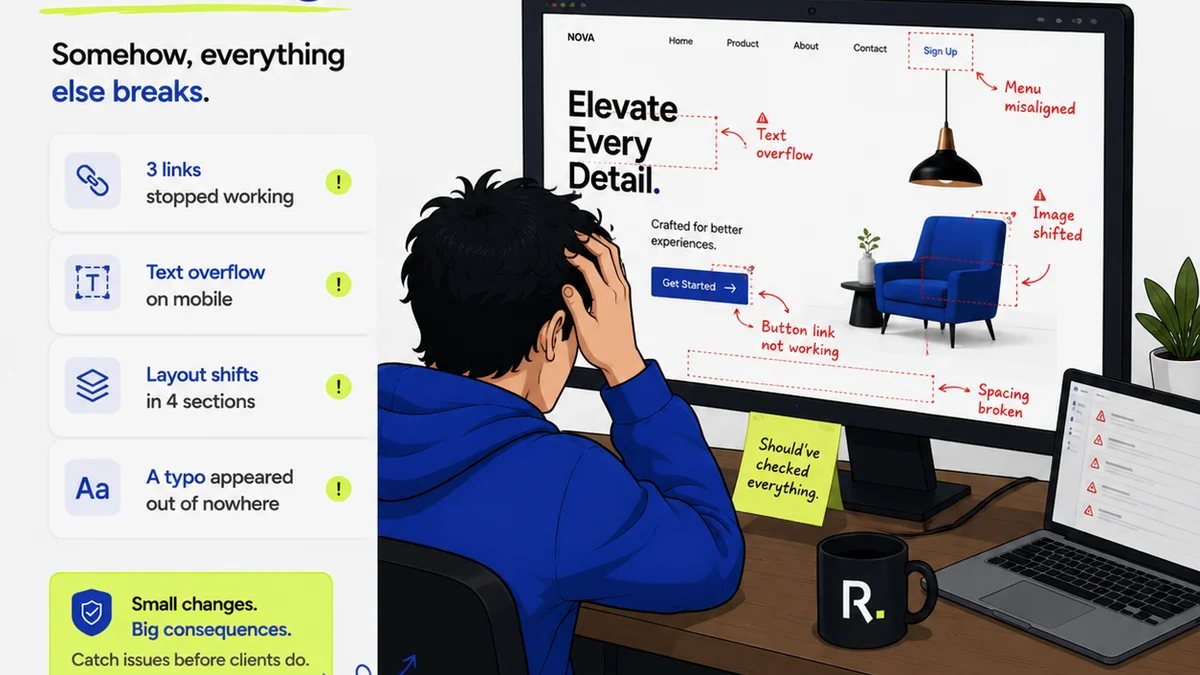
Everyone talks about speeding up creative workflows. The assumption? More creatives, better software, or maybe just working longer hours will do the trick. None of that is wrong. But it’s incomplete.
The hard truth is that most creative workflow bottlenecks aren't about creative output. They’re about communication, process, and visibility. They live in the handover points, the waiting periods, the moments of confusion.
1. The Illusion of Parallel Processing
You might think your team is working in parallel. Designers are designing, writers are writing, developers are developing. Everyone’s busy. But are they waiting for each other?
This is where the real drag happens. One team finishes their part, but the next can’t start until feedback comes in, is approved, or a file is handed over correctly. This creates a cascade of delays, even if everyone is technically working at the same time.
The Hidden Cost of Handoffs
Every time work moves from one person or team to another, there’s a risk of delay and error. Think about it:
- A designer sends a PDF for client review.
- The client leaves vague comments in an email.
- The account manager tries to interpret those comments.
- They relay the feedback to the designer, who then has to ask clarifying questions.
- This cycle repeats.
Each step is a potential point where work stops. It’s not about the creative skill; it’s about the friction in the process.
2. Unpacking Unclear Feedback
Vague, subjective, or contradictory feedback is a creativity killer and a workflow stopper. If you’re constantly asking “What do you mean by that?” or “Can you be more specific?”, you have a bottleneck.
This isn’t the client’s fault entirely. It’s also an agency’s failure to establish a clear feedback loop. Without a structured way to gather and communicate feedback, subjective opinions become roadblocks.
The Impact on Revision Cycles
Endless revision cycles aren't a sign of indecisive clients; they're often a symptom of poor feedback management. When feedback isn't actionable, designers and developers spin their wheels.
- “Make it pop.”
- “I don’t like it.”
- “Can we try something different?”
These statements require interpretation, guesswork, and often, entirely new directions that weren't clearly articulated upfront. This leads to wasted hours and frustrated teams.
3. The Approval Black Hole
What happens after feedback is given? Does it get logged? Does it get approved? Or does it disappear into an inbox, only to resurface weeks later when the project is already off track?
Lack of clear approval processes creates uncertainty. Teams don't know when they can move forward. Stakeholders forget what they agreed to. This isn't efficient; it's chaos.
Visibility is Key
If you can’t see the status of feedback and approvals, you can’t manage the workflow effectively. A project can stall simply because no one knows who needs to review what next, or if a previous stage was actually signed off.
- Who is responsible for the next approval?
- What was the last approved version?
- Are there any outstanding comments that need addressing?
Without answers, progress halts.
4. The Myth of the Agile Creative
Agile methodologies are great for software development, but they often break down in creative agencies. The assumption is that creatives can just pivot instantly. They can’t. Not without context and clear direction.
A creative’s ability to adapt relies on having a solid understanding of the project goals and the previous stages. If they’re constantly being asked to jump to a new task without a clear brief or understanding of what’s just been signed off, they’re not being agile; they’re being reactive and inefficient.
The Cost of Context Switching
Constantly switching between unrelated tasks is a major productivity drain. Each switch requires mental re-orientation, breaking focus and increasing the chance of errors.
- Jumping from a logo concept to an ad banner.
- Shifting from website copy to social media posts.
- Moving from a client call to a design revision.
These switches fragment attention and slow down overall output, even if individual tasks are completed quickly.
5. Quality Control as an Afterthought
Many agencies treat quality control as a final check, done just before delivery. This is a mistake. Quality should be baked into the process, not bolted on at the end.
When QC is an afterthought, you’re more likely to find fundamental issues late in the game. This leads to rushed fixes, missed deadlines, and potentially, client dissatisfaction.
The Late-Stage Discovery Problem
Imagine a campaign goes through design, copywriting, and development. Only on the final review do you realize the core message is misaligned with the brief. Or a technical spec wasn't met.
This is a classic bottleneck. It forces a painful, expensive rewind. Proactive checks at each stage are far more efficient.
- Is the copy on-brand?
- Does the design meet accessibility standards (WCAG)?
- Is the technical implementation sound?
Catching these issues early saves time and resources.
Where Revue Fits In
Addressing these workflow bottlenecks requires more than just good intentions. It requires a system that brings clarity, structure, and visibility to your creative process. That’s where Revue comes in.
Revue is built to tackle the communication and process breakdowns that plague creative teams. It centralizes client feedback, making it clear, actionable, and traceable. No more digging through emails or deciphering Slack messages.
With Revue, you get:
- Centralized Client Feedback: All comments, annotations, and revisions live in one place, directly on the creative asset.
- Clear Revision and Approval Tracking: See exactly who has reviewed what, what feedback has been given, and what has been approved. This eliminates the approval black hole and provides clear next steps.
- Version Control and Audit Trails: Easily manage different versions of your work and maintain a clear history of changes and approvals.
- Streamlined Quality Checks: Integrate quality checks at key stages, ensuring that issues are caught early, not at the eleventh hour.
By providing a single source of truth for feedback and approvals, Revue helps eliminate the guesswork, reduce miscommunication, and accelerate your entire creative workflow. It ensures your team is working on the right things, with clear direction, at the right time.
Final Thought
The fastest creative workflow isn't the one with the most hours logged or the most talented individuals working in isolation. It's the one with the fewest points of friction.
Where are your team's hidden delays? Are you focusing on creative output, or are you optimizing the system that enables it?
Frequently asked questions
What are the most common creative workflow bottlenecks?
The most common bottlenecks are not about creative skill, but about communication breakdowns, unclear feedback, delayed approvals, inefficient handoffs between teams, and treating quality control as an afterthought rather than an integrated part of the process.
How can I get clearer feedback from clients?
Establish a structured feedback process. Use tools that allow for direct annotation on creative assets, ask clarifying questions, and set clear expectations for the type and detail of feedback required. Centralizing feedback in a platform like Revue helps ensure it's actionable.
Why is visibility important in a creative workflow?
Visibility ensures everyone knows the project status, who is responsible for the next step, and what has been approved. This prevents work from stalling in an 'approval black hole' and reduces confusion and duplicated effort.
How does managing revisions impact workflow speed?
Unmanaged revisions lead to endless cycles, wasted time, and frustration. A clear system for tracking revisions and approvals, like those offered by Revue, ensures that teams work from the latest approved version and know exactly what needs to be done next, significantly speeding up the process.