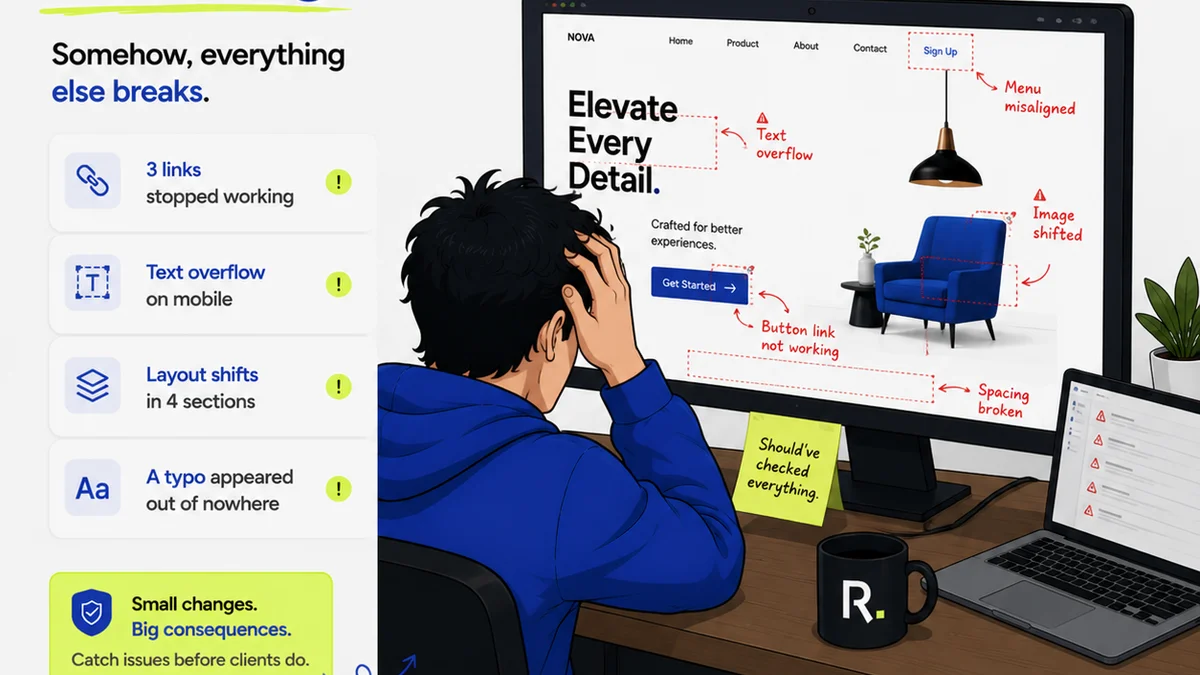
Everyone agrees that a smooth design handoff is crucial. You’ve probably heard it’s about better communication, clearer specs, or maybe just more coffee. None of that is wrong. But it’s incomplete.
The hard truth? Design handoff bottlenecks aren't a communication problem. They’re a workflow problem. And they’re costing your agency time, money, and client trust.
1. The Myth of the 'Final' Design File
We treat design files like finished products. We export them, send them off, and assume the job is done. But a design file is rarely truly 'final' until it’s built and live. The handoff process often ignores the messy middle ground.
This leads to assumptions. Designers assume developers understand every nuance. Developers assume designers have accounted for every technical constraint. Clients assume the visual they signed off on is exactly what they’ll get.
This gap is where bottlenecks form.
The Symptoms of a Broken Handoff
- Endless rounds of
Frequently asked questions
What are the most common design handoff bottlenecks?
Common bottlenecks include unclear specifications, lack of asset organization, insufficient communication between design and development, last-minute changes, and the absence of a standardized process. These issues lead to delays and rework.
How can I improve communication during design handoff?
Establish clear communication channels and a single source of truth for feedback and assets. Regular syncs between designers and developers, utilizing tools that facilitate annotated feedback, and having dedicated check-ins can significantly improve communication.
What role does project management play in design handoffs?
Project management is central. A good PM ensures all necessary information is gathered, timelines are realistic, communication flows smoothly, and the process is standardized. They act as the bridge between teams and clients, proactively identifying and resolving potential bottlenecks.
How can design tools help with handoff issues?
Modern design tools like Figma offer features for inspecting designs, exporting assets, and sharing style guides. However, they are just one piece of the puzzle. Integrating them into a broader workflow management system is key to truly eliminating bottlenecks.