Everyone talks about brand consistency. They say it’s about guidelines, logos, and color palettes. None of that is wrong. But it’s incomplete.
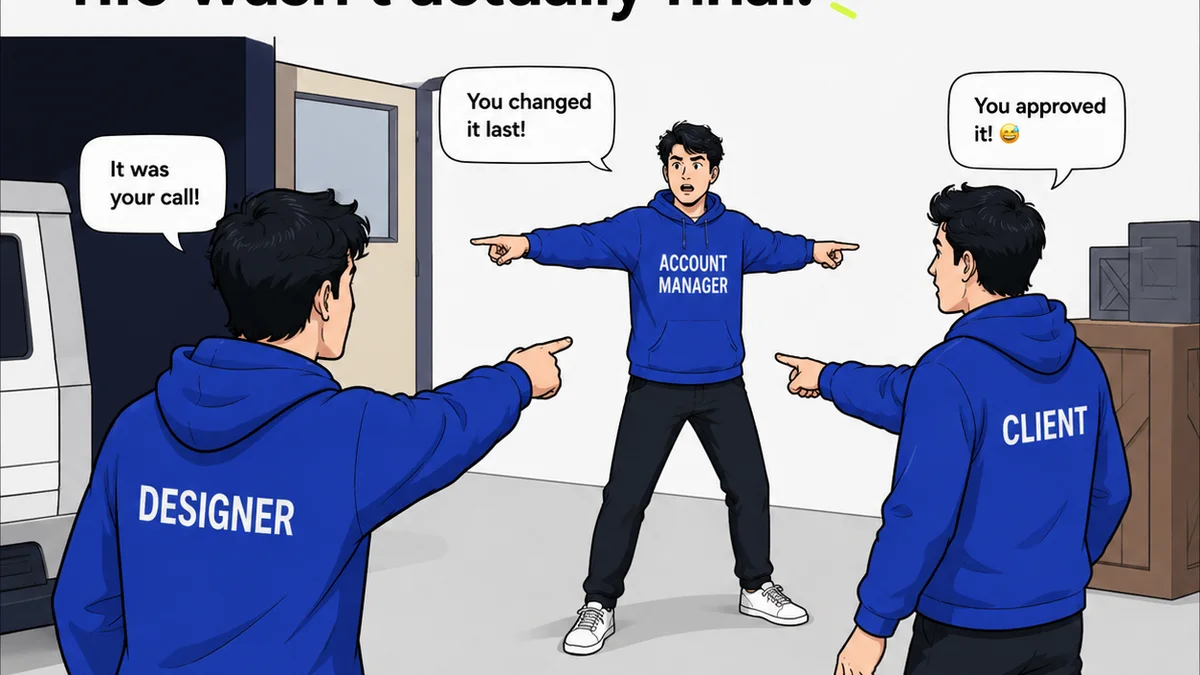
The real problem for enterprise branding isn’t a lack of rules. It's the operational drag that kills momentum. It’s the endless loops of feedback, the murky approval chains, and the sheer volume of assets needed across dozens of teams. This is where branding efforts go to die.
1. The Myth of Centralized Control
The assumption is that a strong central brand team can dictate everything. They create the guidelines, and everyone else just follows them. Simple, right?
Wrong.
In large organizations, the central team is often too removed from the day-to-day realities of regional marketing, product launches, or partner co-branding. They can't possibly foresee every use case or nuance.
The Operational Reality
Central control is a fantasy when you have thousands of employees and hundreds of touchpoints. What actually happens is a slow, bureaucratic process where local teams either:
- Wait weeks for clarification or approval on minor deviations.
- Ignore the guidelines because they’re impractical or outdated.
- Create workarounds that dilute the brand over time.
This isn't about rebellion; it's about the need to move fast in their own contexts. The bottleneck isn't the lack of control; it's the *inefficiency* of the control mechanism.
2. Feedback Loops: The Silent Killer of Velocity
Ever asked a creative team about their biggest pain point? Chances are, client feedback (or internal stakeholder feedback) will be high on the list. For enterprise branding, this problem is magnified.
Imagine hundreds of stakeholders, each with their own interpretation of
Frequently asked questions
What are the most common bottlenecks in enterprise branding?
The most common bottlenecks include inefficient feedback loops, unclear approval processes, lack of centralized asset management, outdated brand guidelines, and poor communication between central brand teams and local/regional teams.
How can technology help reduce enterprise branding bottlenecks?
Technology like Digital Asset Management (DAM) systems and project management tools can centralize assets, streamline feedback and approvals, and improve collaboration, reducing manual work and delays.
Why is brand consistency so hard to maintain in large enterprises?
Maintaining consistency is hard due to the sheer number of people involved, geographic distribution, varying levels of brand understanding, differing market needs, and the rapid pace of product development and marketing campaigns, all of which can lead to deviations from brand standards.
What is the role of the central brand team in managing bottlenecks?
The central brand team's role shifts from rigid gatekeeping to enabling. They should focus on creating clear, adaptable guidelines, providing accessible resources, implementing efficient review processes, and fostering communication, rather than solely enforcing rules.