Everyone agrees that marketing design bottlenecks slow things down. They create missed deadlines, frustrated clients, and overworked teams. Common advice? Hire more designers, use better software, or improve project management. None of that is wrong. But it’s incomplete.
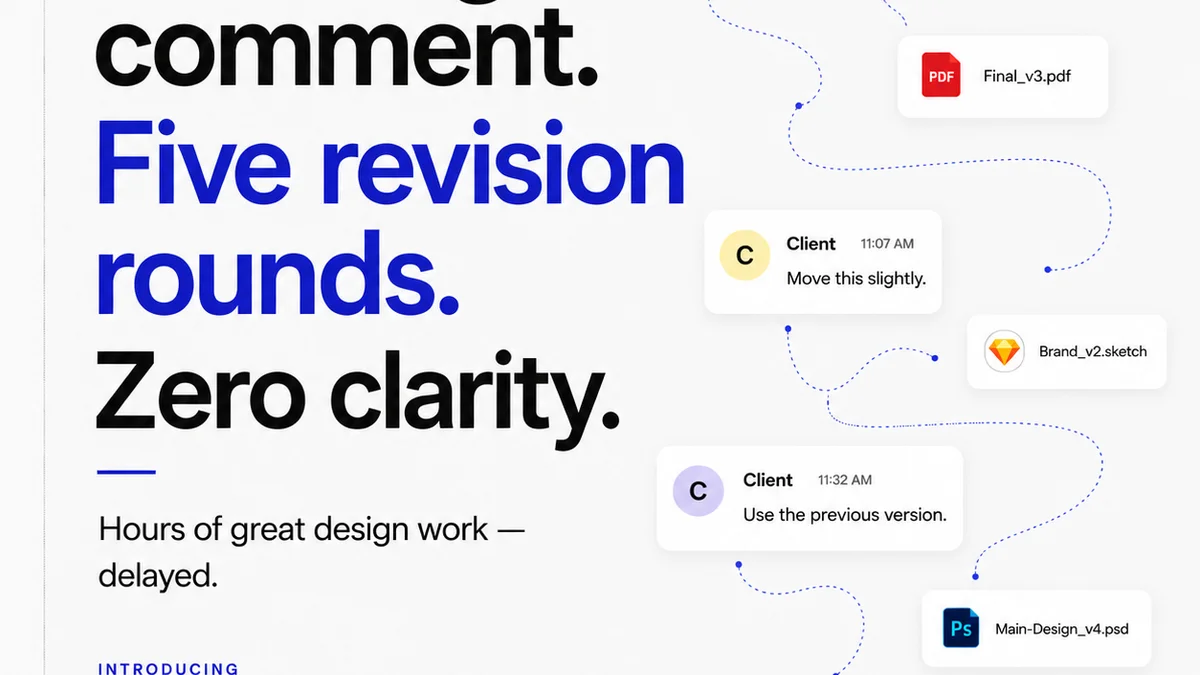
The hard truth is that most design bottlenecks aren't about resources or tools. They're about communication and process. Specifically, how feedback is given, revisions are managed, and approvals are tracked.
1. The Illusion of 'Quick Feedback'
It seems simple: a stakeholder sees a design, makes a comment, and the designer fixes it. Easy, right?
Wrong. The real problem starts when feedback is vague, contradictory, or comes from too many people.
The Feedback Avalanche
Imagine an email chain with 15 recipients. Everyone chimes in. One person loves the color. Another hates it. A third asks for a completely different direction. The designer is left deciphering a mess.
This isn't 'quick feedback.' It's a recipe for rework and confusion.
- Vague comments like “make it pop” or “I don’t like it.”
- Conflicting opinions from different stakeholders.
- Too many cooks spoiling the creative broth.
- Delayed feedback that halts progress for days.
This chaos isn't just frustrating; it actively breaks the design process. It forces designers to guess, leading to more revisions and longer timelines.
The Single Source of Truth
Effective feedback is clear, constructive, and consolidated. It comes from a designated point person or a structured review process.
When feedback is centralized, designers know exactly what's required. They can focus on execution, not interpretation.
2. Revision Rounds: The Never-Ending Story
Most agencies and teams have a set number of revision rounds included in a project scope. But what happens when those rounds morph into an endless cycle of tweaks?
It's often not the designer's fault. It's a symptom of unclear project goals and scope creep disguised as 'minor changes.'
When 'Minor' Becomes Major
A client asks to change a headline. Seems simple. But then they want to resize an image to accommodate the new headline. Then they decide the new headline needs a different call to action. Suddenly, a 'minor' change has cascaded into significant rework.
This happens when the initial brief is weak or when changes aren't tracked against the original scope.
Scope Creep's Cousins
This isn't just about extra work. It's about a lack of clarity on:
- The original project objectives.
- The specific deliverables.
- The agreed-upon scope of work.
- What constitutes a 'revision' versus a 'new request.'
Without a clear framework, revision rounds can become a black hole for time and resources. They erode profitability and strain client relationships.
Defining 'Done'
A crucial step is defining what 'done' means for each deliverable and for the project as a whole. This involves clear acceptance criteria agreed upon upfront.
When everyone understands the finish line, it's easier to identify when changes are genuinely out of scope.
3. Approval Paralysis
Getting a final sign-off on creative work should be the victory lap, not another hurdle.
Yet, many teams experience approval paralysis. Designs sit idle for days, sometimes weeks, waiting for a signature.
The Waiting Game
Why does this happen? Often, it's because the approval process is buried in email threads, internal messages, or simply forgotten.
Key stakeholders might be out of office, overloaded, or simply not aware that their sign-off is the next step.
The Cost of Indecision
This delay has tangible costs:
- Campaign launch dates slip.
- Media spend is wasted.
- Team morale plummets.
- Opportunity cost—the work that could have been done in the meantime.
It’s not just about waiting for a 'yes.' It’s about the ripple effect of that wait on the entire marketing engine.
Streamlining Sign-Offs
A clear, documented, and easily accessible approval process is vital. It needs to be obvious who needs to approve, what they are approving, and by when.
When the path to approval is frictionless, projects move forward decisively.
4. The Hidden Cost of Inefficiency
These aren't isolated incidents. They are systemic issues that drain resources and impact the bottom line.
When feedback is messy, revisions are endless, and approvals are slow, the entire creative output suffers.
The Domino Effect
A bottleneck in one area triggers a cascade:
- Designers spend more time managing feedback and revisions than creating.
- Project managers are stuck chasing approvals and clarifying requests.
- Clients become impatient and lose confidence.
- Team burnout increases due to constant firefighting.
- Profits shrink as projects run over budget and behind schedule.
This isn't just an operational headache; it's a threat to the agency's or team's sustainability.
Focus on Flow
The goal is to create a smooth, predictable flow of work. This means addressing the root causes of delays, not just the symptoms.
It requires systems that facilitate clear communication and controlled progress.
Where Revue Fits In
Managing marketing design feedback, revisions, and approvals efficiently is crucial for creative teams. This is precisely where a tool like Revue can make a significant difference.
Revue acts as a central hub, bringing clarity to a process often bogged down by miscommunication and disorganization.
Centralized Feedback and Annotation
Instead of sifting through endless email threads or chat messages, all feedback can be captured directly on the creative assets within Revue. Stakeholders can leave precise comments with visual annotations, eliminating ambiguity. This ensures designers receive clear, actionable input, reducing the need for guesswork and rework.
Streamlined Revision and Approval Workflows
Revue provides visibility into the revision process. You can track which versions are current, who has reviewed them, and what the status of approvals is. This eliminates the 'approval paralysis' by making it clear what needs to happen next and who is responsible. Setting up clear workflows ensures that feedback is consolidated and revisions are managed systematically, preventing scope creep from disguised 'minor' changes.
Enhanced Quality Control
By centralizing feedback and approvals, Revue helps ensure that all stakeholders have seen and signed off on the final version. This reduces the risk of errors slipping through the cracks and ensures that the final output meets all requirements before being published or delivered.
Ultimately, Revue helps transform a chaotic, bottleneck-prone design process into a streamlined, efficient operation.
Final Thought
Are design bottlenecks truly about a lack of talent or technology, or are they a predictable outcome of poorly managed communication and opaque workflows?
The answer lies in building systems that prioritize clarity, accountability, and efficiency at every stage of the creative process.
Frequently asked questions
What are the most common causes of design bottlenecks?
The most common causes are unclear or conflicting feedback, an overwhelming number of feedback sources, vague revision requests, scope creep, and slow or unclear approval processes. These issues stem from poor communication and inefficient workflows rather than a lack of resources.
How can I get clearer feedback from stakeholders?
Establish a single point of contact for feedback, define clear project goals and acceptance criteria upfront, and use tools that allow for visual annotations and consolidated comments. Encourage stakeholders to be specific about their needs and rationale.
What's the best way to manage revision rounds?
Clearly define the scope and number of revision rounds at the project's outset. Track all changes against the original brief and scope. Differentiate between 'revisions' and new requests, and ensure all changes are approved before proceeding to the next iteration.
How do I avoid 'approval paralysis'?
Implement a clear, documented approval process. Assign specific approvers and set deadlines. Use a centralized platform where designs and feedback are easily accessible, and notifications can be sent to prompt action. Regular check-ins can also help.