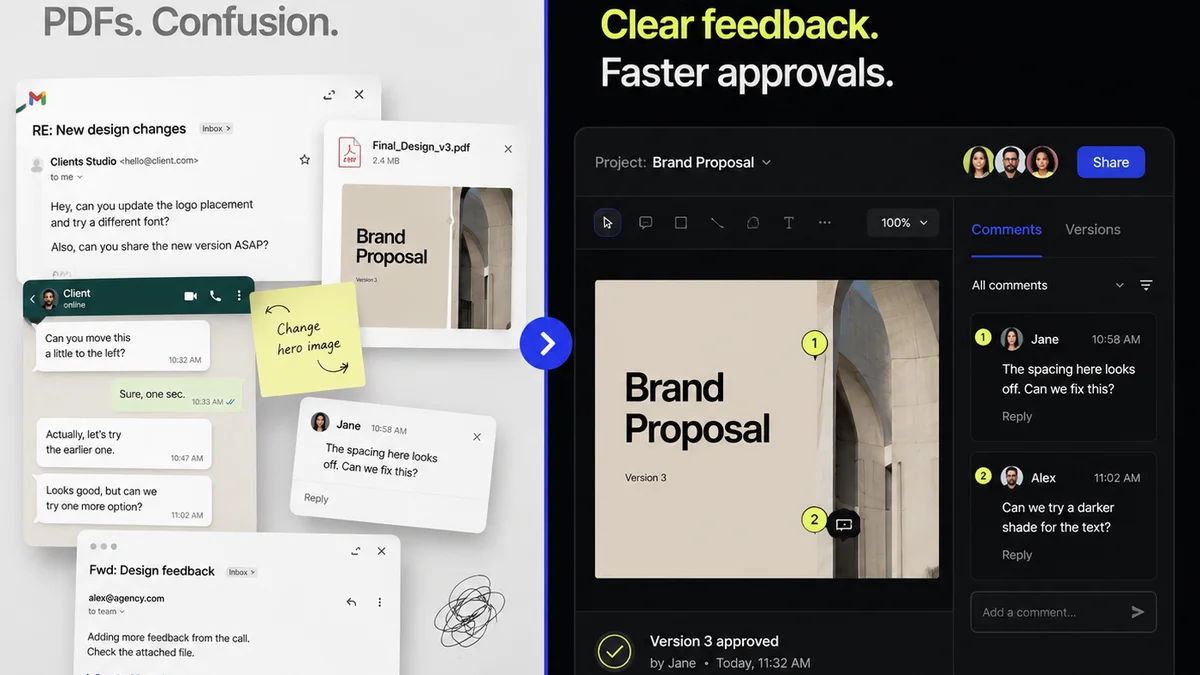
The assumption is simple: if your design team is swamped, the obvious solution is to hire more designers. More hands, more output. Seems logical, right?
None of that is wrong. But it’s incomplete.
The hard truth is that most creative bottlenecks aren't a capacity problem. They're a process problem. You're likely drowning in inefficiencies you don't even see.
Hiring more people just adds more complexity to a broken system. It's like pouring water into a leaky bucket. You need to fix the leaks first.
1. The Illusion of Busyness
We've all seen it. Designers glued to their screens, looking stressed, buried under a mountain of tasks. It *looks* like peak productivity. But is it?
Often, this
Frequently asked questions
What are the signs of a process bottleneck in a creative team?
Common signs include constant project delays, repeated revisions on the same assets, team members working overtime just to keep up, and a general feeling of being reactive rather than proactive. Communication breakdowns and unclear feedback loops are also major indicators.
How does centralized feedback help reduce bottlenecks?
Centralized feedback ensures all comments and approvals are in one place, reducing the time spent searching for information or clarifying conflicting instructions. It creates a single source of truth, minimizing back-and-forth and speeding up the revision process.
Can a small creative team still face bottlenecks?
Absolutely. Bottlenecks are rarely about the number of people and more about how work flows. Inefficient processes, poor communication, and lack of clear approval stages can create significant bottlenecks even for small, highly skilled teams.
What's the first step to identifying bottlenecks?
Start by mapping your current workflow. Document every step a project takes from initial brief to final delivery. Identify where tasks consistently get stuck or delayed. Talk to your team; they often know exactly where the friction points are.