Everyone uses email. It’s the default. It’s how we’ve always done it.
None of that is wrong. But it’s incomplete.
For design reviews, email isn’t just a bad tool. It’s actively harmful to your process, your client relationships, and your team’s sanity.
The hard truth? Relying on email for design feedback is a one-way ticket to chaos.
1. The Inbox is a Communication Black Hole
Email’s design is simple: send, receive, reply. But for nuanced creative work, it’s a disaster.
Think about a typical design feedback loop:
- Client receives a PDF or link via email.
- Client replies to the email with feedback.
- Designer receives the feedback, maybe buried under other emails.
- Designer makes changes, sends a new version, again via email.
- The cycle repeats.
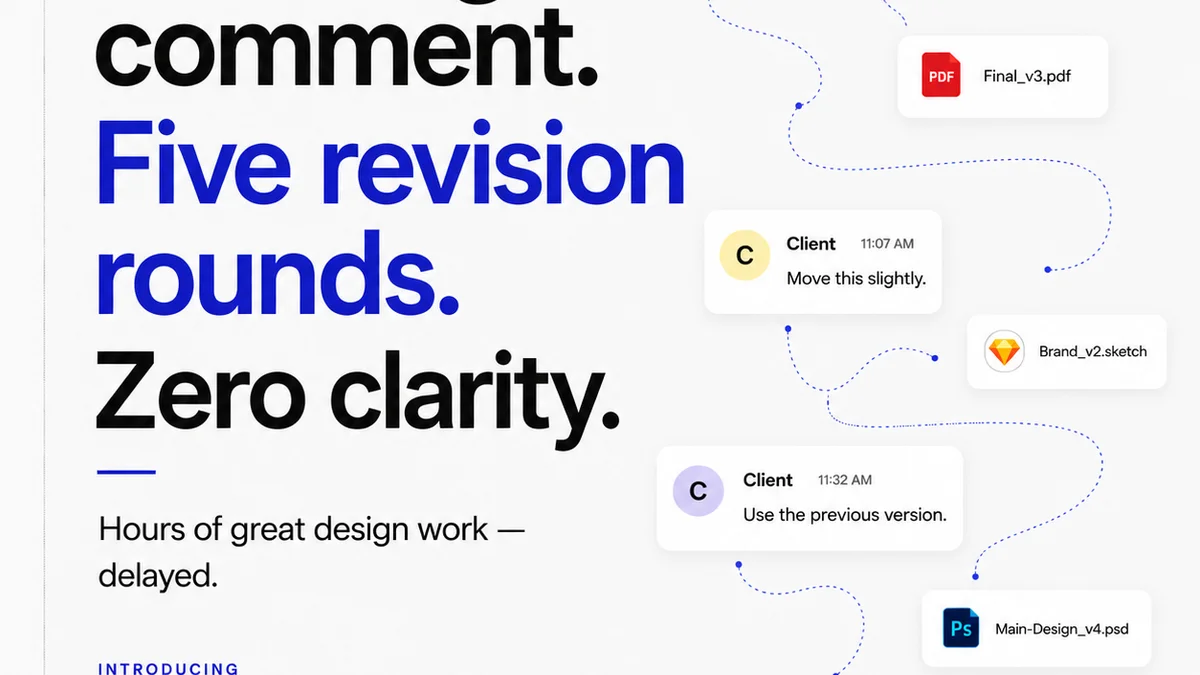
Each email is a silo. Feedback gets lost. Context evaporates. The original brief? Probably in a different thread. The client’s *previous* feedback? Also somewhere else.
Version Control Nightmare
Which version is the latest? The one in the thread titled 'RE: FINAL FINAL VERSION v3 (REALLY)'? Good luck.
You end up with multiple versions scattered across inboxes, no clear audit trail, and the constant risk of working off outdated files.
Context Collapse
Imagine a client sends feedback on a logo concept. The email might say, “I don’t love the blue.”
What blue? The background? The text? The accent element?
Without visual context directly attached to the feedback, interpretation is left to the designer. This leads to assumptions, rework, and frustration on both sides.
2. The Illusion of Centralization
Many agencies think they’re centralized because all the *final* files eventually land in a shared drive. But the feedback process itself? That’s often a free-for-all.
Email gives the illusion of a single point of contact, but it’s a deceptive one.
When feedback is scattered across dozens of email threads, with multiple people CC’d (or BCC’d), who’s actually keeping track?
Lack of Visibility
Project managers can’t easily see the status of feedback. Creative directors can’t quickly scan for outstanding revisions. Clients themselves often lose track of what they’ve already approved.
This lack of visibility breeds inefficiency and misunderstandings.
The
Frequently asked questions
What are the main problems with using email for design feedback?
Email creates communication silos, makes version control impossible, leads to lost context, and lacks visibility for all stakeholders. This results in misunderstandings, rework, and delays.
How can agencies manage design feedback more effectively?
Agencies can use dedicated design review and approval platforms that centralize feedback, link comments directly to specific design elements, provide clear version history, and offer real-time visibility to all parties involved.
Is there any situation where email is acceptable for design feedback?
For very minor, simple projects with a single, highly communicative client, email *might* suffice. However, for any complex creative work involving multiple stakeholders or revisions, it quickly becomes unmanageable and inefficient.
How does email affect client relationships during the design process?
When feedback gets lost or misinterpreted due to email, it can lead to client frustration, missed deadlines, and a perception of unprofessionalism. Clear, organized feedback processes build trust.