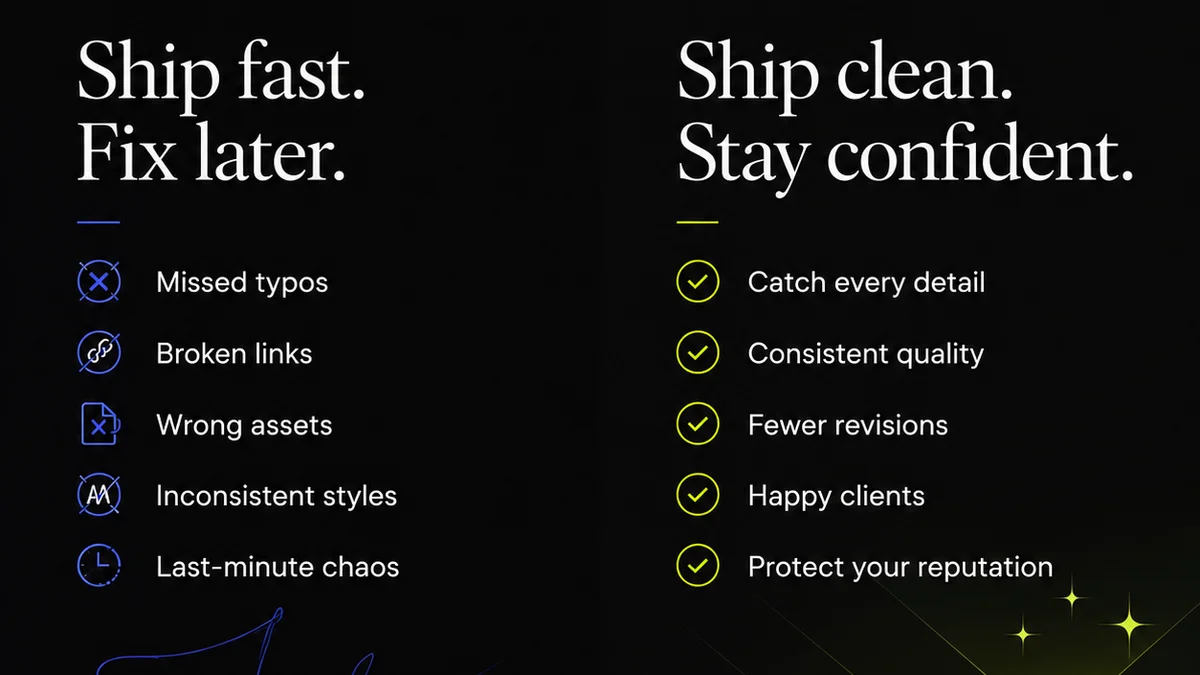
Everyone uses email. It’s the default for client communication. So, obviously, it’s the best way to get feedback on creative work, right?
Wrong.
Email is the worst tool for creative feedback. It’s slow, chaotic, and a black hole for important details. If you’re relying on email for client approvals, you’re setting yourself up for missed deadlines, scope creep, and endless frustration.
The hard truth? Your clients and your team deserve better. You need a system built for creative workflows, not for sending memos.
1. The Illusion of Organization
Email *feels* organized. You get a thread, replies go in sequence. Simple.
Except when they don’t.
Client feedback via email breaks down the moment a new email address enters the chain. Or when someone hits 'Reply All' to a thread that’s already 30 messages deep. Or when the client forwards a previous email with their new notes buried inside.
Suddenly, you’re hunting for the latest version of the feedback. Is it in the original email? The second reply? The forwarded message from Brenda in accounting?
This isn't organization; it's a treasure hunt with no prize.
Common Email Feedback Pitfalls
- Lost comments in long threads.
- Conflicting feedback from different stakeholders.
- Missing crucial context or attachments.
- Difficulty tracking revisions and approvals.
- Endless back-and-forth clarification emails.
Each of these issues adds hours to your project timeline. Hours you can’t bill for.
2. Version Control Nightmare
“Please see attached the latest draft.”
How many times have you sent that email? Now, how many times has the client replied with feedback on the *wrong version*?
Email lacks any inherent version control. You rely on filenames like Final_v3_client_edit_REALLY_FINAL.pdf. It’s a guessing game.
This leads to:
- Working on outdated files.
- Revisions that are immediately obsolete.
- Clients thinking you ignored their feedback when you just didn’t see it.
- Wasted design and development time.
Accurate version tracking is non-negotiable for creative projects. Email offers none.
3. Context Collapse
Feedback needs context. A single comment like “Make it pop more” is useless without knowing what “it” refers to and what “pop” means to *this specific client*.
Email strips away visual context. A screenshot might be attached, but is it the latest iteration? Is the feedback pointing to a specific element, or a general feeling?
This forces awkward clarification loops:
“When you say ‘the logo feels off,’ which part of the logo are you referring to?”
“The blue part.”
“There are three shades of blue. Which one?”
This slows down the process and increases the chance of misinterpretation.
4. The Bottleneck of Asynchronous Communication
Email is asynchronous. That’s usually a good thing. But for creative feedback, it’s a killer.
A client might send feedback at 3 PM. You see it at 9 AM the next day. You respond. They see it two days later.
Each step introduces delays. Multiply these delays across multiple rounds of feedback, and a simple project can stretch for weeks longer than necessary.
This isn't just inefficient; it’s costly.
The Cost of Email Delays
- Extended project timelines.
- Increased labor costs.
- Delayed launch dates.
- Unhappy clients who want results *now*.
Your agency’s profitability is directly tied to project efficiency. Email actively works against that.
5. Lack of Accountability and Visibility
Who approved what? When? Was that feedback from the primary stakeholder or a random team member?
Email threads bury approval history. It’s hard to pinpoint who signed off on a specific design direction or a particular revision.
This lack of clear accountability leads to disputes down the line. “I never approved that!” becomes a common, and costly, refrain.
Visibility is also poor. Can your team easily see the status of feedback and approvals across all projects? Probably not, if it’s scattered across hundreds of email inboxes.
Where Revue Fits In
Creative agencies and in-house teams need a better way to manage client feedback and approvals. A system designed for the visual nature of creative work.
Revue centralizes all client feedback in one place, directly on the creative assets themselves. No more hunting through email threads.
Imagine:
- Clients leaving comments directly on mockups, videos, or web pages.
- Clear visual indicators showing exactly what needs revision.
- A definitive audit trail of all feedback, comments, and approvals.
- Stakeholders having clear visibility into the review process.
- Streamlined revision cycles that move at the speed of creativity.
Revue helps you manage revisions and approvals with confidence, ensuring everyone is on the same page and quality checks are rigorous.
6. The Hidden Cost of
Frequently asked questions
Why is email bad for creative feedback?
Email is bad for creative feedback because it lacks visual context, makes version control impossible, leads to lost comments in long threads, creates communication delays, and offers poor visibility and accountability.
What are the main problems with using email for approvals?
Using email for approvals leads to confusion about which version is approved, difficulty tracking who approved what and when, and can result in disputes if feedback is missed or misinterpreted.
How can agencies improve their feedback process?
Agencies can improve their feedback process by adopting specialized tools that centralize feedback on visual assets, provide clear version control, and offer a transparent audit trail for all communication and approvals.
Can email ever be useful for client communication?
Yes, email is still useful for general client communication, scheduling, and sending formal documents. However, it is fundamentally unsuited for the specific demands of creative feedback and approval cycles.