Everyone uses email. It’s the default for communication, and that includes client feedback. For enterprise teams, especially those juggling multiple large projects, it feels like the path of least resistance. It's familiar. It's accessible. Everyone has it.
None of that is wrong. But it’s incomplete.
The hard truth? Relying on email for critical feedback and approvals is a recipe for disaster. It’s slow, messy, and fundamentally unsuited for the demands of modern creative production.
1. The Illusion of Centralization
Email promises a record of communication. But in reality, it fragments feedback across countless threads, inboxes, and even different email clients. Project managers and creative leads spend hours sifting through endless reply-alls, searching for that one crucial comment buried under a mountain of CC’d noise.
Where was the final sign-off on the logo revision?
Was that feedback from Tuesday or Wednesday?
Who actually approved the copy deck? The client contact, or their assistant who forwarded the email?
This isn't centralization; it's a chaotic digital paper trail.
The Reply-All Nightmare
The dreaded reply-all chain is a productivity killer. Every stakeholder gets every update, regardless of relevance. This leads to inbox overload, missed messages, and the inevitable “Sorry, I missed that email” when a critical deadline looms.
Version Control Chaos
Email attachments are a black hole for version control. You'll find dozens of files named:
- logo_final.ai
- logo_final_v2.ai
- logo_final_really_final.ai
- logo_final_REALLY_FINAL_USE_THIS_ONE.ai
Which one is it? Good luck figuring it out without asking someone. This ambiguity breeds errors and wasted time, as teams work on outdated versions.
2. The Feedback Loop from Hell
Effective feedback is clear, contextual, and actionable. Email is none of those things when used for creative review.
A client might write: “I don’t like the blue.”
Which blue?
The background blue? The button blue? The text blue?
This ambiguity forces endless back-and-forth, often involving screenshots pasted into emails, which themselves become outdated the moment a new version is sent.
Lack of Context
Email strips feedback from its visual context. A comment about a specific element on a webpage gets lost when it’s just text in an email. There’s no direct annotation, no way to point and say, “This specific pixel needs adjustment.”
Delayed Responses
Enterprise clients are busy. Their inbox is a battlefield. An email requesting urgent feedback can sit unread for hours, or even days, while more “important” messages take precedence. This latency stalls creative progress, pushing deadlines and creating unnecessary stress.
3. The Approval Bottleneck
Getting formal approval is vital. Email makes this process painfully inefficient and prone to error.
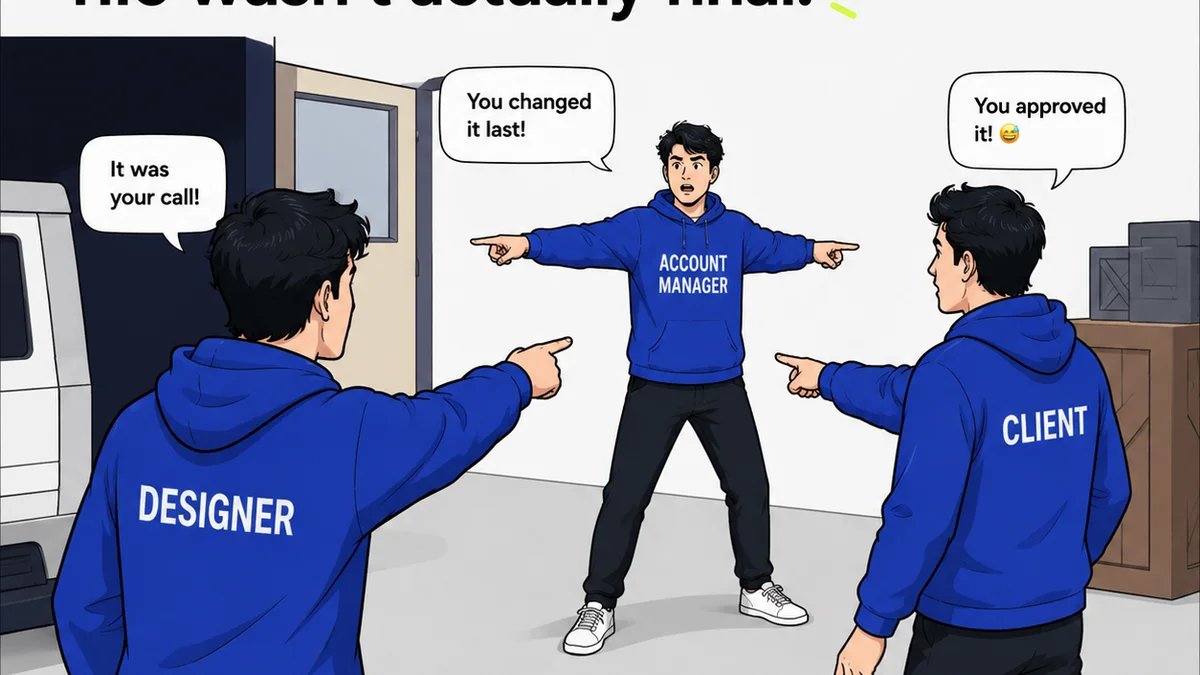
Formal sign-offs often get buried in long email threads. A simple “Approved” can be misinterpreted or missed entirely. The lack of a clear, auditable trail means disputes can arise later, with no definitive record of who agreed to what and when.
The
Frequently asked questions
Why is email bad for creative feedback?
Email lacks context, leads to version control issues, fragments communication across threads, and creates approval bottlenecks, making it inefficient and error-prone for creative projects.
What are the main problems with using email for approvals?
Approvals via email are often buried in threads, lack a clear auditable trail, and are prone to misinterpretation or being missed entirely, leading to potential disputes and project delays.
How can enterprise teams improve their feedback process?
Enterprise teams can improve by adopting specialized feedback and collaboration tools that offer centralized communication, direct annotation, clear version control, and auditable approval workflows.
Can email ever be useful for client communication?
Email is still valuable for general communication, announcements, and formal contract discussions. However, for granular creative feedback and approvals, it is significantly outmatched by dedicated tools.