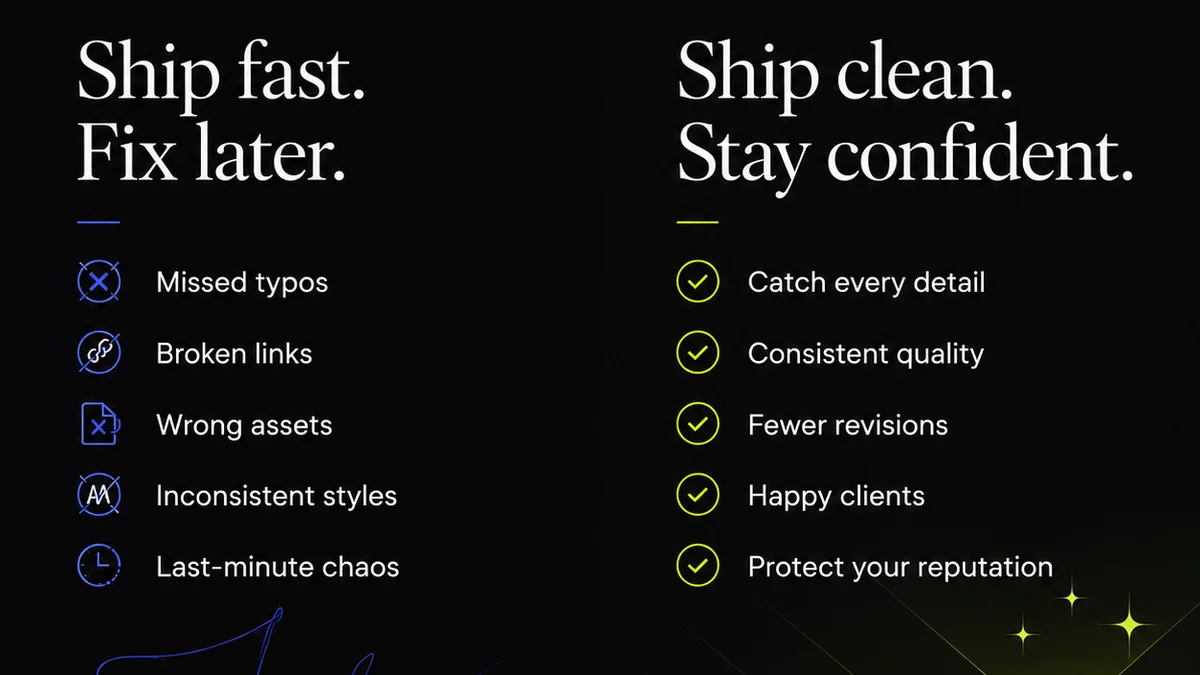
Everyone thinks endless revisions are just a cost of doing business in creative agencies. A necessary evil. That clients will always be clients, and designers will always be tweaking pixels forever.
None of that is wrong. But it’s incomplete.
The real problem isn't the *act* of revising. It's the chaos, the miscommunication, and the sheer inefficiency that surrounds it. That’s where the right software makes all the difference.
You need more than just a digital scratchpad. You need a system. This is what to look for in revision management software that actually helps you escape the endless loop.
1. Centralized Feedback: Ditch the Email Chains
The single biggest drain on creative agency time and sanity? Scattered feedback. It lives in emails, Slack messages, Google Docs comments, carrier pigeons, and whispered conversations.
Trying to consolidate this is a nightmare. You’re playing detective, trying to piece together requirements that have been diluted and distorted through multiple communication channels.
The Illusion of Organization
Many tools let you *collect* feedback. But collecting isn't the same as centralizing.
If feedback is still siloed within different platforms or even different projects within the same platform, you haven't solved the core problem. You've just moved the mess.
What to Demand
- One Source of Truth: All client comments, internal notes, and stakeholder approvals must live in one place, tied directly to the specific creative asset being reviewed.
- Contextual Annotations: Feedback needs to be placed directly on the design element it refers to. No more guessing what “make the logo bigger” actually means when there are ten logos on the page.
- Version Control That Matters: Simple version numbering isn't enough. You need to see a clear history of changes, who requested them, and when, all linked to the feedback that prompted them.
This isn't about making clients happier (though that's a nice side effect). It’s about giving your team clarity.
2. Streamlined Workflows: From Feedback to Final
A good revision tool doesn't just capture comments; it actively guides the revision process. It should make moving from feedback to a revised deliverable as frictionless as possible.
Think about the steps involved: receiving feedback, assigning tasks, making revisions, getting approvals. Where does your current process break down?
The Bottleneck Blues
Often, the bottleneck isn't the design work itself. It’s the administrative overhead:
- Chasing down stakeholders for overdue feedback.
- Manually updating project managers on revision status.
- Manually creating new versions for review.
- The dreaded
Frequently asked questions
What is the primary benefit of revision management software?
The primary benefit is centralizing all client feedback and revision history in one place, eliminating confusion, saving time, and improving communication between clients and creative teams.
How can revision management software prevent scope creep?
By providing a clear, documented trail of all feedback and approvals, revision management software helps identify when requests go beyond the original scope, allowing agencies to address scope creep proactively.
Is revision management software only for large agencies?
No, revision management software is beneficial for agencies of all sizes. Small teams can gain significant efficiency by reducing time spent on administrative tasks and miscommunication, while larger agencies benefit from structured processes and accountability.
Can revision management software integrate with existing tools?
Many modern revision management platforms offer integrations with popular design tools (like Adobe Creative Cloud, Figma) and project management software (like Asana, Jira), allowing for a more seamless workflow.