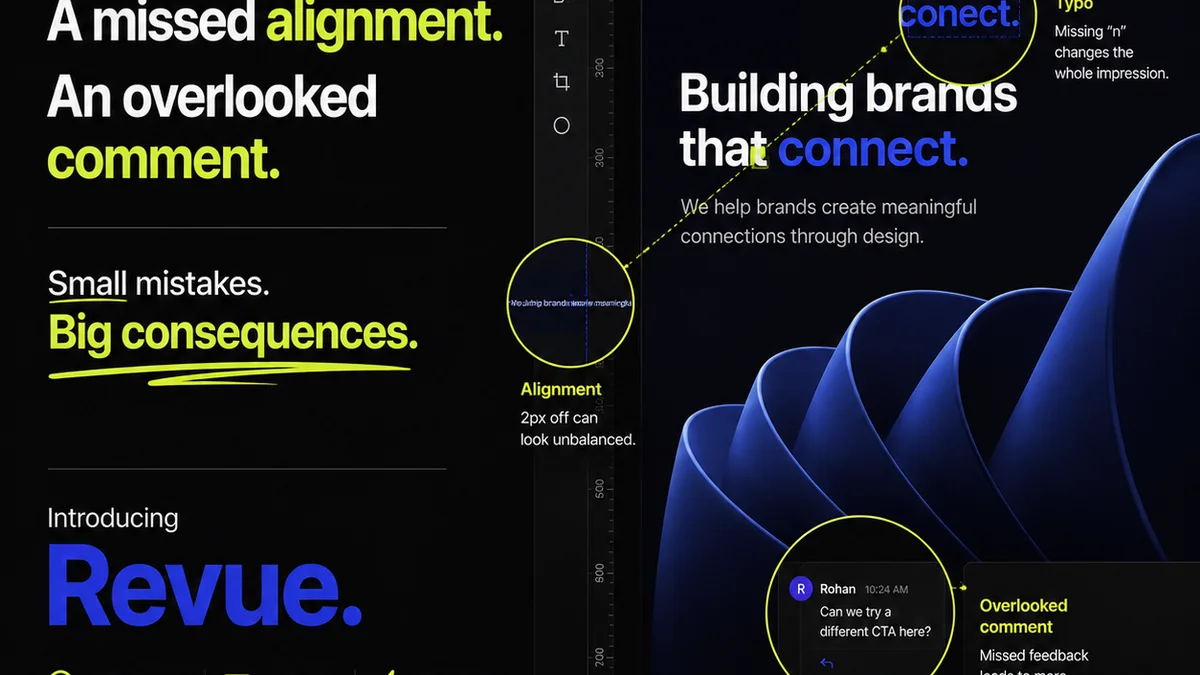
Everyone thinks brand quality assurance is about catching typos and ensuring logos are the right color. That’s part of it, sure. But it’s also the least important part.
The real work of brand QA happens long before the final deliverable hits the client. It’s woven into every step of the creative process. For enterprise teams, where consistency across dozens of touchpoints is non-negotiable, this operational reality is critical.
1. The Myth of the Final Check
Most teams treat brand QA as a gatekeeper at the end of the production line. A last-minute sweep for errors before it goes live. This approach is fundamentally flawed.
It assumes that all brand guidelines have been adhered to throughout the entire creative process. They haven’t.
When QA is a final step, it’s reactive. It’s about fixing mistakes, not preventing them. This leads to:
- Last-minute rushes and stressful revisions.
- Missed deadlines.
- Inconsistent messaging and visuals that dilute the brand.
- Wasted time and resources on rework.
- Frustrated clients and internal teams.
This isn’t QA. This is damage control.
2. Building Quality In: Proactive Brand Governance
True brand QA is proactive. It’s about embedding brand governance into your workflows from the start. This means:
- Clear, accessible brand guidelines.
- Tools that enforce brand standards automatically.
- Training and ongoing education for all creative and marketing staff.
- Defined roles and responsibilities for brand stewardship.
This isn't just about having a style guide. It's about making that style guide a living, breathing part of your operations.
2.1. Accessible and Actionable Guidelines
Your brand guidelines need to be more than a PDF. They need to be a practical resource. Think:
- Digital-first, easily searchable.
- Examples of do's and don'ts for common use cases.
- Specific guidance on tone of voice, imagery, typography, and color palettes.
- Information on accessibility standards, like WCAG guidelines, to ensure inclusivity.
If your team can't find it or understand it quickly, it's not actionable.
2.2. Templating and Automation
For enterprise teams, manual application of brand rules is a losing battle. Leverage technology:
- Templates: Pre-built templates in design tools (like Adobe Illustrator or Figma) that have brand elements locked or easily selectable.
- Design Systems: A robust design system acts as a single source of truth for UI components, brand assets, and guidelines.
- Brand Compliance Tools: Software that can scan assets for incorrect logo usage, colors, or fonts.
Automation reduces human error and frees up teams to focus on creativity, not compliance checks.
2.3. Continuous Training and Reinforcement
Brand guidelines evolve. Teams change. Regular training is essential.
- Onboarding for new hires.
- Refresher sessions for existing teams.
- Workshops on specific brand elements or new campaign requirements.
Make brand stewardship a shared responsibility, not just a task for one person.
3. The Enterprise Brand QA Checklist: Operationalizing Consistency
An enterprise brand QA checklist isn't just a list of things to check. It's a framework for ensuring quality at every stage. It should cover:
3.1. Strategic Alignment
Before any creative work begins, ask:
- Does this project align with overall brand strategy and objectives?
- Who is the target audience, and does the creative resonate with them?
- What is the core message, and is it clear?
This strategic check prevents off-brand creative from even starting.
3.2. Concept and Creative Briefing
During the concept phase, review:
- Does the concept address the brief effectively?
- Are the proposed visuals and messaging on-brand?
- Is the tone of voice appropriate?
- Are there any potential cultural sensitivities or accessibility issues to consider?
This is where early course correction is most impactful and least costly.
3.3. Asset Creation and Production
As assets are being built, check for adherence to:
- Visual Identity: Correct logo usage, typography, color palettes, imagery style, iconography.
- Tone of Voice: Messaging consistency, grammar, spelling, adherence to approved terminology.
- Technical Specifications: File formats, resolutions, dimensions, color modes (RGB/CMYK).
- Accessibility: Color contrast ratios, alt text for images, clear navigation (if applicable).
- Legal and Compliance: Disclaimers, copyright notices, regulatory requirements.
This stage requires granular checks against established brand standards.
3.4. Cross-Channel Consistency
For enterprise, consistency across all touchpoints is paramount. Before launch, verify:
- Website: UI elements, content, branding.
- Social Media: Post templates, profile branding, campaign visuals.
- Advertising: Digital ads, print ads, video pre-roll.
- Marketing Collateral: Brochures, presentations, case studies.
- Product Interfaces: UI/UX consistency.
A disconnected brand experience erodes trust.
3.5. Post-Launch Monitoring
QA doesn't end at launch. Monitor:
- User feedback and social sentiment.
- Performance metrics for off-brand elements.
- New instances where brand guidelines might be misinterpreted or ignored.
This feedback loop informs future training and guideline updates.
4. Where Revue Fits In
Managing brand QA across an enterprise is complex. It involves multiple teams, countless assets, and a constant flow of feedback and revisions. This is where a centralized platform becomes indispensable.
Revue helps bridge the gap between creative production and brand governance. It provides a single source of truth for feedback and approvals, ensuring that:
- Client feedback is centralized: No more hunting through emails or chat threads. All comments are attached to the specific version of the asset.
- Revisions are trackable: See exactly what changed, who approved it, and when. This creates an audit trail for brand adherence.
- Quality checks are streamlined: Integrate your brand QA checklist directly into the review process. Team members can tick off items as they review, ensuring all critical brand elements are assessed before final sign-off.
- Consistency is maintained: By having all communication and approvals in one place, you reduce misinterpretations and ensure everyone is working from the same, approved brand standards.
This visibility and control are what separate reactive error-fixing from proactive brand stewardship.
5. Final Thought
Is your brand QA process a bottleneck, or is it a catalyst for consistent, high-quality creative? The difference lies not in the checklist itself, but in how deeply and proactively its principles are integrated into your daily workflow. For enterprise brands, this operational discipline is the bedrock of trust and recognition.
Frequently asked questions
What is the primary goal of brand QA for enterprise teams?
The primary goal is to ensure consistent application of brand identity, messaging, and standards across all touchpoints, reinforcing brand recognition and trust at scale. It's about proactive governance, not just error correction.
How can enterprise teams operationalize brand QA effectively?
Operationalization involves embedding brand governance into workflows from the start. This includes accessible guidelines, leveraging templating and automation tools, continuous training, and integrating QA checks into the feedback and approval process using platforms like Revue.
What are the key areas to include in an enterprise brand QA checklist?
A comprehensive checklist should cover strategic alignment, concept and brief review, asset creation adherence (visuals, tone, technical specs, accessibility, legal), cross-channel consistency, and post-launch monitoring. It's a framework for continuous quality.
How does a tool like Revue help with brand QA?
Revue centralizes feedback and approvals, providing a clear audit trail of revisions. This visibility helps ensure that all brand guidelines are being followed and that quality checks are systematically performed before final sign-off, reducing misinterpretations and rework.