Everyone talks about enterprise branding. They talk about consistency. They talk about visual identity. They talk about brand guidelines.
None of that is wrong. But it’s incomplete.
The real work of enterprise branding happens long after the logo is designed and the PDF guide is published. It’s about the messy, operational reality of delivering that brand, consistently, at scale, across a thousand touchpoints. It’s about managing the inevitable friction between brand vision and day-to-day execution. That’s the hard truth.
True enterprise branding isn't a design problem. It’s an operational challenge. And the agencies and in-house teams that master it understand this deeply.
1. The Myth of the Static Brand Guide
The brand guide. The holy grail of consistency. We’ve all seen them: thick PDFs, meticulously detailing color palettes, typography, logo usage, and tone of voice. They’re essential, no doubt.
But here’s the contrarian take: a brand guide is a *starting point*, not an endpoint. It’s a map, not the territory itself.
The territory is the real world of campaigns, product launches, social media posts, sales decks, and customer service interactions. This is where the brand lives and dies.
The Operational Reality
Think about it. A global company might have hundreds, even thousands, of people creating content or interacting with customers. How many of them *actually* read the entire brand guide? How many of them are trained on it? How many of them have the tools and processes to apply it perfectly, every single time?
The answer, usually, is far fewer than anyone in marketing or design leadership wants to admit.
- Sales teams need to customize presentations.
- Regional offices need to adapt campaigns for local markets.
- Product teams need to communicate feature updates.
- Customer support needs to handle inquiries.
Each of these scenarios is an opportunity for brand drift. The static brand guide, sitting on a server, does very little to prevent it.
2. Scaling Consistency: The Technology and Workflow Challenge
Consistency at the enterprise level isn't achieved through sheer willpower or by handing out more PDFs. It requires deliberate systems and workflows.
This is where many organizations stumble. They assume that because they have a strong brand identity, the execution will automatically follow. It doesn't.
Consider the average workflow for creating a piece of marketing collateral. It might involve:
- A brief from marketing.
- Design concepting.
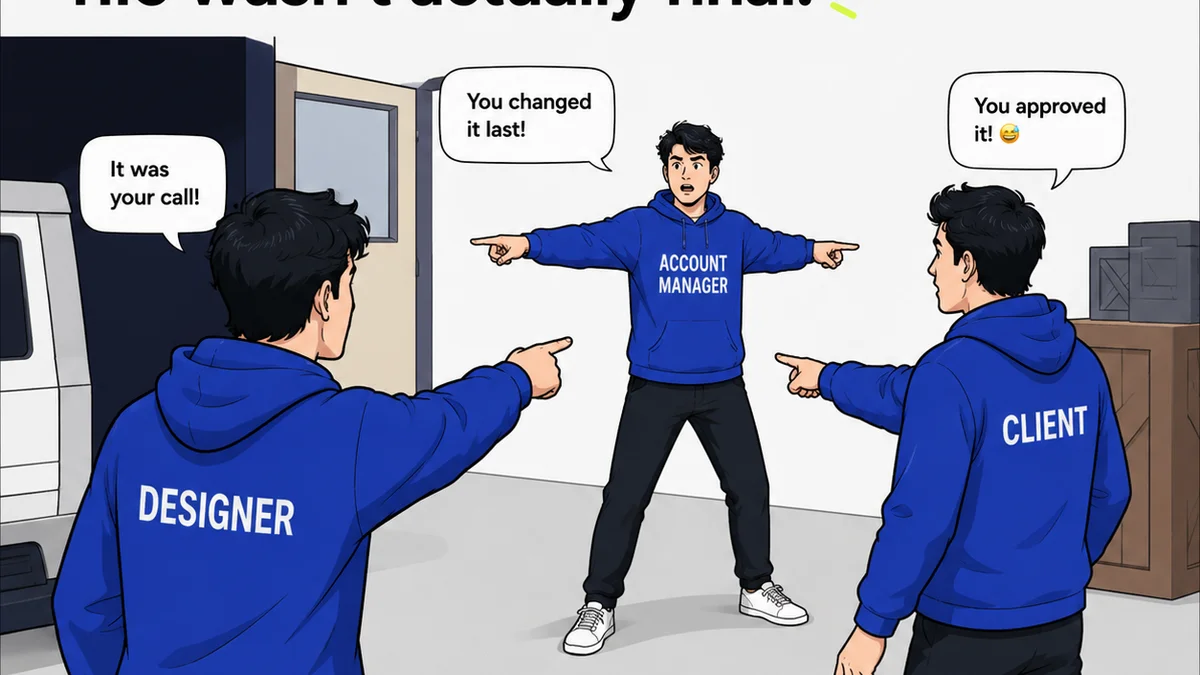
- Client (or internal stakeholder) feedback.
- Revisions.
- Legal review.
- Final approval.
- Distribution.
Each step is a potential point of failure for brand consistency. Is the right logo being used? Is the typography correct? Is the tone of voice on-point? Without a system to manage these questions, you're flying blind.
The Cost of Inconsistency
The stakes are higher for enterprise brands. Inconsistent branding erodes trust. It dilutes impact. It makes a company appear unprofessional or disorganized.
Think about the cumulative effect:
- A slightly off-color logo on a trade show banner.
- A sales deck with outdated messaging.
- A social media post that uses the wrong tone.
- A product page that doesn't align with the latest campaign visuals.
Individually, these might seem minor. Collectively, they chip away at the brand's perceived value and professionalism. The operational cost of fixing these errors, or the lost opportunity from weak brand perception, can be enormous.
3. The Feedback Loop: From Vision to Reality
Enterprise branding is a continuous process, not a one-time project. It requires a robust feedback loop to ensure that the brand vision is being translated accurately into daily operations.
This feedback loop needs to be integrated into the very fabric of how work gets done.
Centralized Feedback and Approvals
Where does feedback on creative work typically live?
- In endless email threads.
- Scattered across Slack channels.
- Jotted down in meeting notes.
- Marked up on screenshots.
This is a recipe for disaster. Important feedback gets lost. Revisions are missed. Stakeholders aren't aligned.
For enterprise brands, this chaos is amplified. Imagine trying to manage feedback for a global product launch with input from teams in New York, London, and Tokyo. The potential for miscommunication is astronomical.
Effective enterprise branding requires a single source of truth for all feedback and approvals. This ensures that everyone is working from the same set of instructions and that the final output aligns with the brand's strategic objectives.
Managing Revisions with Clarity
Revisions are inevitable. The goal isn't to eliminate them, but to manage them efficiently and ensure they serve the brand.
A common assumption is that more feedback equals better branding. Not necessarily. Unstructured, conflicting, or poorly communicated feedback can lead to brand dilution, not enhancement.
The operational challenge is to ensure that revisions are:
- Clear and actionable.
- Tracked and auditable.
- Aligned with the overall brand strategy.
- Approved by the right people.
Without a system for managing this, revision cycles can become endless, costly, and detrimental to the brand.
4. Quality Control: The Unsung Hero of Brand Integrity
Beyond the initial design and rollout, maintaining brand integrity requires rigorous quality control. This is often the most overlooked aspect of enterprise branding.
Think about the sheer volume of creative assets produced by a large organization. From internal presentations to external ad campaigns, each piece is a brand ambassador.
Are these ambassadors polished and professional, or are they sloppy and inconsistent?
The Operational Bottleneck
Many teams rely on manual checklists or ad-hoc reviews for quality control. This approach breaks down quickly under pressure and volume.
It's easy for small errors to slip through:
- Incorrect font weights.
- Slight color deviations.
- Misaligned elements.
- Outdated logos.
- Inconsistent tone.
These aren't just aesthetic flaws; they are breaches of brand integrity. They signal a lack of attention to detail and can undermine the perceived quality of the entire organization.
Enterprise-grade quality control requires systematic processes that embed brand standards into the review and approval workflow.
5. Where Revue Fits In
Managing enterprise branding effectively is an operational challenge that demands the right tools. This is where Revue can make a significant difference.
Revue provides a centralized platform designed to streamline the entire creative workflow, from initial feedback to final approval. This directly addresses the operational pain points that plague enterprise branding efforts.
- Centralized Feedback: Instead of scattered emails and Slack messages, all client or stakeholder feedback lives in one place, attached directly to the creative asset. This eliminates confusion and ensures no crucial comments are missed.
- Revision Management: Track every revision, see who approved what, and maintain a clear audit trail. This clarity prevents scope creep and ensures that all changes align with the brand strategy.
- Quality Assurance: By having a single, clear source for feedback and approvals, you significantly reduce the chances of brand inconsistencies slipping through. Every stakeholder sees the same version, and approvals are documented, making it easier to maintain brand integrity.
- Visibility and Accountability: Everyone involved in the process has clear visibility into the status of assets, feedback, and approvals. This fosters accountability and reduces the time spent chasing down information.
Revue doesn't just manage creative assets; it manages the *process* around them. This operational efficiency is key to delivering a consistent, high-quality brand experience at the enterprise level.
Final Thought
Enterprise branding is often discussed as a top-down mandate from marketing or design. But its true success hinges on its operational execution at every level of the organization.
Are you building a brand, or are you just managing a logo?
Frequently asked questions
What's the biggest mistake companies make with enterprise branding?
The biggest mistake is treating branding as a purely design or marketing task, rather than an operational one. They focus heavily on the visual identity and guidelines but fail to implement systems that ensure consistent execution across all departments and touchpoints.
How can a company ensure brand consistency across different teams and regions?
Consistency at scale requires centralized systems for feedback, approvals, and asset management. Technology that provides a single source of truth for creative work, tracks revisions, and facilitates clear communication is crucial. Training and clear processes are also vital.
Is a brand guide enough for enterprise-level consistency?
A brand guide is essential, but it's rarely enough on its own. It's a foundational document. True consistency comes from integrating brand standards into daily workflows, using technology to manage feedback and approvals, and implementing quality control measures.
How does managing revisions impact enterprise branding?
Unmanaged revisions can lead to brand drift and inconsistency. Without a clear process for tracking feedback, making changes, and obtaining final approvals, a brand's integrity can be compromised. Centralized systems help ensure revisions align with strategic brand goals.