Most agencies think enterprise branding is about big budgets, fancy mood boards, and a killer final logo. They chase the idea of a singular, iconic mark that will define a global corporation for decades. That’s not entirely wrong. But it’s incredibly incomplete.
The hard truth is that world-class agencies understand enterprise branding isn't just about aesthetics. It's about operational rigor. It’s about building systems that ensure brand consistency and integrity at massive scale, across thousands of touchpoints, and with hundreds of internal and external stakeholders. It’s a discipline of execution, not just ideation.
1. The Brand as a System, Not Just an Asset
Think of a major enterprise brand like a city. It’s not just one famous building. It’s the infrastructure, the zoning laws, the public transport, the street signs, the architecture guidelines, and the maintenance crews all working in concert. A strong brand system is the same.
World-class agencies build brand systems that are:
- Scalable: Can be applied across countless product lines, regions, and media without breaking.
- Governable: Clear rules and processes make it easy for anyone to use correctly.
- Adaptable: Flexible enough to evolve with market changes and new technologies, without losing core identity.
- Accessible: Understandable and usable by everyone from the CMO to a junior designer to a third-party vendor.
This systemic approach moves branding from a purely creative exercise to an operational imperative.
The Visual Language Beyond the Logo
Yes, the logo is crucial. But for enterprise brands, the visual identity is a comprehensive ecosystem. This includes:
- Typography: A defined typographic hierarchy and set of approved fonts for all applications.
- Color Palette: Primary, secondary, and accent colors with clear usage guidelines for digital, print, and environmental applications.
- Imagery Style: Guidelines for photography, illustration, and iconography that ensure a consistent tone and quality.
- Layout Grids: Underlying structures that ensure visual harmony and usability across diverse formats.
- Motion Graphics: Principles for how the brand moves and animates in digital environments.
Agencies that excel in enterprise branding don’t just create these elements; they document them exhaustively and make them easily discoverable.
2. The Workflow Behind Unwavering Consistency
The biggest challenge for enterprise brands isn't creating great creative; it's ensuring that great creative is produced *consistently* across the entire organization. This is where operational excellence shines.
World-class agencies engineer workflows that embed brand governance directly into the creative process. This means:
- Centralized Asset Management: A single source of truth for all brand assets.
- Standardized Briefing: Clear, consistent briefs that account for brand requirements from the outset.
- Automated Checks: Tools or processes that flag deviations from brand guidelines early.
- Structured Feedback Loops: Defined channels for review and approval that ensure brand stewards are involved.
This isn't about stifling creativity; it’s about providing guardrails so creativity can flourish within a defined, recognizable framework.
From Concept to Rollout: The Governance Layer
Enterprise branding demands a robust governance layer. This is often overlooked by agencies focused solely on the initial concept.
Consider the journey of a single campaign element:
- Initial Concept: Developed within brand parameters.
- Asset Creation: Designers use approved templates and assets.
- Internal Review: Brand team checks for adherence to guidelines.
- External Vendor Use: Clear, documented guidelines and approved templates are provided.
- Deployment: Content management systems or templates enforce usage.
- Performance Review: Brand compliance is a factor in campaign success metrics.
Every step requires a process that supports brand integrity. Without this, even the most brilliant initial concept can become diluted or distorted through mass application.
3. The Role of Technology in Brand Scalability
You can’t manage enterprise brand consistency with spreadsheets and shared drives alone. Technology is the backbone of modern brand management.
Agencies that master enterprise branding leverage technology for:
- Digital Asset Management (DAM): Systems like Adobe Experience Manager Assets or similar platforms to store, organize, and distribute brand assets.
- Brand Portals/Guidelines Platforms: Centralized, searchable repositories for all brand rules, templates, and assets. Think of them as the brand's operating manual.
- Project Management Tools: Platforms that track creative projects, manage revisions, and ensure brand stakeholders are integrated into the workflow.
- AI and Automation: Emerging tools that can flag off-brand usage or even generate on-brand variations automatically.
The goal is to make adherence to brand standards not just easy, but almost automatic.
Designing for the Digital-First Enterprise
The explosion of digital touchpoints has made brand management infinitely more complex. Websites, apps, social media, email campaigns, digital ads – each requires a nuanced application of the brand.
World-class agencies understand that enterprise brand guidelines must be:
- Digital-Native: Designed with digital constraints and opportunities in mind first.
- Component-Based: Brand elements are conceived as reusable components that can be assembled in various ways.
- Interactive: Guidelines are often presented in interactive formats, not static PDFs.
- Data-Informed: Usage patterns and performance data feed back into brand evolution.
This digital-first mindset is critical for brands operating in today's landscape.
4. Building Trust Through Predictable Excellence
Why does all this operational rigor matter? Because at the enterprise level, brand is fundamentally about trust. And trust is built on predictability.
When customers, partners, and employees encounter an enterprise brand, they expect a certain experience. They expect a certain look, feel, and tone. This consistency breeds familiarity and reliability.
Agencies that focus only on the big creative idea miss the point. The big idea is the *start* of the journey. Sustaining that idea, ensuring it's executed flawlessly millions of times over, is the real challenge and the true measure of branding success.
The Long Game: Brand Equity Over Short-Term Wins
Enterprise branding is a marathon, not a sprint. Agencies that succeed are those that partner with clients for the long haul, embedding themselves into the operational fabric of the organization.
This means:
- Prioritizing Brand Education: Training internal teams and external partners.
- Continuous Improvement: Regularly updating guidelines and processes based on feedback and market shifts.
- Measuring Brand Health: Tracking consistency and impact over time.
- Strategic Partnership: Acting as a long-term guardian of brand equity.
This is how enduring brands are built and maintained.
Where Revue Fits In
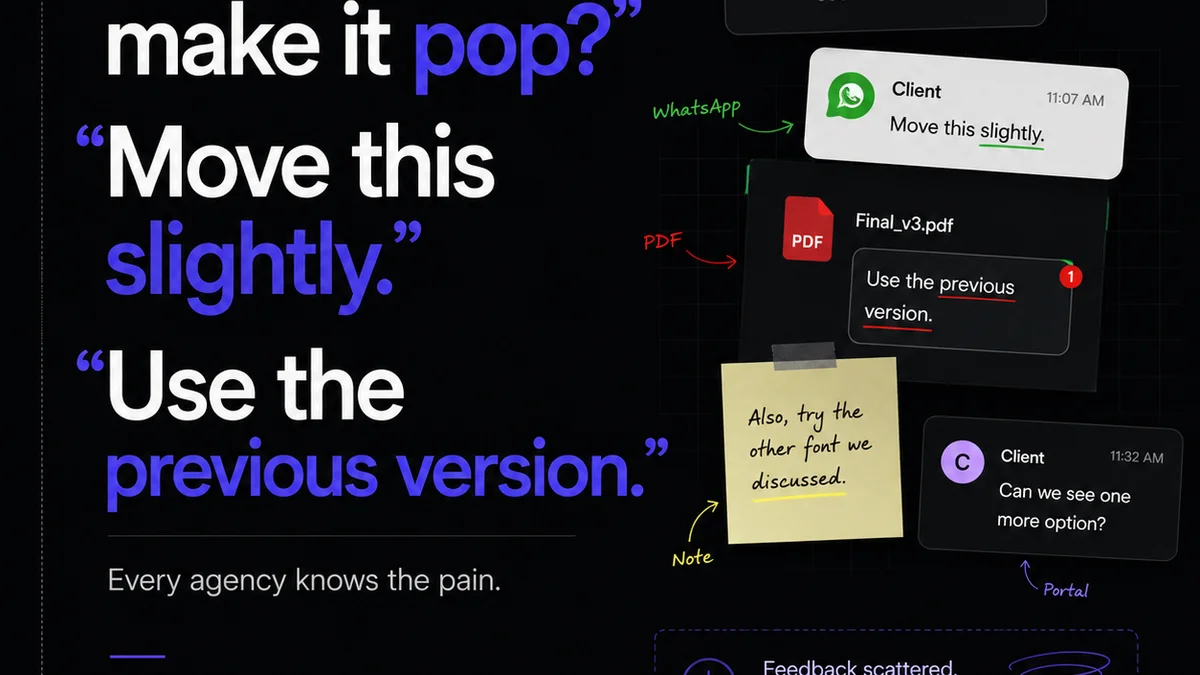
Managing enterprise branding effectively requires a centralized hub for feedback and approvals. Scattered email threads, lost files, and unclear revision histories are the enemy of consistency at scale.
Revue helps world-class agencies and their enterprise clients by providing that essential operational layer:
- Centralized Feedback: All stakeholder comments and annotations live in one place, linked directly to the creative asset. No more hunting for feedback across different platforms or email chains.
- Clear Revision & Approval Tracking: Every version, every comment, every approval is logged. This creates an auditable trail and ensures everyone is working from the latest approved asset.
- Streamlined Quality Checks: Marketers and brand managers can easily run through checklists and ensure that all deployed assets meet the brand's exacting standards before launch.
By bringing order to the chaos of client collaboration and internal review, Revue enables agencies to execute complex enterprise branding projects with the precision and consistency that define true excellence.
Final Thought
Is your agency treating branding as a creative deliverable, or as a foundational business system? The answer reveals whether you're building fleeting campaigns or enduring brands.
Frequently asked questions
What is the difference between brand identity and brand system?
Brand identity often refers to the visual and verbal elements that represent a brand (logo, colors, voice). A brand system is the overarching framework and set of rules that govern how these identity elements are applied consistently across all touchpoints, ensuring scalability and integrity.
How do agencies ensure brand consistency across thousands of touchpoints?
World-class agencies achieve this through robust brand systems, comprehensive style guides, centralized digital asset management (DAM), standardized workflows for feedback and approvals, and leveraging technology to automate checks and ensure adherence to guidelines.
Is enterprise branding just for large corporations?
While the term 'enterprise' implies large organizations, the principles of building a scalable and consistent brand system apply to any business aiming for significant growth and widespread recognition. The complexity increases with scale, but the core concepts remain the same.
How important is technology in managing enterprise brands?
Technology is critical. Digital asset management (DAM) systems, brand portals, project management tools, and increasingly AI-powered solutions are essential for managing brand assets, enforcing guidelines, streamlining workflows, and ensuring consistency at the scale required by enterprise brands.