Everyone thinks enterprise branding is about a killer logo, a catchy tagline, and a slick website. That’s the easy part.
The hard truth? Most companies fail at enterprise branding not because of poor creative, but because they completely miss the operational realities of bringing a brand to life at scale.
1. The Brand is Not a Document, It’s a System
The common assumption is that a brand lives and dies in a beautifully designed brand guidelines document. That document is important, sure. But it’s a map, not the territory.
An enterprise brand needs to function as a living, breathing system across hundreds, if not thousands, of touchpoints. This means it needs to be operationalized, not just documented.
Consider the sheer volume of assets and communications an enterprise produces:
- Marketing campaigns
- Sales collateral
- Product interfaces
- Internal communications
- Customer support
- Social media
- Partnerships
- Physical spaces
Each of these is a potential brand touchpoint. If the brand isn’t built into the workflows that produce these assets, it will break.
The Myth of the Single Source of Truth
Many organizations treat their brand guidelines PDF as the single source of truth. This is a fatal flaw.
A PDF is static. It doesn’t evolve with the market. It doesn’t provide context for *why* certain decisions were made. And critically, it doesn’t integrate with the tools your teams actually use.
The result? Teams default to what’s easiest, not what’s on-brand. Or worse, they spend hours trying to find the *right* logo file or the *correct* shade of blue, leading to frustration and inconsistency.
2. The Disconnect Between Brand Strategy and Creative Execution
There’s often a vast chasm between the high-level brand strategy and the day-to-day creative execution. Leadership signs off on a vision, but that vision rarely trickles down effectively into actionable creative briefs.
This isn’t always intentional. It’s usually a symptom of poor communication and siloed departments.
From Vision to Brief: The Black Hole
Marketing teams develop brand strategy. Creative teams develop assets. But the translation layer — the creative brief — is often where things go wrong.
A weak brief leads to:
- Misinterpretation of brand goals
- Generic creative output
- Endless rounds of revisions based on subjective feedback
- Missed opportunities to reinforce the core brand message
When the strategy isn’t clearly translated into concrete creative direction, the brand loses its focus. It becomes diluted, serving no real strategic purpose.
Feedback Loops That Break Brands
Even with a good brief, the feedback and revision process can be a brand killer. Unstructured, subjective feedback from multiple stakeholders – often without clear brand ownership – leads to a Frankenstein’s monster of an asset.
“Can you make the logo bigger?”
“I don’t like this color.”
“My boss’s boss thinks it needs more blue.”
This kind of feedback erodes the integrity of the brand. It’s not about strategy; it’s about personal preference.
3. The Illusion of Centralization
Enterprise branding *sounds* like it should be centralized. And in theory, it is. But in practice, control often gets diluted across numerous teams, projects, and external vendors.
This isn’t about authoritarian control; it’s about consistent application.
Asset Sprawl and Version Chaos
Where are the latest approved logos stored? Which version of the campaign imagery is current? Who has access to the official brand fonts?
Without a central, accessible repository, teams waste time searching for assets. They end up using outdated or incorrect versions, leading to visual inconsistency. This is especially true for large, distributed organizations.
Lack of Visibility into Brand Application
How can you ensure brand consistency if you can’t see where and how the brand is being applied? Many organizations lack this visibility.
They might approve a campaign concept, but they don’t have a clear view of every single ad, social post, or landing page created for it. This lack of oversight allows off-brand execution to slip through the cracks.
4. Underestimating the Role of Technology
Many companies approach enterprise branding with a purely human-centric mindset, relying on processes and people. While crucial, this often overlooks the power of technology to enforce consistency and streamline workflows.
Manual processes are prone to error and don’t scale.
The Manual Grind
Think about the sheer manual effort involved in ensuring brand compliance across a large organization:
- Manually checking every piece of marketing collateral.
- Manually updating brand guidelines documents.
- Manually distributing new assets.
- Manually training new employees on brand standards.
This is not only inefficient but also incredibly expensive. It diverts valuable creative resources away from strategic work.
Bridging the Gap with Digital Tools
Modern digital tools can automate many of these laborious tasks. From Digital Asset Management (DAM) systems to brand compliance checkers, technology can be a force multiplier.
These tools can:
- Centralize all brand assets.
- Provide instant access to approved, latest versions.
- Automate checks for correct logo usage, colors, and fonts.
- Streamline the feedback and approval process.
Ignoring technology means accepting inefficiency and inconsistency as the status quo.
Where Revue Fits In
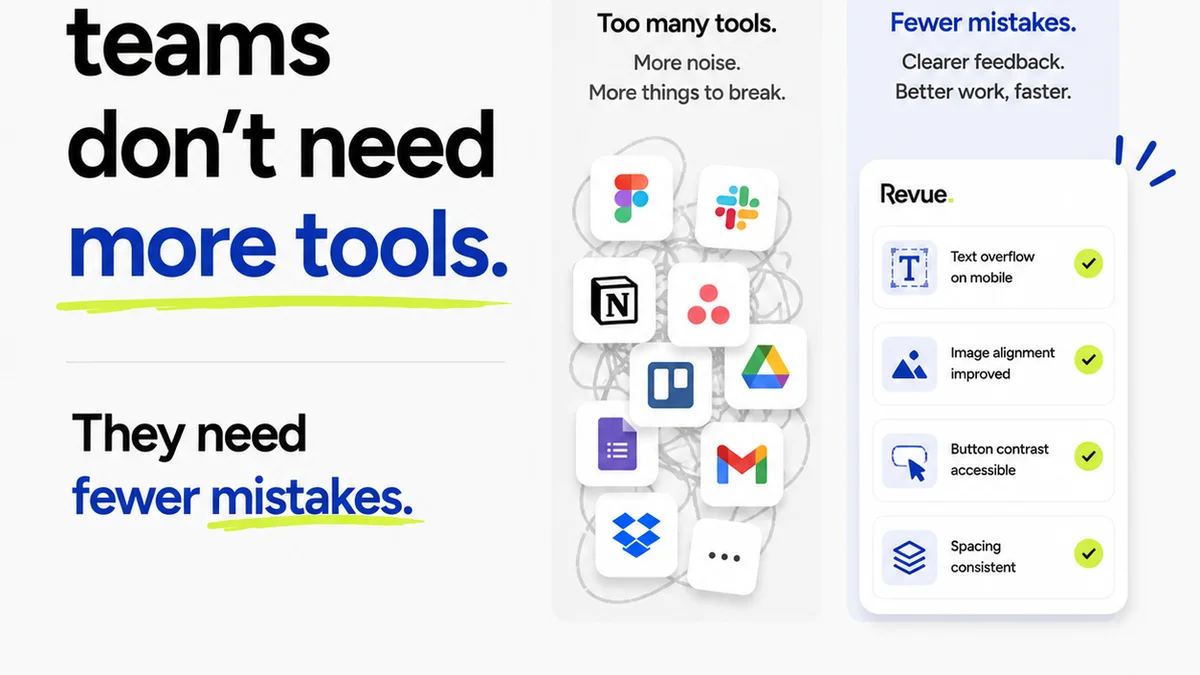
Effectively managing an enterprise brand requires more than just good design. It demands robust systems for feedback, revision, and approval. This is precisely where Revue excels.
Revue provides a centralized platform where all creative assets and client feedback live. No more hunting for the latest version or deciphering ambiguous email chains.
With Revue, creative directors and brand managers gain clear visibility into:
- Centralized Feedback: All comments and annotations are linked directly to the asset, providing context and clarity.
- Revision Management: Track every version, understand the evolution of an asset, and revert if necessary.
- Approval Workflows: Define clear approval paths, ensuring that only stakeholders with brand authority sign off.
- Quality Checks: Implement consistent review processes to catch off-brand elements before they go live.
By centralizing these critical workflow stages, Revue helps ensure that your enterprise brand is not just documented, but consistently and effectively executed across all touchpoints.
Final Thought
Most companies treat branding as a creative problem. It’s not.
It’s an operational challenge. It’s a system design problem. It’s a communication problem.
Are you building a brand, or just a beautiful PDF?
Frequently asked questions
What is the biggest mistake companies make in enterprise branding?
The biggest mistake is treating brand guidelines as a static document rather than a dynamic system. This leads to a failure to operationalize the brand across all touchpoints and workflows.
How does creative feedback impact enterprise branding?
Unstructured and subjective feedback from multiple stakeholders can dilute the brand's integrity, leading to inconsistent execution and a loss of strategic focus. Clear approval workflows are essential.
Why is asset management crucial for enterprise brands?
Without centralized and accessible asset management, teams resort to using outdated or incorrect versions, leading to visual inconsistency and wasted time. A single source of truth for approved assets is vital.
Can technology really help with enterprise branding?
Yes, technology like Digital Asset Management (DAM) systems and workflow tools can automate compliance checks, streamline approvals, and provide visibility, significantly improving consistency and efficiency.