Everyone thinks enterprise branding is all about the big, splashy campaigns. The Super Bowl ads. The global rollout of a new logo. The massive billboards.
None of that is wrong. But it’s incomplete. Radically incomplete.
The real work of enterprise branding happens far from the spotlight. It’s in the quiet hum of operations, the daily decisions, the consistency across countless touchpoints.
The Hard Truth: Enterprise Branding is Operational Rigor
Enterprise branding isn't a creative department's pet project. It's a business imperative. It's the disciplined execution of a brand's promise, at scale, across every single interaction a customer has with the company. This means every email, every support call, every product update, every piece of marketing collateral – all of it must align.
This isn't about making things look pretty. It's about making things work. Reliably. Consistently. Everywhere.
1. Beyond the Logo: The Brand as a System
A logo is a symbol. A tagline is a hook. An enterprise brand is a comprehensive system that dictates how a company presents itself and operates to the world. It’s the architecture of perception.
Think of it like this: A great building has a stunning facade, but its real value comes from its structural integrity, its plumbing, its electrical systems, its efficient layout. Enterprise branding is the same. The visual identity is the facade. The operational guidelines, the internal culture, the customer service protocols – that’s the structure.
Defining the Core Pillars
Every enterprise brand needs a clear foundation. This involves:
- Mission: Why does the company exist? What problem does it solve?
- Vision: Where is the company going? What future is it building?
- Values: What principles guide its actions and decisions?
- Brand Promise: What specific value or experience can customers consistently expect?
Without these, any branding effort is just surface-level decoration.
2. The Operational Battlefield: Where Brands Live and Die
Forget the agency pitch deck for a moment. Where does the brand actually show up for a customer?
It’s in the onboarding flow. It’s in the error messages. It’s in the tone of a customer support email. It’s in the packaging of a physical product. It’s in the user interface of a software update.
Every single one of these is a branding touchpoint. And if they’re not aligned, the brand fractures.
Consistency is King (and Queen, and the Entire Royal Court)
This is the operational challenge. How do you ensure that a brand message, developed at headquarters, is executed identically by a sales team in Europe, a support agent in Asia, and a digital product team in North America?
It requires:
- Clear, accessible brand guidelines that go beyond aesthetics.
- Robust training for all customer-facing and product teams.
- Internal tools and processes that enforce brand standards.
- A culture that prioritizes brand consistency as a core business function.
This is where many initiatives stumble. They focus on the creative deliverable and neglect the operational implementation.
3. Building the Brand Infrastructure
Enterprise branding isn't just about assets; it's about the systems that manage and deploy them. This is the unglamorous but critical part.
Brand Guidelines: More Than a PDF
Your brand guidelines document should be a living, breathing resource. It needs to be:
- Comprehensive: Covering not just logos and colors, but tone of voice, imagery style, messaging frameworks, and application examples for various scenarios.
- Accessible: Easy for anyone in the organization to find and understand. Think an internal brand portal, not a buried PDF.
- Actionable: Providing clear do's and don'ts, templates, and resources.
Asset Management: The Single Source of Truth
Where are the latest logos? The approved product photos? The correct PowerPoint template? Without a centralized Digital Asset Management (DAM) system, teams waste time hunting for assets and often use outdated versions, leading to brand inconsistency.
Workflow and Approval Processes: The Gatekeepers of Quality
How does creative work get approved? Who signs off? What’s the feedback loop? A chaotic approval process is a breeding ground for brand dilution. Clear, documented workflows ensure that all creative output adheres to brand standards before it ever sees the light of day.
4. The Human Element: Culture as a Brand Amplifier
You can have the most beautiful guidelines and the slickest DAM, but if your employees don't understand or care about the brand, it won't stick.
Enterprise branding requires embedding brand understanding into the company culture.
Internal Buy-In is Non-Negotiable
Leadership must champion the brand, not just in words, but in actions. Every decision, from hiring to product development, should be viewed through a brand lens.
This means:
- Regular communication about brand strategy and its importance.
- Training programs that connect individual roles to the brand’s success.
- Empowering employees to be brand ambassadors.
- Recognizing and rewarding adherence to brand standards.
When employees understand and believe in the brand, they become its most powerful advocates.
5. Measuring Brand Health at Scale
How do you know if your enterprise branding efforts are actually working? You need metrics beyond just campaign performance.
This involves:
- Brand Perception Surveys: Understanding how target audiences see your brand.
- Customer Satisfaction Scores (CSAT) / Net Promoter Score (NPS): Indirect indicators of whether the brand promise is being met.
- Internal Brand Audits: Regularly checking if internal teams are adhering to guidelines.
- Website and App Analytics: Looking at user engagement and conversion rates that can be influenced by brand experience.
These metrics provide the data needed to refine strategies and demonstrate the ROI of consistent branding.
Where Revue Fits In
Managing enterprise branding across multiple teams, departments, and even geographies is an immense operational challenge. It requires visibility, control, and clear communication.
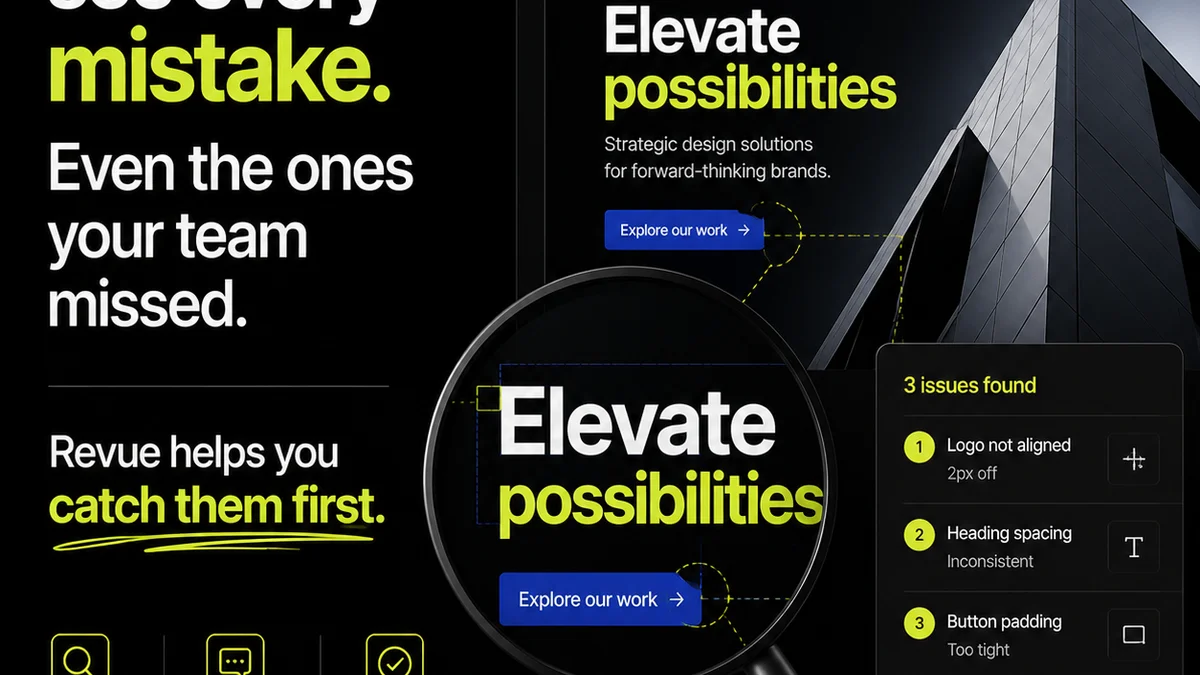
This is precisely where a tool like Revue becomes invaluable. Centralizing client feedback, managing revision and approval cycles, and ensuring quality checks can all be tied directly back to brand standards.
Imagine an agency working on a campaign for a large CPG client. The client has strict brand guidelines regarding product imagery and messaging. Instead of endless email chains and version control nightmares:
- All feedback on creative assets can be logged directly within Revue, linked to specific versions.
- Approval workflows can be set up to ensure brand managers sign off before final delivery.
- Revision history provides a clear audit trail, demonstrating compliance with brand requirements.
- Quality checks can be integrated into the process, flagging any deviations from brand guidelines.
By streamlining these processes, Revue helps ensure that the final output not only meets client expectations but also rigorously adheres to the enterprise brand's established standards. It transforms the often-messy revision process into a controlled, transparent operation that supports brand integrity.
Final Thought
Enterprise branding is less about the flash and more about the follow-through. It's the relentless pursuit of consistency, not just in what you say, but in how you operate. Are you building a brand, or just a beautiful facade?
Frequently asked questions
What's the difference between corporate branding and enterprise branding?
While often used interchangeably, 'enterprise branding' emphasizes the operational integration of the brand across the entire business. Corporate branding can sometimes focus more on the overarching identity and public perception, whereas enterprise branding drills down into how that identity is lived and executed by every department and function.
How can a small agency manage enterprise branding for large clients?
Focus on clear communication channels, meticulous documentation of client brand guidelines, and robust internal processes for feedback and approvals. Tools that centralize these elements, like Revue, are crucial for maintaining consistency and demonstrating adherence to client standards.
Is brand consistency really that important for large enterprises?
Absolutely. For large enterprises, inconsistency erodes trust and dilutes brand equity. A consistent brand experience across all touchpoints reinforces reliability, builds stronger customer relationships, and differentiates the company in a crowded market.
What are the most common mistakes companies make with enterprise branding?
Common mistakes include focusing only on visual identity without operational alignment, failing to communicate guidelines effectively internally, not empowering employees as brand ambassadors, and lacking clear processes for feedback and approvals, which leads to fragmented brand experiences.