Most enterprise branding dashboards are a sea of red and green bubbles. Awareness is up. Engagement is steady. Social sentiment is… well, it’s a number. This is what we’re told matters. This is what gets reported up the chain.
None of that is wrong. But it’s incomplete. It’s like measuring the success of a restaurant by how many people walk past the door.
The hard truth? Most enterprise branding KPIs are vanity metrics. They feel good, but they don’t always translate to tangible business outcomes. They’re proxies, not proof.
Real branding success isn’t just about being seen or liked. It’s about being chosen. It’s about driving revenue, loyalty, and advocacy. It’s about making your brand a strategic asset, not just a marketing expense.
1. Customer Lifetime Value (CLV) Lift
This is the ultimate test of brand strength. If your brand is resonating, customers will stick around longer and spend more. It’s not just about acquiring new customers; it’s about nurturing existing ones.
Why it Matters
A higher CLV means your customers see enduring value in your brand. They trust you, they rely on you, and they’re willing to pay a premium for your products or services. This is the bedrock of sustainable growth.
How to Measure
- Segment your customer base by acquisition channel or initial campaign.
- Track the total revenue generated by each segment over its entire relationship with your company.
- Attribute differences in CLV to specific brand initiatives or messaging that influenced their loyalty.
A significant lift in CLV for customers exposed to targeted brand campaigns is powerful evidence of brand effectiveness.
2. Market Share within Target Segments
Broad market share can be misleading. What matters is your share within the specific segments you’re targeting. Are you the dominant player where it counts?
Why it Matters
Gaining or maintaining market share in your key segments indicates that your brand is the preferred choice for your ideal customers. It means your messaging, product, and overall brand experience are cutting through the noise and resonating with the right audience.
How to Measure
- Define your target market segments precisely.
- Utilize industry reports, market research firms, or internal sales data to determine the total addressable market (TAM) and your current share within those segments.
- Track changes in your share over time, correlating shifts with major brand campaigns or strategic pivots.
An increasing share in key segments is a direct indicator that your brand is winning mind and wallet.
3. Customer Acquisition Cost (CAC) Reduction
A strong brand should make customer acquisition easier and cheaper. If your brand is well-known and trusted, prospects should require less convincing.
Why it Matters
When your brand has pull, marketing and sales efforts become more efficient. Leads come to you more qualified, and the sales cycle shortens. This directly impacts profitability.
How to Measure
- Calculate your total marketing and sales spend over a period.
- Divide that by the number of new customers acquired in the same period.
- Analyze CAC trends, particularly for campaigns that heavily leverage brand awareness and trust.
A declining CAC, especially when linked to strong brand presence, shows your brand is a powerful lead generator.
4. Brand-Driven Lead Velocity Rate (LVR)
This measures the growth rate of qualified leads month-over-month. A strong brand accelerates this process.
Why it Matters
Brand recognition and reputation act as a powerful funnel builder. When people know and trust your brand, they’re more likely to raise their hand and express interest, moving faster from awareness to consideration.
How to Measure
- Track the number of new qualified leads generated each month.
- Calculate the percentage increase or decrease from one month to the next.
- Correlate spikes in LVR with specific brand campaigns or content designed to build authority and trust.
An accelerating LVR suggests your brand is effectively attracting and engaging potential customers.
5. Net Promoter Score (NPS) - Differentiated by Brand Experience
NPS is common, but its real value comes from understanding *why* customers are promoters or detractors. Is it the product, or is it the brand experience?
Why it Matters
A high NPS from customers who can clearly articulate positive brand attributes (beyond just product features) is a sign of deep brand loyalty and advocacy. This is where word-of-mouth magic happens.
How to Measure
- Implement NPS surveys that include follow-up questions about the reasons for their score.
- Analyze qualitative feedback to identify themes related to brand perception, values, and overall experience.
- Segment NPS scores based on customer interactions and exposure to different brand touchpoints.
Focus on promoters who explicitly cite brand elements—like perceived innovation, reliability, or customer care—as reasons for their loyalty.
6. Share of Voice (SOV) in Key Conversations
It’s not just about being loud; it’s about being heard in the right places. Are you dominating the conversations that matter to your industry and your customers?
Why it Matters
A strong SOV in relevant industry forums, social media discussions, and media coverage means your brand is perceived as a leader and an authority. It influences perception and decision-making.
How to Measure
- Identify the key platforms and conversations relevant to your brand and industry.
- Use social listening and media monitoring tools to track mentions of your brand versus competitors.
- Measure your brand's contribution to sentiment and discussion within those specific contexts.
Being a dominant voice in niche, high-impact conversations is more valuable than a fleeting mention in a broad, irrelevant one.
7. Brand Equity Valuation
This is the financial assessment of your brand’s intangible value. It’s the premium customers are willing to pay solely because of your brand name.
Why it Matters
Brand equity is a significant asset. It provides a competitive advantage, allows for premium pricing, and can be leveraged for new product launches. It’s the financial embodiment of brand strength.
How to Measure
- Engage valuation experts or use established methodologies (e.g., Interbrand, Brand Finance) that assess factors like market leadership, differentiation, and customer loyalty.
- Track the trend of your brand valuation over time, correlating changes with strategic brand investments and market performance.
A rising brand valuation is a clear signal that your brand is becoming a more valuable asset to the enterprise.
Where Revue Fits In
Managing and measuring these impactful KPIs requires a clear view of your creative output and client interactions. How do you know if your latest campaign creative is truly on-brand if feedback is scattered across emails, Slack, and random cloud storage links?
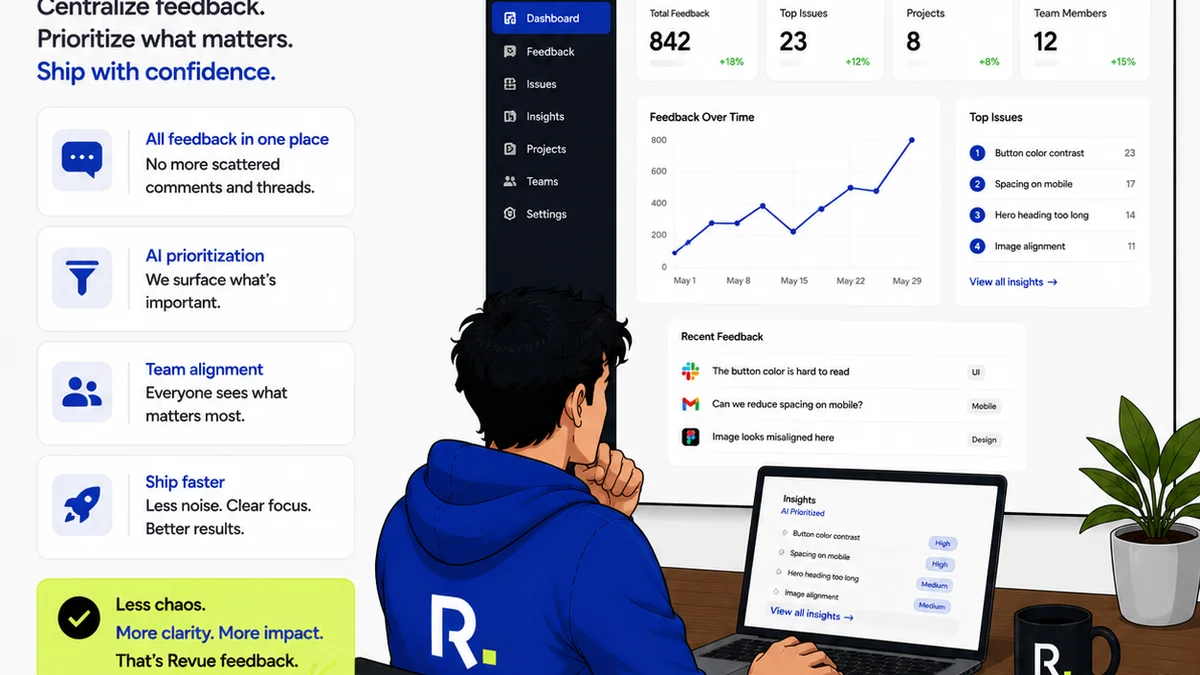
Revue provides the centralized hub for creative collaboration that underpins strong brand execution. By streamlining feedback, managing revisions with clear version history, and ensuring approvals are documented, you gain visibility into the creative process.
This clarity helps ensure that every piece of creative work aligns with brand strategy. When your team uses Revue, you can more confidently link the quality and consistency of your creative output to the brand metrics that matter.
- Centralized Feedback: All comments and annotations in one place, linked to specific creative assets.
- Revision Visibility: Track every iteration, ensuring brand guidelines are maintained.
- Clear Approvals: Documented sign-offs prevent scope creep and brand dilution.
This operational efficiency directly supports the strategic goals of building and measuring a powerful brand.
Final Thought
Are you measuring what truly drives business value, or are you just admiring your dashboard? The most effective brands aren't just built on pretty logos and catchy slogans. They're built on consistent, valuable customer experiences that translate directly to the bottom line. It's time to shift your focus from noise to signal.
Frequently asked questions
What are vanity metrics in branding?
Vanity metrics are statistics that look good on paper but don't necessarily correlate with business success. Examples include raw follower counts, broad website traffic without segmentation, or generic social media engagement without context. They make you feel good but don't drive revenue or strategic goals.
How can I prove the ROI of branding initiatives?
Focus on KPIs that directly link brand activity to business outcomes. This includes metrics like Customer Lifetime Value (CLV) lift, reduction in Customer Acquisition Cost (CAC), and increased market share within target segments. These demonstrate tangible financial impact.
Is Share of Voice (SOV) still relevant for enterprise brands?
Yes, but its relevance depends on context. For enterprise brands, SOV is most powerful when measured within key industry conversations and target audience discussions, rather than just broad media mentions. It signifies thought leadership and relevance where it counts.
How does creative operations software help with branding KPIs?
Tools like Revue centralize creative feedback, manage revisions, and track approvals. This ensures brand consistency across all assets, making it easier to execute on brand strategy and measure the impact of creative work on brand perception and performance.