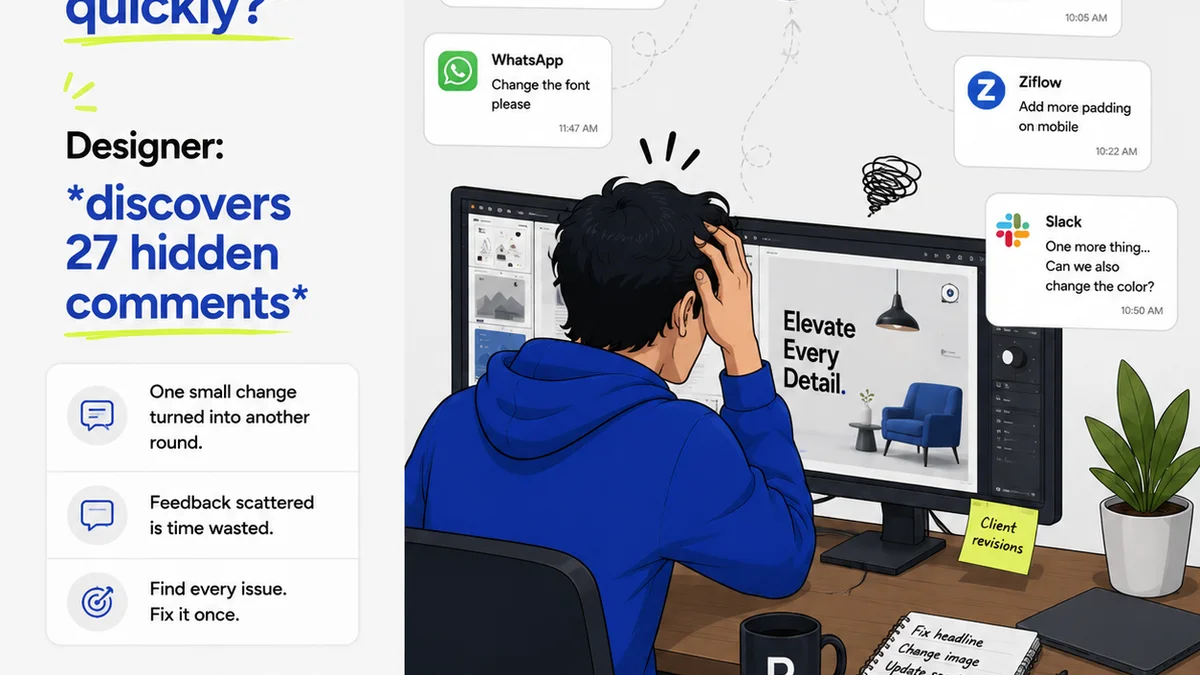
Everyone knows enterprise client feedback is slow. It’s a cliché in the agency world. You’ve probably heard the usual suspects: too many stakeholders, conflicting opinions, or just plain indecisiveness. None of that is wrong. But it’s incomplete.
The hard truth is that enterprise feedback delays aren’t just about people. They’re about broken systems and a fundamental lack of visibility into the creative process. When feedback gets lost, misunderstood, or simply ignored, the timeline explodes. And that’s a systemic problem, not a personal one.
1. The Illusion of Collaboration: Too Many Voices, No Single Source of Truth
Enterprise projects often involve a dizzying array of departments and individuals. Marketing, legal, product, sales – they all have a stake. And they all have opinions. The assumption is that more input leads to a better outcome. Usually, it leads to chaos.
Without a clear process for collecting and consolidating feedback, these disparate voices become a cacophony. Emails get CC'd into oblivion. Slack threads multiply. Version control becomes a distant memory.
The Email Avalanche
Every stakeholder sends their thoughts via email. You get a dozen different versions of the same comment, often contradictory. Trying to reconcile these emails is a nightmare. Did legal approve the copy, or did they just flag it for review? Who’s responsible for that font change? The email chain doesn't tell you.
The Meeting Maze
Endless review meetings are scheduled. Each one adds another layer of discussion, another set of action items. But how is the feedback from these meetings captured? Is it typed up? Recorded? Who owns that summary? Without a central repository, these meetings become talking shops rather than decision-making forums.
The Version Control Void
Which is the *actual* latest version? The one from Friday? Or the one Sarah sent Monday morning with her
Frequently asked questions
What are the main reasons enterprise client feedback takes so long?
The primary reasons include a lack of a single source of truth for feedback, poor version control, unclear communication channels, and insufficient process for consolidating and acting on input from multiple stakeholders across different departments.
How can agencies improve feedback turnaround time with enterprise clients?
Agencies can improve turnaround by establishing clear feedback protocols, using centralized platforms for all communication and asset review, defining stakeholder roles and responsibilities, and setting explicit deadlines for feedback submission.
Is it always the client's fault when feedback is delayed?
Not always. While client-side bottlenecks are common, agency processes, unclear briefs, and a lack of proactive communication from the agency can also significantly contribute to feedback delays.
How does centralized feedback software help enterprise clients?
Centralized feedback tools provide a single, organized platform for all comments, revisions, and approvals. This eliminates email chains, reduces version confusion, and gives all stakeholders clear visibility, speeding up the decision-making process.