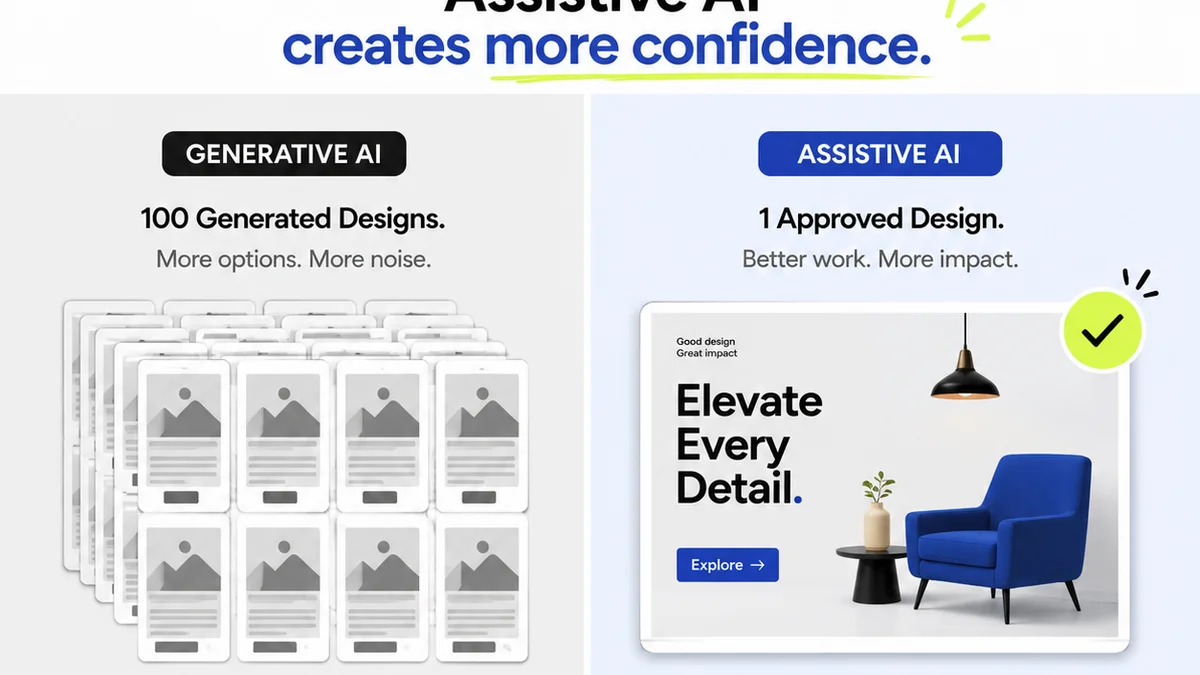
Everyone talks about collaboration. It’s the buzzword of choice in every creative agency and in-house team. We assume that if we put smart people in a room, or on a Slack channel, great ideas will just flow.
None of that is wrong. But it’s incomplete.
The hard truth is that true enterprise collaboration isn't about proximity or tools. It’s about process. It’s about clarity. It’s about accountability.
For creative leaders, this means moving beyond simply facilitating meetings and hoping for the best. It means architecting a system where feedback is actionable, revisions are tracked, and approvals are definitive. It means understanding that the *how* of collaboration directly impacts the *what* of your creative output.
1. The Illusion of 'Open' Communication
We’re told that open communication is key. We champion transparency. We encourage everyone to speak up.
But in a large organization, 'open' often becomes 'noisy.' Emails get lost. Slack threads disappear into the ether. Important decisions are buried under a mountain of casual chats.
This isn't a failure of individuals; it's a failure of the system.
The Bottleneck of Unstructured Feedback
When feedback isn’t centralized, it becomes a game of telephone. A client might say X to the account manager, who tells Y to the creative director, who interprets it for Z the designer. Each step introduces potential for misinterpretation and dilution.
This leads to:
- Endless
Frequently asked questions
What's the biggest misconception about enterprise collaboration in creative teams?
The biggest misconception is that simply providing tools or encouraging 'open communication' is enough. True collaboration is built on structured processes for feedback, revision tracking, and clear approvals, not just on proximity or chat channels.
How does unstructured feedback hurt creative projects?
Unstructured feedback creates bottlenecks, leads to misinterpretations, causes scope creep, and erodes accountability. It makes it difficult to track decisions and ensure everyone is working from the latest version, ultimately impacting quality and timelines.
What are the signs of poor collaboration in a creative agency?
Signs include endless revision cycles, missed deadlines, scope creep, conflicting feedback, a lack of clarity on who owns decisions, and team members feeling overwhelmed or unsure of project status. It often manifests as a general lack of project momentum and client frustration.
How can creative leaders improve collaboration?
Creative leaders can improve collaboration by implementing clear workflows for feedback and approvals, centralizing all project communication and assets, defining roles and responsibilities, and leveraging technology to provide visibility and track progress. Focus on process over just tools.