Everyone talks about collaboration. Especially in enterprise settings. It’s the magic bullet for innovation, efficiency, and keeping those big, complex projects moving. You hear it in every meeting, see it in every mission statement.
But how many of those collaboration initiatives actually move the needle? Most of them don’t.
Why? Because we treat collaboration like a feature, not a system. We assume great people will just naturally collaborate. Or we implement a tool and call it a day.
None of that is wrong. But it’s incomplete.
The hard truth is that effective enterprise collaboration isn't about good intentions or shiny new software. It’s about building a robust, repeatable framework. A system that guides how people work together, regardless of department, location, or project complexity.
1. Define Your Collaboration Ecosystem
Before you can build a framework, you need to understand what you’re building it for. What does collaboration *look* like in your organization? Who needs to talk to whom, and about what?
This isn't about drawing org charts. It’s about mapping the flow of information and decision-making.
Identify Key Stakeholders and Teams
Who are the usual suspects on your projects? Think beyond the core team. Who are the approvers, the subject matter experts, the legal reviewers, the marketing liaisons? Map these out.
Map Information Flows
How does information get from Point A to Point B? Is it email chains? Shared drives? Instant messages? Is it clear who owns what information at each stage? Where are the bottlenecks?
Understand Decision-Making Processes
Who makes the final call? How is feedback consolidated? What happens when there are conflicting opinions? Clarity here prevents endless loops.
Document Existing Workflows (and Pain Points)
Don’t assume you know. Talk to the teams. What’s working? What’s a constant headache? Documenting the current state, warts and all, is crucial for designing a better future state.
2. Build Your Collaboration Pillars
Once you understand your ecosystem, you can start building the structural elements of your framework. These are the fundamental components that support all collaborative activity.
Clear Roles and Responsibilities
This goes beyond job titles. For any given project or task, who is responsible for doing the work? Who is accountable for the outcome? Who needs to be consulted? Who needs to be informed?
Use a RACI matrix (Responsible, Accountable, Consulted, Informed) if it helps. The key is that everyone knows their part.
Standardized Communication Channels
Not all communication is created equal. Define which channels are for what purpose. Is Slack for quick questions? Email for formal approvals? A dedicated platform for project assets?
This reduces noise and ensures messages are seen in the right context.
Centralized Knowledge Hub
Where do people go to find project briefs, assets, feedback, and decisions? A single source of truth is non-negotiable. Without it, people waste time searching or reinventing the wheel.
Defined Feedback and Approval Loops
This is often the messiest part. How is feedback collected? How is it organized? How are revisions tracked? How is final approval given and documented?
Ambiguity here leads to scope creep, missed deadlines, and frustrated teams.
3. Implement Your Collaboration Framework
A framework on paper is useless. It needs to be actively implemented and integrated into daily operations.
Phased Rollout
Don’t try to change everything overnight. Start with a pilot project or a specific team. Gather feedback, iterate, and then expand.
Training and Onboarding
Your framework is only as good as your team’s understanding of it. Provide clear training. Make sure new hires are onboarded into the collaborative processes from day one.
Regular Audits and Iterations
The business changes. Projects evolve. Your collaboration framework needs to adapt. Schedule regular check-ins to assess what’s working, what’s not, and where adjustments are needed.
This isn’t a one-and-done exercise.
Lead by Example
Leadership buy-in and adoption are critical. If managers and directors aren’t adhering to the framework, why should anyone else?
4. Where Revue Fits In
Building a robust collaboration framework for enterprise creative teams often boils down to managing feedback, revisions, and approvals efficiently. This is where dedicated tools become essential.
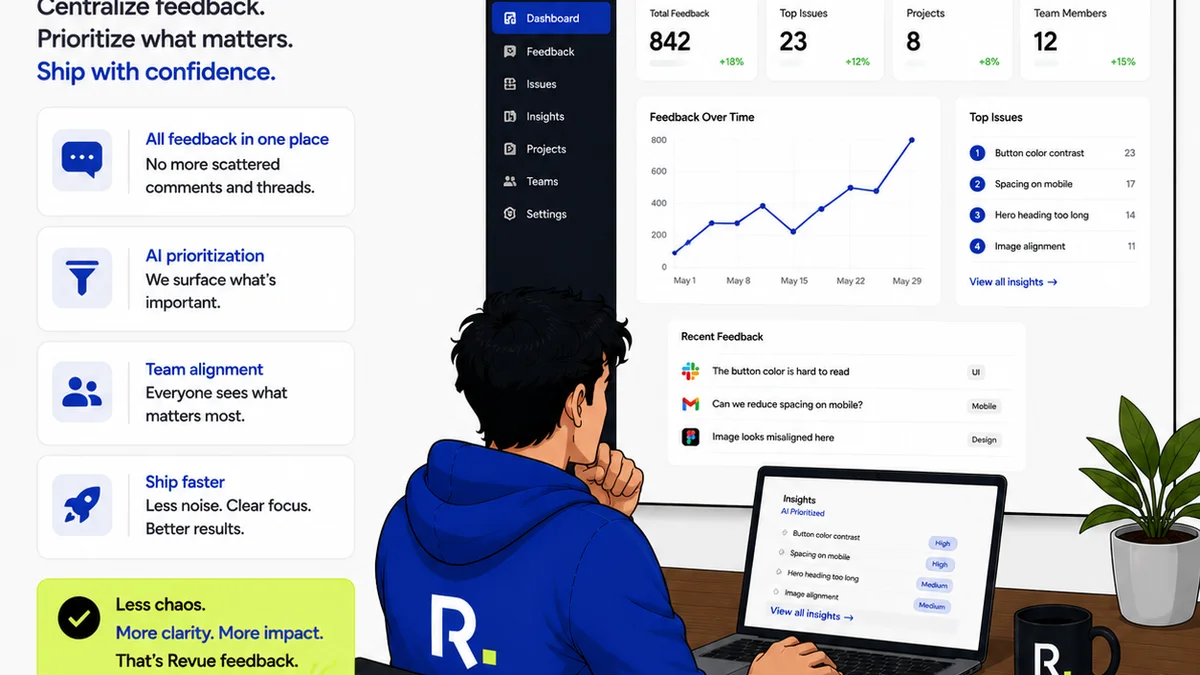
Revue acts as the central nervous system for creative collaboration. It provides a single, clear space for:
- Centralized Client Feedback: Instead of scattered emails and messages, all client comments and stakeholder input are logged directly on the creative assets. No more hunting for that one crucial piece of feedback buried in an inbox.
- Revision and Approval Visibility: Track the entire revision history of a project. See who provided what feedback, which comments were actioned, and who gave the final sign-off. This transparency eliminates “he said, she said” arguments and keeps everyone accountable.
- Quality Assurance Checks: Ensure that every piece of creative work meets the required standards before it goes out the door. Built-in checklists and approval stages help standardize your QA process, catching errors before they become costly problems.
By streamlining these critical touchpoints, Revue helps solidify the foundation of your collaboration framework, ensuring smoother workflows and higher-quality output.
5. Final Thought
Collaboration isn't a soft skill. It's a hard operational necessity. And like any critical operation, it requires a deliberate, structured approach.
Are you building a collaboration *system*, or just hoping for the best?
Frequently asked questions
What are the key components of an enterprise collaboration framework?
A robust framework includes defined roles and responsibilities, standardized communication channels, a centralized knowledge hub, and clear feedback and approval loops.
How do I get buy-in for a new collaboration framework?
Start with a pilot program, clearly communicate the benefits, provide thorough training, and ensure leadership actively participates and champions the new processes.
How can technology support an enterprise collaboration framework?
Technology, like platforms for centralized feedback and revision tracking, can automate and streamline key aspects of the framework, such as managing approvals and documenting changes.
Is a collaboration framework the same as project management software?
Not exactly. Project management software is a tool that supports aspects of a framework, but the framework itself is the overarching strategy, processes, and guidelines for how teams work together. The software implements parts of that strategy.