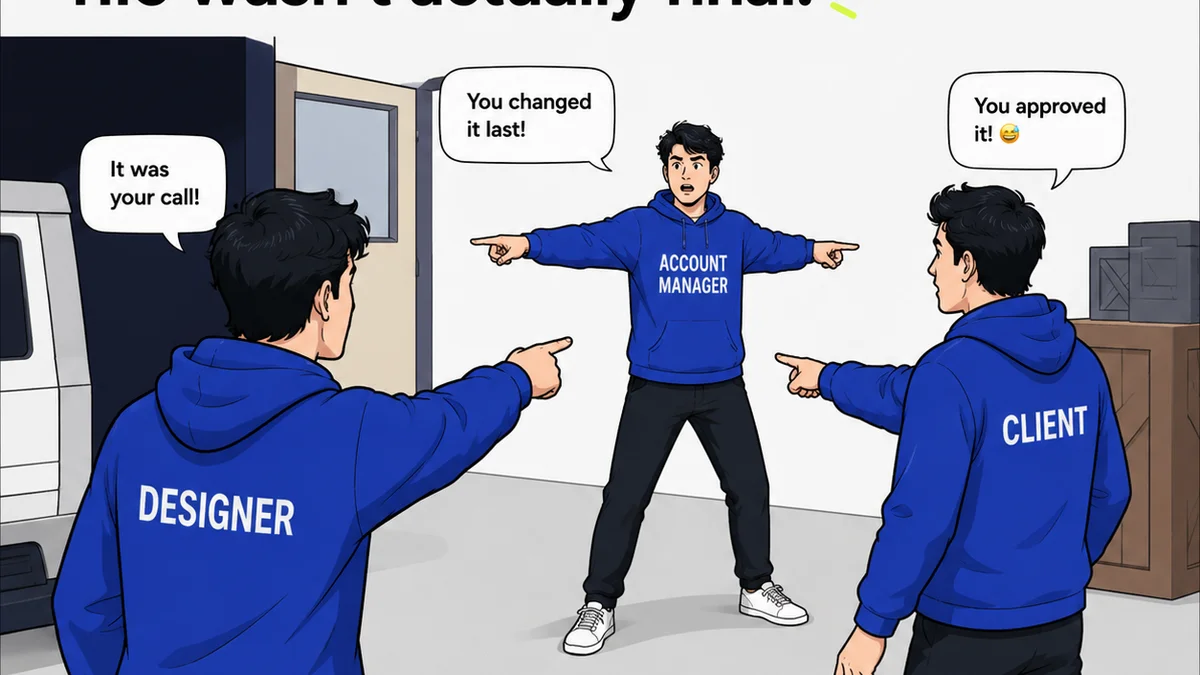
Everyone talks about collaboration tools. Slack, Teams, Asana, Trello. You name it, your clients probably use it. And they'll tell you these are the keys to seamless enterprise collaboration.
None of that is wrong. But it’s incomplete.
The hard truth? The tools are just the plumbing. The real magic—or the real mess—happens in the workflow. Without a clear process, even the best tech becomes a digital filing cabinet for chaos.
1. The Illusion of Connectivity
We assume more tools mean better connection. More apps, more integrations, more ways to talk. It sounds good on paper.
In reality, this often leads to fragmentation. Information gets siloed across platforms. Decisions get lost in endless notification threads. The sheer volume of communication becomes a barrier, not a bridge.
The Symptom: Notification Overload
Sound familiar?
- Endless pings from multiple apps.
- Difficulty tracking conversations across different channels.
- Key feedback buried under mountains of chatter.
- The constant feeling of being “always on” but never truly caught up.
This isn’t collaboration. It’s noise.
2. Defining
Frequently asked questions
What is the biggest misconception about enterprise collaboration?
The biggest misconception is that simply implementing more tools equals better collaboration. The reality is that workflow and process are far more critical than the technology itself.
How do communication tools hinder collaboration?
When not managed with clear workflows, communication tools can lead to information silos, notification overload, and lost feedback, ultimately hindering rather than helping collaboration.
What are the key components of effective enterprise collaboration?
Effective enterprise collaboration requires clear communication protocols, defined workflows for feedback and approvals, centralized documentation, and a shared understanding of project goals.
How can agencies improve their enterprise collaboration?
Agencies can improve by mapping out their core workflows, standardizing feedback and approval processes, centralizing project assets and communication, and choosing tools that support these defined processes rather than dictate them.