Everyone talks about collaboration tools. Slack, Teams, Asana, Monday.com – the shiny new platforms promising seamless teamwork. The assumption is that if you buy the right software, your enterprise collaboration problems will magically disappear.
None of that is wrong. But it’s incomplete.
The real enemy of enterprise collaboration isn’t a lack of tools. It’s a lack of clarity, process, and accountability. It’s the operational friction that grinds teams down, not the absence of another chat app.
Let’s cut through the noise and talk about the hard truths. What’s *really* killing your team’s ability to work together effectively?
1. The Illusion of Centralized Communication
You’ve got a central hub. Maybe it’s Slack, maybe it’s Teams. Everyone’s in it. But is communication truly centralized? Or is it just… everywhere?
The problem isn't the tool itself, but the culture around its use. When information is scattered across DMs, random channels, email threads, and even personal messages, your central hub becomes a black hole of lost context.
The Symptom: The Endless Search
Sound familiar?
- “Where did we decide on that?”
- “I can’t find the client feedback from last week.”
- “Was that in an email or a Slack message?”
- “Someone needs to pull that up…”
This isn’t a sign of a bad platform. It’s a sign of a bad *system* for using the platform.
The Fix: Define Your Channels
You need a clear taxonomy for your communication. What goes where? Make it explicit.
- Project-specific channels: Keep all discussions for Project X in #project-x.
- Client channels: Dedicated spaces for client communication.
- Team-wide announcements: A specific channel for official updates.
- Water cooler/social: Keep it separate from work.
This isn’t about rigid control. It’s about creating predictable, searchable, and accessible information streams. When everyone knows where to find what they need, time spent searching evaporates.
2. The Feedback Black Hole
Client feedback is the lifeblood of creative work. But how is it managed in your enterprise? Is it a chaotic jumble of emails, scribbled notes, and verbal directives?
The assumption is that feedback is just… given. The reality is that *collecting, organizing, and acting on* feedback is a critical operational process. And most enterprises get it wrong.
The Symptom: The Revision Loop of Doom
You’ve seen it. The endless back-and-forth:
- Client sends vague feedback via email.
- Team interprets feedback, makes changes.
- Client sees changes, says, “That’s not what I meant.”
- Repeat.
This isn’t the client being difficult. It’s a breakdown in the feedback loop. There’s no clear record, no single source of truth, and no way to ensure everyone is on the same page.
The Fix: Structured Feedback Capture
You need a system that treats feedback as structured data, not random noise.
- Centralize all feedback in one place.
- Use annotation tools for visual feedback directly on the asset.
- Categorize feedback (e.g., copy, design, technical).
- Require clear, actionable comments.
- Link feedback directly to the relevant asset version.
When feedback is captured with context and clarity, interpretation errors drop. Revisions become targeted, not guesswork. The dreaded revision loop shortens, or disappears altogether.
3. The Approval Bottleneck
Approvals are necessary. But they can also be the slowest part of any workflow. Why? Because they’re often treated as an afterthought, a casual nod rather than a formal gate.
The assumption is that an approval is just a “yes” or “no.” The deeper truth is that a robust approval process requires clear roles, defined timelines, and a verifiable record.
The Symptom: The Waiting Game
Projects stall because:
- The right person isn’t available to approve.
- It’s unclear *who* needs to approve.
- Feedback is buried in email chains, delaying the decision.
- There’s no clear way to track the status of an approval.
This isn't just frustrating; it’s costly. Every day an asset is stuck in limbo is a day of lost productivity and potential revenue.
The Fix: Formalize the Approval Process
Treat approvals as a critical milestone, not a casual check-in.
- Clearly identify approvers for each stage.
- Set clear deadlines for feedback and final sign-off.
- Implement a system for formal sign-off, not just a verbal OK.
- Maintain a clear audit trail of all approvals and rejections.
When approvals are structured, predictable, and trackable, bottlenecks dissolve. Projects move forward with confidence.
4. The Quality Control Mirage
You’ve designed it, you’ve built it, you’ve approved it. It’s done. Right?
Wrong. The assumption is that once a piece of work passes through the necessary stages, it’s inherently high quality. But without a dedicated quality control (QC) step, you’re leaving crucial errors to chance.
QC isn't just about catching typos. It’s about ensuring the work meets the brief, aligns with brand standards, and functions as intended. It’s the final safeguard before delivery.
The Symptom: The Post-Launch Glitch
What happens after delivery?
- Client finds errors you missed.
- Brand guidelines are subtly violated.
- Technical glitches appear in live environments.
- The work doesn’t quite hit the strategic mark.
These aren’t minor inconveniences. They erode client trust and damage your agency’s reputation. They are the direct result of skipping or skimping on QC.
The Fix: Integrate Dedicated QC
Build QC into your workflow, don’t tack it on at the end.
- Define clear QC checklists based on project type and client requirements.
- Assign specific individuals or a dedicated team to QC.
- Allow sufficient time for thorough reviews.
- Ensure QC covers creative, technical, and strategic aspects.
A robust QC process isn't an obstacle; it’s an investment in delivering flawless work and maintaining client satisfaction.
5. The Siloed Workflow Syndrome
Perhaps the most insidious problem is the silo. Marketing works here, design works there, development over there. Each team uses its own tools, follows its own processes, and rarely shares information effectively.
The assumption is that specialized teams are efficient. The reality is that in enterprise creative work, these silos create massive friction, duplication of effort, and a fundamental disconnect from the client’s overall goals.
The Symptom: The Information Mismatch
You’ll see this:
- Design creates assets that don’t fit marketing’s campaign needs.
- Development builds features that don’t align with the UX brief.
- Sales promises deliverables that the delivery team can’t realistically achieve.
- Client communication is inconsistent across departments.
This isn’t just a communication problem. It’s a structural one. When teams operate in isolation, the final output suffers, and the client experience is fragmented.
The Fix: Cross-Functional Visibility
Break down the walls. Foster transparency.
- Implement shared project management tools that provide visibility across teams.
- Encourage cross-functional team meetings and stand-ups.
- Ensure a single source of truth for project scope, assets, and client requirements.
- Map out the entire client journey, identifying touchpoints and handoffs.
When everyone can see the bigger picture and how their work connects to other teams and the client’s objectives, collaboration shifts from a chore to a natural outcome.
Where Revue Fits In
You can have the best people and the most brilliant ideas, but without the right operational framework, collaboration will always be a struggle. This is where a centralized platform designed for creative workflows becomes indispensable.
Revue isn't just another tool; it's the operational backbone for managing creative projects.
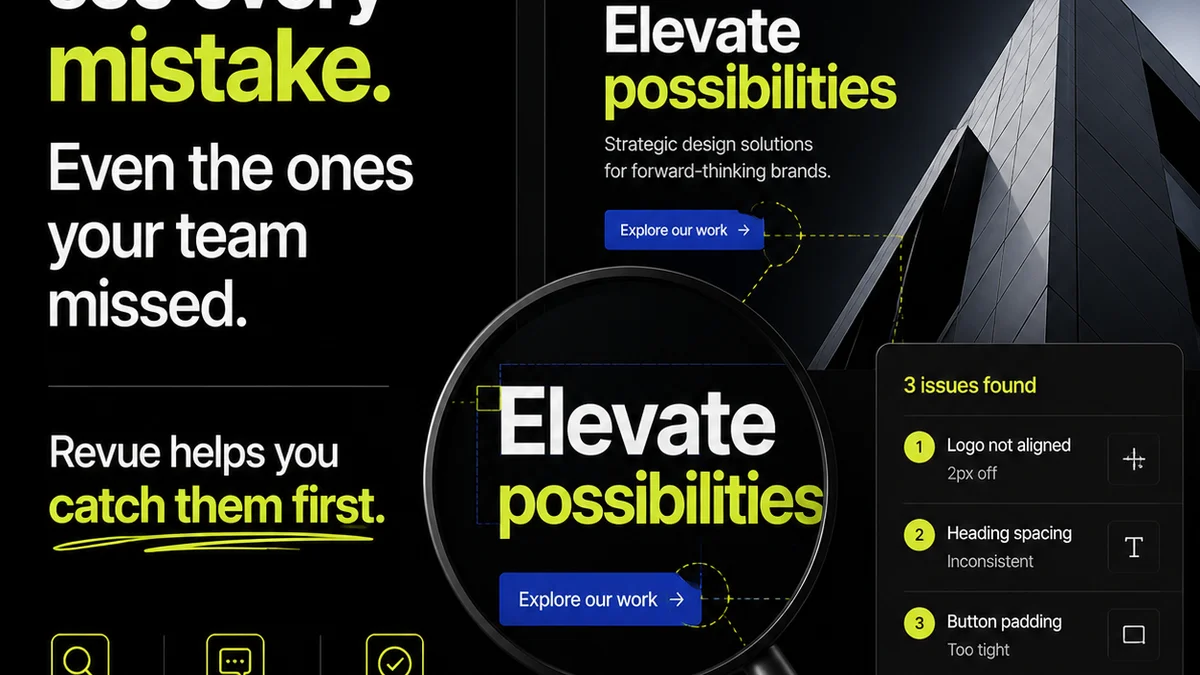
- Centralized Feedback: No more hunting through emails or chat logs. All client feedback, annotations, and discussions live directly on the asset, in context. This eliminates ambiguity and ensures everyone is working from the same, up-to-date information.
- Revision & Approval Visibility: Track every version, every revision, and every approval with a clear audit trail. Know exactly where a project stands and who needs to take action, cutting down on bottlenecks and delays.
- Quality Assurance Built-In: Integrate your QC checklists directly into the workflow. Ensure every asset goes through a standardized review process before it’s sent to the client, catching errors before they become problems.
- Streamlined Communication: By consolidating project-specific communication and asset management, Revue reduces reliance on scattered tools, keeping your team focused and informed.
It’s about bringing order to the creative chaos, ensuring that your team’s energy is focused on creating great work, not on navigating broken processes.
Final Thought
Are you investing in collaboration tools, or are you investing in collaborative *operations*? The former is easy. The latter is where true progress lies. It’s time to stop blaming the software and start optimizing the system.
Frequently asked questions
What is the biggest mistake companies make with collaboration tools?
The biggest mistake is assuming that simply adopting a new tool will solve collaboration problems. True collaboration relies on clear processes, defined communication protocols, and a culture of accountability, not just the software itself.
How can I prevent feedback from getting lost in enterprise environments?
Implement a centralized system for capturing all client feedback directly on the relevant assets. Use annotation tools and require clear, actionable comments to ensure context is maintained and feedback is easily traceable.
What’s the best way to speed up approval processes?
Formalize your approval process. Clearly identify approvers, set specific deadlines for sign-off, and maintain a verifiable audit trail of all approvals and rejections. Treat approvals as a critical project milestone.
How does Revue help with siloed workflows?
Revue provides a single, centralized platform for project assets, feedback, and revisions. This cross-functional visibility breaks down communication silos by ensuring all team members and stakeholders have access to the same, up-to-date project information.