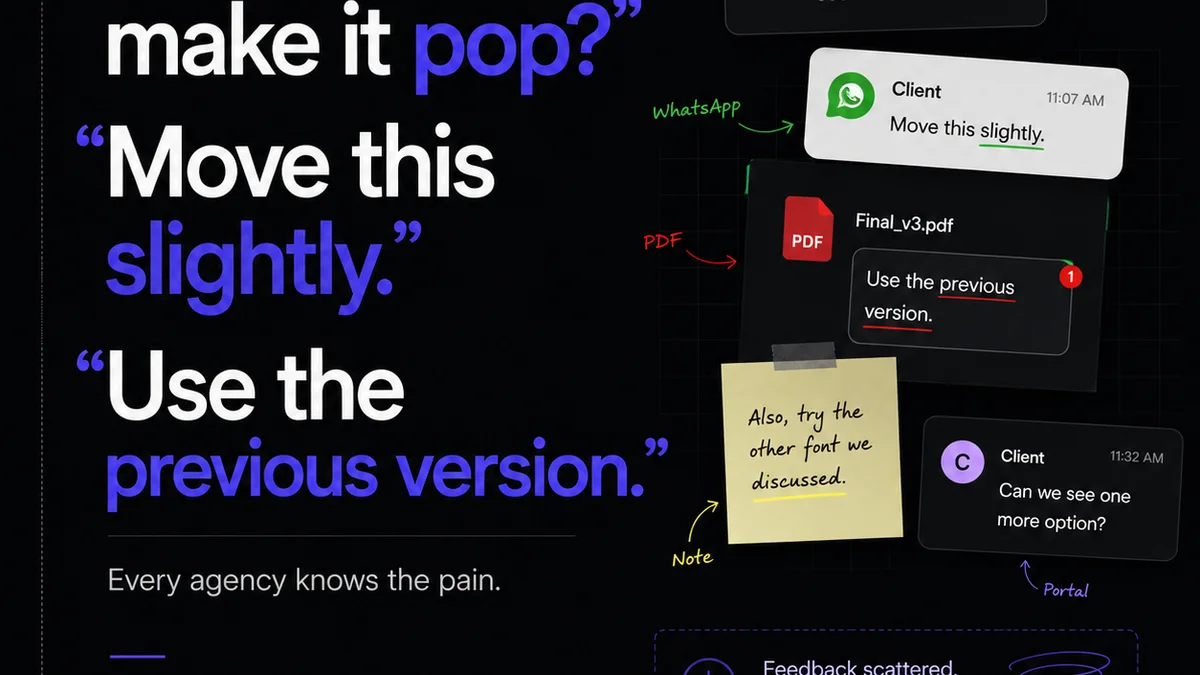
Everyone talks about collaboration. Especially in large organizations. They say it’s about open communication, shared goals, and the right tools. None of that is wrong. But it’s incomplete.
The hard truth? Enterprise collaboration isn’t a feeling. It’s an operating system. And like any OS, it needs a robust, well-defined process to function. Without it, you’re just a bunch of smart people talking past each other, hoping for the best. That’s not collaboration; it’s chaos.
1. The Illusion of Alignment
Many enterprise teams assume that because they’re all working on the same project, they’re automatically aligned. This is a dangerous assumption.
Alignment isn't a static state; it's a dynamic process. It requires constant calibration, clear documentation, and visible progress. Without a defined process, alignment erodes quickly.
Symptoms of Misalignment
- Scope creep that sneaks in unnoticed.
- Duplicate efforts across departments.
- Conflicting priorities causing delays.
- Decisions made in silos that impact others negatively.
- A general sense of “what are we even doing?”
These aren’t signs of bad people. They’re signs of a broken process. Or, more often, no process at all.
2. Defining Your Collaboration Operating System
Think of your collaboration process as the operating system for your team’s collective output. It dictates how information flows, how decisions are made, and how work progresses from idea to completion.
A robust OS has clear protocols for everything. For enterprise collaboration, this means mapping out the entire lifecycle of a project or task.
Key Components of a Collaboration OS
- Onboarding & Kick-off: How do new projects or team members get integrated? What information is essential from day one?
- Communication Cadence: What channels are used for what? How often do different groups or individuals sync? What’s the protocol for urgent vs. non-urgent updates?
- Decision-Making Framework: Who has the final say? How are stakeholders identified and consulted? What’s the escalation path?
- Feedback Loops: How is feedback gathered, consolidated, and acted upon? What’s the difference between input and actionable feedback?
- Revision & Approval Workflow: What are the stages of review? Who signs off at each stage? What are the deadlines?
- Quality Assurance: How is the final output checked against requirements and standards?
- Offboarding & Archiving: How is project knowledge preserved? How are resources released?
This isn’t about bureaucracy for its own sake. It’s about creating predictable, repeatable workflows that reduce friction and amplify output.
3. Mapping the Workflow: From Brief to Approval
The most critical part of any collaboration process is mapping the actual workflow. This is where most teams fall short. They have a general idea, but not a documented, step-by-step protocol.
Let’s take a common scenario: a client project requiring input from multiple internal departments and external stakeholders.
The Journey of a Creative Asset
- Briefing & Discovery: Clear, consolidated brief. Stakeholder identification. Initial alignment on goals and scope.
- Concept Development: Internal creative brainstorming. Initial concept presentation to key internal stakeholders for directional feedback.
- Design & Production: Asset creation. Regular internal check-ins with project leads.
- Internal Review: Formal review by department heads or project managers. Feedback consolidation.
- Client Presentation: Presenting concepts or drafts to the client. Gathering initial feedback.
- Revisions: Incorporating client feedback. Tracking changes.
- Stakeholder Approvals: Securing sign-off from all necessary internal and external parties.
- Final QA: Ensuring the asset meets all technical and creative specifications.
- Delivery: Final handover.
Each of these steps needs clear ownership, defined inputs, and specific outputs. Where does feedback happen? Who consolidates it? Who makes the final call if there’s disagreement?
Without this map, you’re navigating blind. And you’ll inevitably hit a wall.
4. The Human Element: Process vs. People
A common mistake is thinking that a great process will magically fix dysfunctional teams. It won’t.
Process is the framework. People are the operators. You need both working in concert.
A well-defined process makes it easier for people to collaborate effectively. It removes ambiguity, reduces conflict, and ensures everyone is playing the same game.
When Process Supports People
- Reduces
Frequently asked questions
What is the biggest mistake companies make with enterprise collaboration?
Assuming collaboration is a natural outcome of having smart people and tools. The reality is that it requires a deliberate, well-defined process to manage communication, decision-making, and feedback loops effectively.
How can I map out my team's collaboration workflow?
Start by documenting every step from project initiation to completion. Identify key stakeholders, define communication channels for each stage, clarify decision-making authority, and establish clear feedback and approval protocols.
Does a formal process stifle creativity in large teams?
Not if done correctly. A strong process provides structure, reducing ambiguity and freeing up cognitive load. This allows creative individuals to focus on the work itself, rather than navigating internal politics or unclear expectations.
What role do tools play in enterprise collaboration?
Tools are enablers, not solutions. They support the process. Without a defined process, even the best collaboration tools can lead to more noise and less signal. The process dictates how the tools are used effectively.