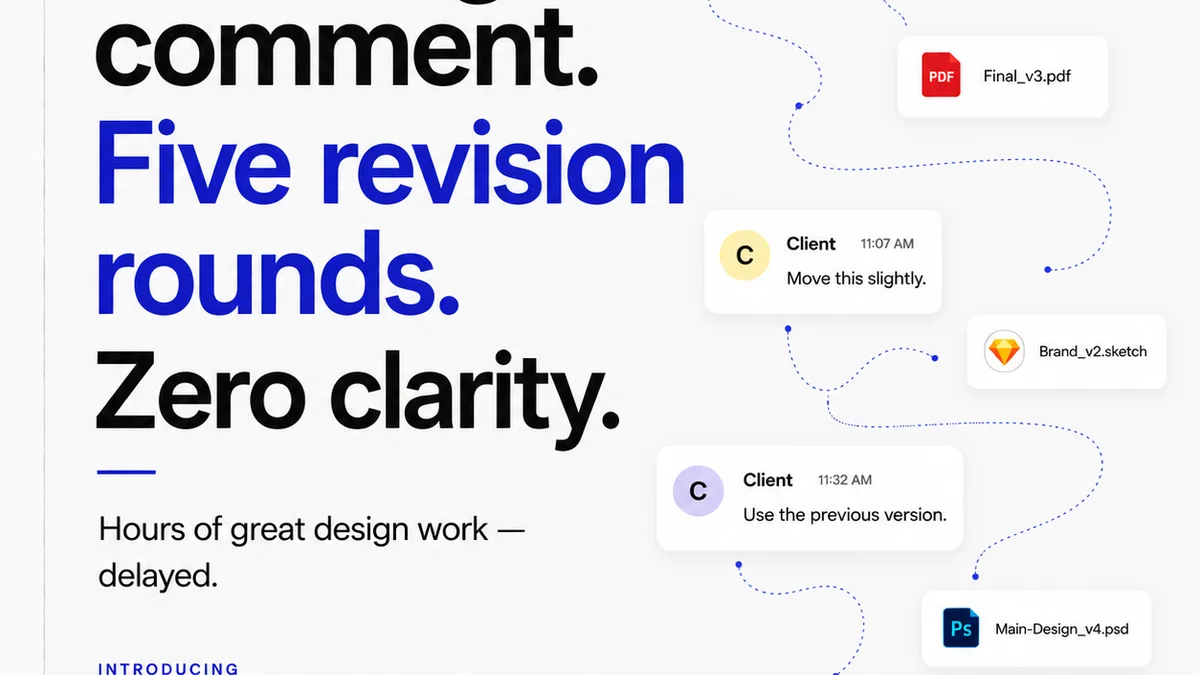
Everyone wants better collaboration. You hear it everywhere: "We need to collaborate more!" "Our tools aren't integrated!" "We need a central hub!"
And none of that is wrong. But it’s incomplete.
The real truth is, simply buying more software or mandating a new platform won't magically boost your agency's bottom line. True ROI from enterprise collaboration isn't about the tools themselves. It's about how those tools force you to streamline your operations and eliminate waste.
Let's cut through the noise. Here's how to actually get measurable returns.
1. The Myth of "More" Collaboration
The assumption: If we have more ways to talk, share, and connect, we'll be more productive. More features, more integrations, more communication channels equals better results. Right?
Wrong. More often, it means more noise, more context switching, and more places for critical information to get lost. Think about your average workday:
- Slack messages you miss.
- Emails buried under replies.
- Comments scattered across PDFs, Google Docs, and presentation slides.
- Version control nightmares.
- Endless, unproductive meetings to sync up.
This isn't collaboration. It's chaos disguised as connection. It's a drain on time and resources, directly impacting your profitability.
2. The Hard Truth: Efficiency is King
The real ROI of collaboration tools lies in their ability to enforce and enable *efficiency*. It's about reducing friction, clarifying processes, and making sure the right information gets to the right person at the right time, with minimal effort.
This means:
- Reducing the number of touchpoints.
- Minimizing manual handoffs.
- Eliminating redundant communication.
- Ensuring clear accountability.
- Accelerating decision-making.
When a tool does this, it doesn't just make things nicer. It makes them faster, cheaper, and more accurate. That's where the money is.
3. Deconstructing the Bottlenecks
To find ROI, you first need to identify where you're losing money. Most agencies bleed profit in the creative review and approval cycle. This is where feedback gets muddled, revisions spiral, and projects get delayed.
The Feedback Black Hole
Where does feedback go? Is it an email? A Slack message? A scribbled note on a printout? A comment in a shared drive?
When feedback is siloed, subjective, and hard to track, it creates massive inefficiencies:
- Misinterpretation: "Make it pop more" can mean wildly different things to different people.
- Lost Context: Feedback is given without seeing the full picture or previous iterations.
- Duplication: Multiple people give the same feedback, or conflicting feedback.
- Accountability Issues: Who said what? Who approved it? It becomes a blame game.
This cycle leads to endless revisions, scope creep, and frustrated clients. Each extra revision cycle is a direct hit to your margin.
The Revision Rabbit Hole
Once feedback is (eventually) consolidated, the revision process begins. But without a clear system, this is another profit killer.
- Unclear Scope: Are these minor tweaks or a full redesign?
- Version Control Chaos: Which is the latest file? Which is the approved version?
- Inefficient Handoffs: Designers don't get clear briefs; account managers chase down approvals.
- Extended Timelines: Every delay means more billable hours spent, or worse, unbillable hours.
This isn't just about project timelines; it's about resource allocation. Time spent in revision hell is time that could be spent on new, profitable work.
4. The Efficiency Multiplier: Centralization and Clarity
The core of collaboration ROI isn't about having *more* tools, but about having the *right* tool that centralizes and clarifies critical workflows.
Centralized Feedback
Imagine all client feedback for a project living in one place. Not just a document, but a system where comments are tied directly to the creative asset. Every stakeholder sees the same version, and every comment is logged.
This means:
- Single Source of Truth: No more hunting for feedback across emails and chats.
- Contextual Comments: Feedback is directly on the element being discussed.
- Clear Decision-Making: Easily see what was requested, what was approved, and by whom.
- Reduced Misinterpretation: Visual cues and direct links prevent ambiguity.
This alone can shave days off your review cycles.
Streamlined Revisions and Approvals
With feedback centralized, the revision process becomes far more manageable. Clear workflows for submitting revisions and obtaining formal approvals are crucial.
- Defined Revision Rounds: Set limits and track progress.
- Digital Approvals: Formal sign-offs that are auditable and undeniable.
- Version History: Always know which version is current and which was approved.
- Automated Notifications: Keep stakeholders informed without manual chasing.
This transforms a chaotic, time-consuming process into a predictable, efficient one. You move faster, with less risk of errors.
5. Where Revue Fits In
This is precisely why we built Revue. It’s not just another platform; it’s a system designed to tackle these exact efficiency drains.
Revue provides a single, centralized hub for all your creative feedback, revision management, and quality checks. Forget the scattered spreadsheets, endless email chains, and confusing Slack threads.
With Revue, you get:
- Centralized Feedback: Clients and stakeholders can leave precise, contextual comments directly on your creative work. No more hunting for feedback.
- Clear Revision Tracking: Manage revisions easily, see what's changed, and track progress towards final approval.
- Visible Approval Workflow: Get clear, auditable sign-offs, eliminating ambiguity and accelerating decision-making.
- Quality Assurance: Implement checklists and standardized checks to ensure every piece of work meets your agency's high standards before it goes to the client.
By consolidating these critical, often painful, steps into one streamlined process, Revue directly impacts your team's efficiency and, by extension, your agency's profitability. It’s about reducing wasted time and effort, so you can focus on delivering great creative work.
6. Measuring the Real ROI
How do you know if your collaboration efforts are actually paying off? Look beyond vanity metrics.
Track Time, Not Just Tasks
Measure the reduction in time spent on:
- Chasing feedback.
- Consolidating comments.
- Managing file versions.
- Getting approvals.
- Internal sync meetings related to reviews.
Even saving an hour per project per team member adds up significantly over a year.
Monitor Revision Cycles
Are you consistently getting work approved within the first or second round? A reduction in the average number of revision cycles directly correlates to lower costs and faster project completion.
Calculate Cost of Delay
Every day a project is stuck in review is a day you're not billing for it, or a day that pushes back other profitable work. Quantify this cost.
Client Satisfaction Scores
While not directly financial, smoother, faster, and more transparent processes often lead to happier clients. Happy clients lead to repeat business and referrals, which *are* financial.
Final Thought
The true value of enterprise collaboration isn't found in the feature list of your software. It's forged in the operational discipline it enables. Are your tools helping you cut through the noise and drive ruthless efficiency, or are they just adding another layer of complexity?
Frequently asked questions
What is the biggest misconception about collaboration tools?
The biggest misconception is that simply implementing more tools or features will automatically improve collaboration and ROI. True ROI comes from how these tools enforce efficiency, streamline processes, and reduce waste, not from the sheer number of features available.
How does client feedback impact agency ROI?
Disorganized and scattered client feedback leads to misinterpretation, endless revisions, scope creep, and project delays. Each extra revision cycle directly eats into your profit margins and consumes valuable resources that could be used for new business.
What are the key indicators of collaboration ROI in an agency?
Key indicators include reduced time spent on chasing feedback and approvals, fewer revision cycles per project, a lower cost of project delays, and improved client satisfaction scores. Focusing on efficiency gains is crucial.
How can a platform like Revue help improve ROI?
Revue centralizes feedback, streamlines revision management, and provides clear approval workflows. By creating a single source of truth and reducing friction in the review process, it directly cuts down on wasted time and resources, boosting profitability.