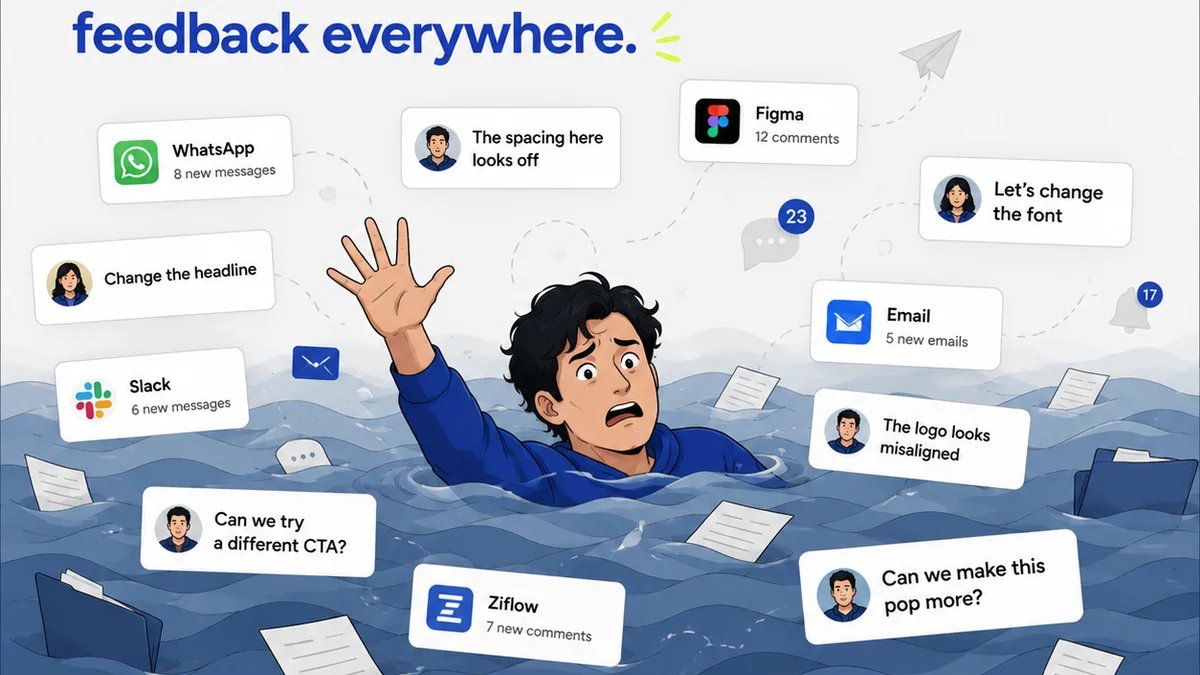
Everyone talks about collaboration. Especially in creative agencies and in-house teams. The assumption is that more talking, more meetings, more shared docs equals better results. More minds, more ideas, right?
None of that is wrong. But it’s incomplete.
The hard truth? Unmanaged collaboration is a productivity black hole. It’s not the *act* of collaborating that slows teams down. It’s the friction points: endless email chains, version control nightmares, unclear feedback, and delayed approvals.
This isn't about working less. It's about working smarter. It's about building systems that let your team collaborate effectively without grinding to a halt.
1. The Myth of the 'Open Door' Policy
An open door policy sounds great. It implies accessibility and transparency. But in practice, it often means constant interruptions.
A designer is deep in flow, headphones on, code editor open. Suddenly, a colleague pops their head in. "Quick question about the XYZ project." Five minutes later, it’s ten. The designer is now out of their flow state, and that 'quick question' has cost them an hour of focused work.
This isn't malicious. It's just how work happens when there are no clear channels for communication and feedback.
Interrupt-Driven Development (and Design)
- Constant pings from Slack or Teams.
- Unexpected hallway conversations.
- Urgent
Frequently asked questions
What's the biggest misconception about enterprise collaboration?
The biggest misconception is that more communication automatically leads to better outcomes. In reality, unmanaged communication and feedback loops create bottlenecks that slow teams down. Effective collaboration requires structure and clear processes, not just more talking.
How can I prevent feedback from slowing down my team?
Centralize feedback in a single platform where it's contextual and actionable. Define clear roles for who provides feedback and when. Set deadlines for feedback and approvals. Use tools that allow for clear, trackable comments directly on the creative asset.
Is it possible to collaborate on creative projects without endless revisions?
Yes. By establishing a clear approval workflow, defining scope upfront, and ensuring all feedback is consolidated and prioritized, you can significantly reduce unnecessary revisions. Tools that provide version history and clear approval statuses are crucial here.
How does Revue help with enterprise collaboration?
Revue acts as a central hub for client feedback and internal reviews. It streamlines the process of collecting, organizing, and acting on feedback, making revisions and approvals transparent and efficient. This reduces the time spent chasing information and allows teams to focus on creative execution.